
Key Takeaway
EFT produces large effect sizes for PTSD symptom reduction, with outcomes comparable to or exceeding established treatments like CBT and EMDR.
Summary
This updated systematic review and meta-analysis examined the efficacy of Emotional Freedom Techniques (EFT) for treating post-traumatic stress disorder (PTSD). Building on earlier meta-analyses, the authors searched multiple databases for randomized controlled trials and clinical outcome studies comparing EFT to waitlist controls, active treatments, or other standard interventions for PTSD.
The analysis included studies across diverse populations including veterans, survivors of abuse, accident victims, and others with clinically diagnosed PTSD. Effect sizes were calculated using Hedge's g to account for sample size variability. The pooled results demonstrated large effect sizes favoring EFT for PTSD symptom reduction, with EFT performing comparably to gold-standard trauma therapies.
The authors concluded that EFT meets the criteria for an evidence-based treatment for PTSD according to APA Division 12 standards, and recommended its wider adoption in clinical practice and integration into PTSD treatment guidelines.
Methods
Systematic search of PubMed, PsycINFO, and other databases for RCTs and clinical studies of EFT for PTSD. Studies were screened using PRISMA guidelines. Effect sizes were calculated using Hedge's g with 95% confidence intervals. Risk of bias was assessed, and subgroup analyses were performed by comparison type (waitlist vs. active control).
Key Results
- Large overall effect sizes for EFT compared to control conditions (Hedge's g = 2.96 vs. waitlist)
- EFT showed comparable effectiveness to CBT and EMDR in head-to-head comparisons
- Significant reductions in PTSD symptom severity across multiple validated measures (PCL, IES-R)
- Benefits maintained at follow-up assessments
- Effects observed across diverse trauma populations including veterans and civilian samples
Figures
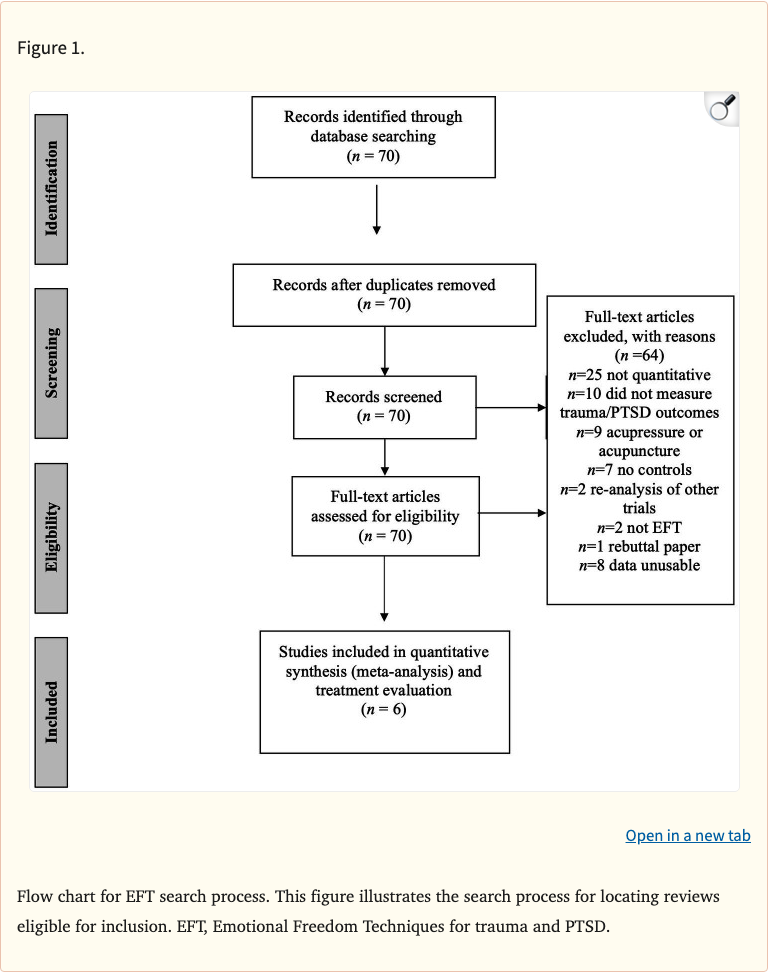 Figure 1
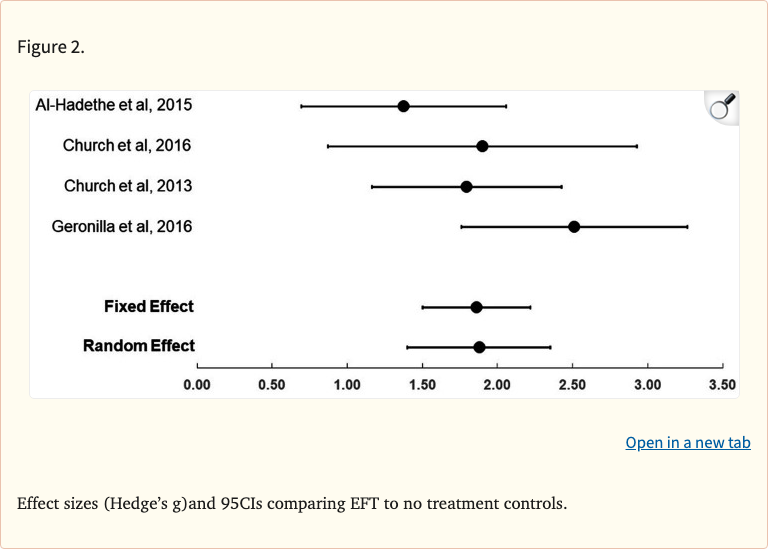 Figure 2
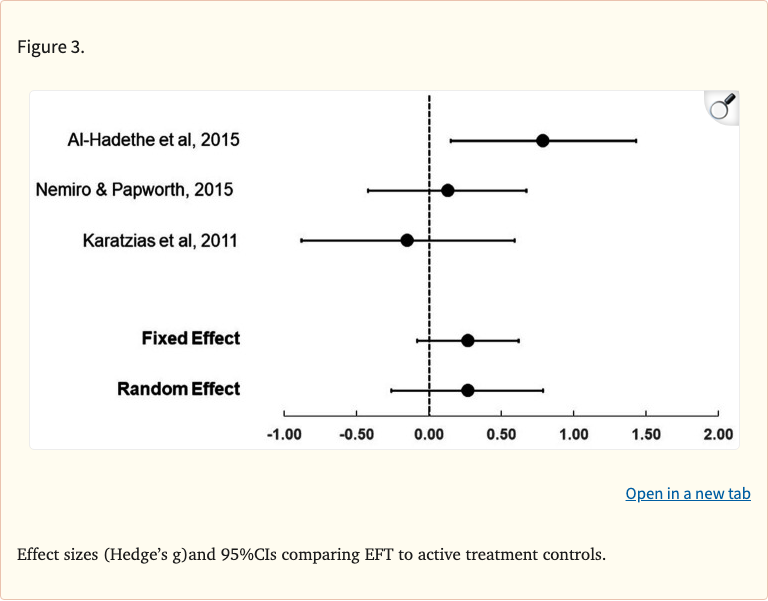 Figure 3
Limitations
- Moderate heterogeneity across studies due to varying populations and protocols
- Some included studies had small sample sizes
- Risk of bias concerns in several studies (lack of blinding, self-report measures)
- Limited long-term follow-up data beyond 6 months
- Potential allegiance effects as some authors are EFT proponents