
Key Takeaway
12 weeks of mini-trampoline exercise significantly improved body composition, cardiovascular fitness, blood pressure, and quality of life in overweight women.
Summary
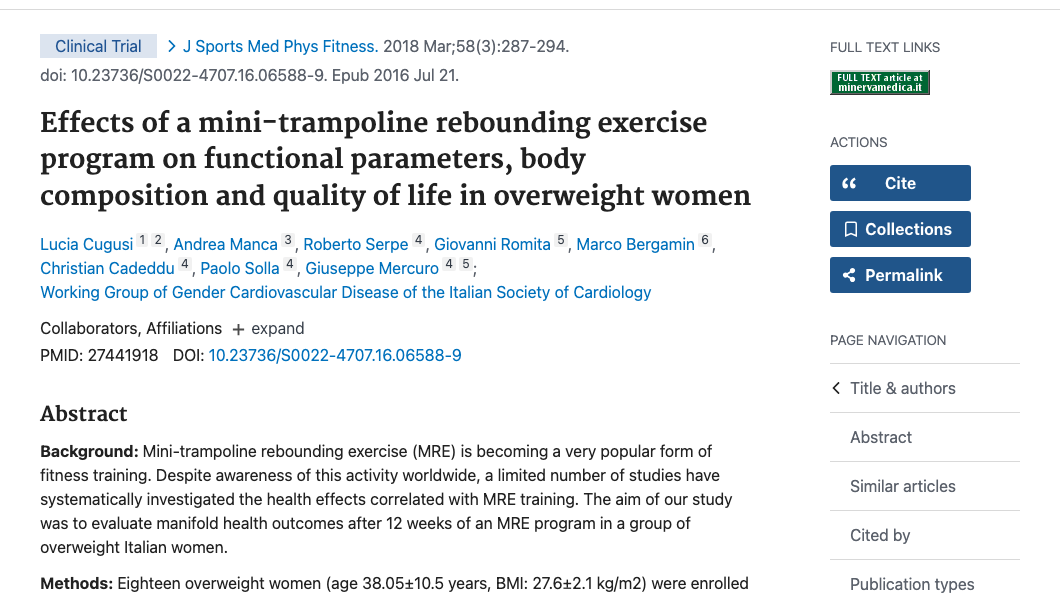
This clinical trial evaluated the effects of a 12-week mini-trampoline rebounding exercise program on a range of health outcomes in 18 overweight Italian women (mean BMI 27.6 kg/m2, mean age ~38 years). The study assessed functional parameters, body composition, lipid and glucose profiles, quality of life, and pain before and after the intervention.
Participants showed significant improvements across multiple domains. Blood pressure dropped from 128/80 to 123/71 mmHg, work capacity increased from 104 to 123 watts, and VO2max improved from 15.4 to 16.9 mL/kg/min. Significant reductions in fat mass and improvements in lean muscle mass and anthropometric measures were also observed, along with favorable changes in lipid and glucose profiles.
Quality of life improved in four of eight SF-36 domains plus the Mental Component Summary score. Pain severity and pain interference scores also decreased, as measured by the Brief Pain Inventory. The results suggest rebounding is a well-rounded exercise modality for overweight populations, offering cardiovascular, metabolic, and psychological benefits.
Methods
- 12-week mini-trampoline rebounding exercise program
- 18 overweight women (mean age 38, BMI 27.6 kg/m2)
- Pre/post assessments at baseline and week 12
- Measured: blood pressure, work capacity, VO2max, body composition, lipid/glucose profiles
- Quality of life assessed via SF-36
- Pain assessed via Brief Pain Inventory-Short Form
Key Results
- Blood pressure decreased from 128/80.5 to 123/71 mmHg (P<0.05)
- Work capacity increased from 104 to 123 watts (P=0.003)
- VO2max improved from 15.4 to 16.9 mL/kg/min (P=0.04)
- Significant improvements in fat mass and lean/muscular mass
- Improved lipid and glucose profiles
- Positive changes in 4 of 8 SF-36 domains plus Mental Component Summary
- Decreased pain severity and interference scores
Limitations
- Small sample size (N=18)
- No control group
- Pre/post design without randomization
- Single population (overweight Italian women)
- Short duration (12 weeks)