
Key Takeaway
Scoping review of 11 studies found rebounding exercises improve body composition, cardiovascular fitness, bone health, metabolic markers, and quality of life across diverse populations.
Summary
This scoping review systematically examined the evidence on mini-trampoline rebounding exercises in rehabilitation and fitness contexts. The authors searched PubMed, MEDLINE, Scopus, Google Scholar, and EBSCO for studies published up to December 2023, ultimately including 11 reports that met their inclusion criteria.
The review found that rebounding exercises showed benefits across multiple health domains. For body composition, studies demonstrated significant reductions in body fat percentage and improvements in lean mass, with one study showing greater fat loss from rebounding compared to running in young men. Cardiovascular benefits included improvements in VO2max, blood pressure, and work capacity. Metabolic improvements were documented in type 2 diabetes patients, including reduced insulin resistance and improved lipid profiles. Bone health markers also responded positively, with improvements in femur neck and lumbar bone mineral density.
For strength and motor performance, rebounding was found to be equally effective as resistance training for knee extension/flexion torque and dynamic balance. Quality of life improvements were also noted, including reduced pain severity. However, the authors highlighted important limitations including insufficient research overall, equipment variability across studies, safety concerns around falls and injury, and a lack of standardized protocols. They recommended developing evidence-based protocols, integrating wearable monitoring technology, and exploring applications in neurological rehabilitation.
Methods
- Scoping review following systematic search methodology
- Databases: PubMed, MEDLINE, Scopus, Google Scholar, EBSCO
- Keywords: "Mini Trampoline" and "Rebound Exercises" with Boolean operators
- Inclusion: English-language studies up to December 2023, all age groups
- Two independent reviewers assessed titles/abstracts; third reviewer resolved disagreements
- Quality assessment via Cochrane risk of bias tool for RCTs
- 11 reports included in final analysis
Key Results
- Body composition: significant reductions in body fat, BMI, and waist-hip ratio across studies
- Cardiovascular: improvements in VO2max, blood pressure, and work capacity
- Metabolic: reduced insulin resistance and improved lipid profiles in type 2 diabetes patients
- Bone health: improved femur neck and lumbar bone mineral density
- Strength: equally effective as resistance training for knee extension/flexion torque
- Lung function: improved FEV1 and FVC in 4-week intervention
- Quality of life: positive changes in SF-36 domains and reduced pain scores
- Rebounding showed greater body fat reduction compared to running in young men
Figures
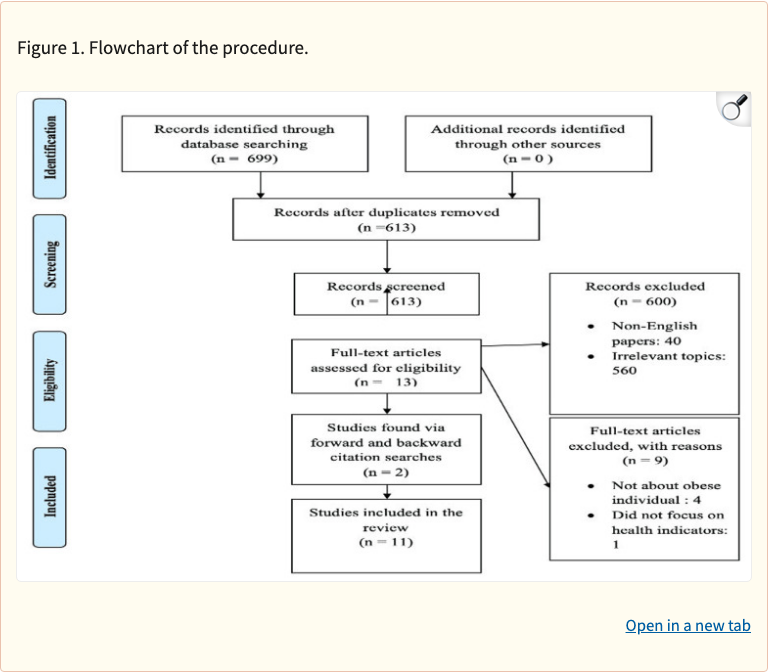 Figure 1
Limitations
- Only 11 studies met inclusion criteria, reflecting limited research base
- Equipment variability across studies (different trampoline types)
- Safety concerns around falls and injury risk not well quantified
- Lack of standardized rebounding protocols
- Heterogeneous study designs and populations limit comparability
- English-language studies only