
Key Takeaway
All resistance training prescriptions produced comparable muscle hypertrophy regardless of load, while higher loads were superior for maximizing strength gains, supporting lower-load and bodyweight approaches as effective for building muscle.
Summary
This systematic review and Bayesian network meta-analysis examined the effects of different resistance training prescriptions on muscle strength and hypertrophy in healthy adults. The study included 192 trials with over 5,000 participants and used network meta-analysis to simultaneously compare multiple training variables including load, volume, frequency, and rest periods.
For muscle hypertrophy, the key finding was that virtually all resistance training prescriptions produced comparable gains. Neither higher loads nor higher volumes were significantly superior for building muscle size. This finding is particularly relevant for bodyweight training, which typically involves lower external loads compensated by higher repetitions or more challenging progressions.
For muscle strength, however, higher loads (>60% 1RM) and compound movements showed clear advantages. This suggests that while bodyweight training is an excellent tool for hypertrophy, individuals seeking maximal strength gains may benefit from incorporating heavier external loading.
The analysis ranked different prescription combinations by probability of being the most effective, providing practical guidance for program design. The results reinforce that consistency and progressive overload matter more than specific loading parameters for muscle growth.
Methods
- Systematic review and Bayesian network meta-analysis
- 192 randomized controlled trials included (>5,000 participants)
- Searched MEDLINE, EMBASE, CINAHL, SPORTDiscus through 2022
- Compared multiple training variables: load, volume, frequency, rest periods, and their combinations
- Outcomes: muscle hypertrophy (CSA, thickness, lean mass) and maximal strength (1RM, MVC)
- Used surface under the cumulative ranking curve (SUCRA) to rank interventions
Key Results
- For hypertrophy: all resistance training prescriptions produced comparable muscle growth regardless of load magnitude
- No significant differences between higher-load and lower-load training for hypertrophy outcomes
- For strength: higher loads (>60% 1RM) were significantly superior to lower loads
- Higher training volumes showed modest advantages for both outcomes but were not dramatically superior
- Training frequency had minimal impact when volume was equated
- Results suggest load is not a critical variable for hypertrophy, supporting bodyweight and lower-load approaches
Figures
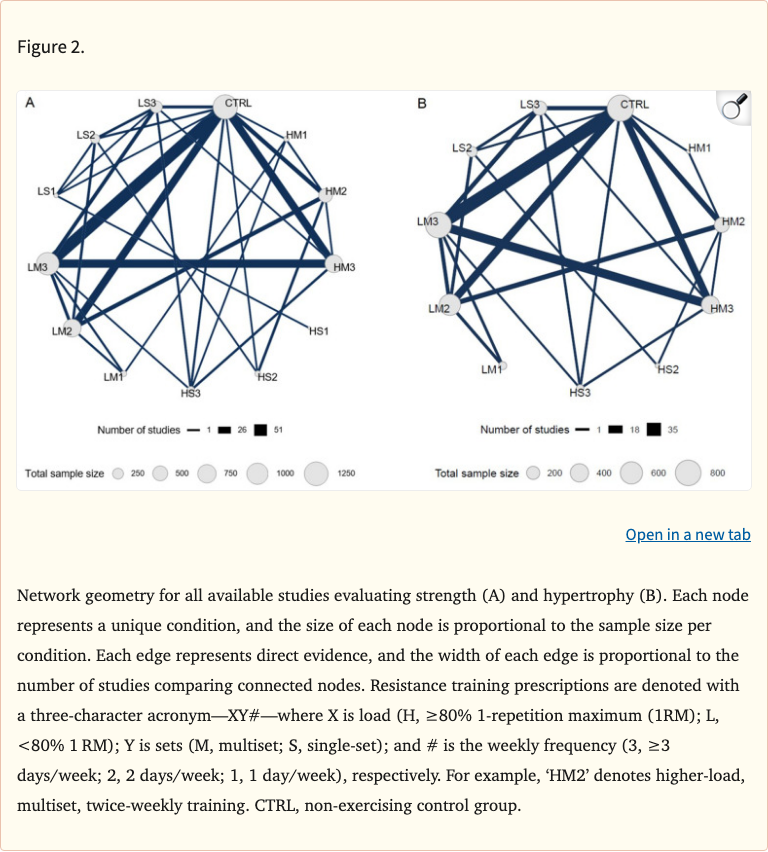 Figure 1
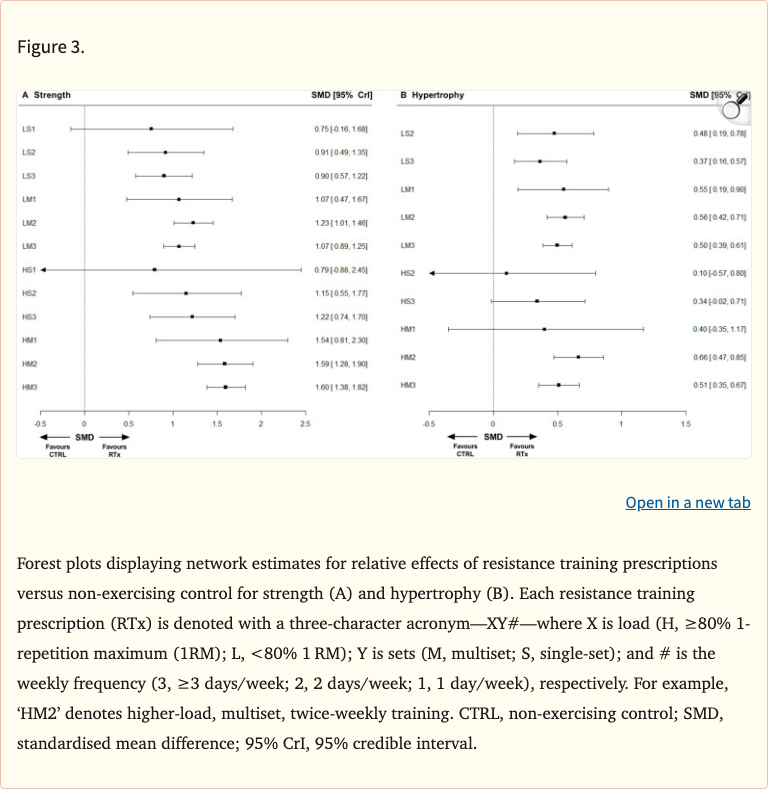 Figure 2
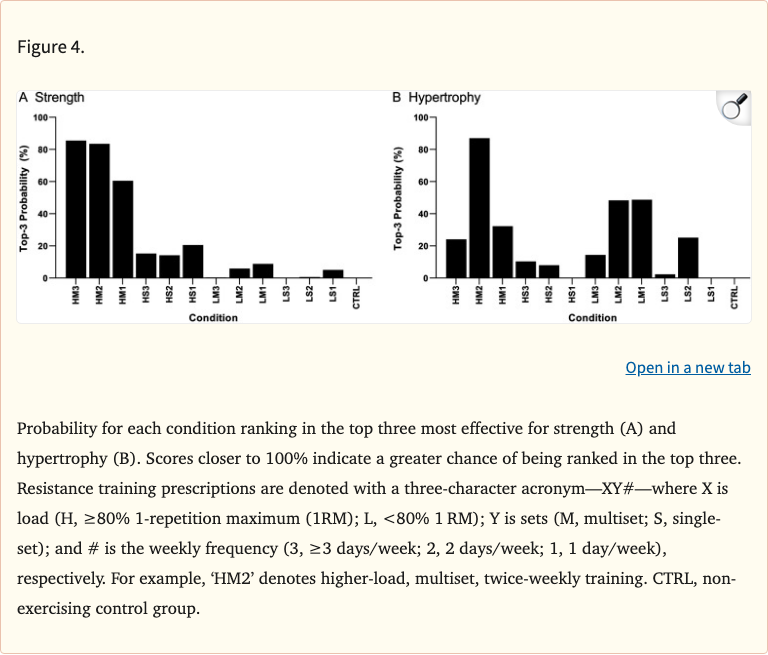 Figure 3
Limitations
- Network meta-analysis relies on indirect comparisons between some training conditions
- Heterogeneity in study designs, populations, and outcome measures
- Most included studies were of short to moderate duration (8-16 weeks)
- Predominantly young, healthy, male participants in the literature
- Could not fully account for training status (novice vs. trained) in all analyses
- Bodyweight training was not isolated as a separate category; findings inferred from lower-load training data
