
Key Takeaway
Body mass-based resistance training produced muscle hypertrophy comparable to free weight training in the quadriceps and additionally decreased intramuscular fat, suggesting unique body composition benefits beyond traditional weight training.
Summary
This randomized controlled trial compared the effects of free weight training versus body mass-based resistance training on thigh muscle size, strength, and intramuscular fat (IMF) in 42 healthy young and middle-aged adults. Participants were assigned to either a free weight group (using dumbbells and barbells) or a body mass-based group (using progressive bodyweight exercises).
Both groups trained the lower body twice per week for 8 weeks. Muscle cross-sectional area (CSA) was measured via MRI, maximal voluntary contraction (MVC) assessed knee extension strength, and intramuscular fat content was quantified using fat-water MRI sequences.
Both training modalities produced significant and comparable increases in quadriceps muscle CSA and knee extension MVC. Notably, the body mass-based group showed a significant decrease in intramuscular fat content that was not observed in the free weight group. This finding suggests that bodyweight training may offer a unique advantage for improving muscle quality (the ratio of contractile tissue to fat within the muscle), which has implications for metabolic health and functional capacity, particularly in aging populations.
Methods
- 42 healthy young and middle-aged adults randomized to free weight (n=21) or body mass-based resistance training (n=21)
- 8-week training program, 2 sessions per week targeting the lower body
- Body mass-based exercises progressed through squat, split squat, and single-leg squat variations
- Free weight group used dumbbells and barbells with progressive loading
- Outcomes: quadriceps muscle CSA (MRI), knee extension MVC, intramuscular fat content (fat-water MRI)
Key Results
- Both groups showed significant increases in quadriceps muscle CSA (no significant between-group difference)
- Both groups significantly improved knee extension MVC (no significant between-group difference)
- Body mass-based group showed significant decreases in intramuscular fat content; free weight group did not
- The reduction in intramuscular fat suggests improved muscle quality with bodyweight training
Figures
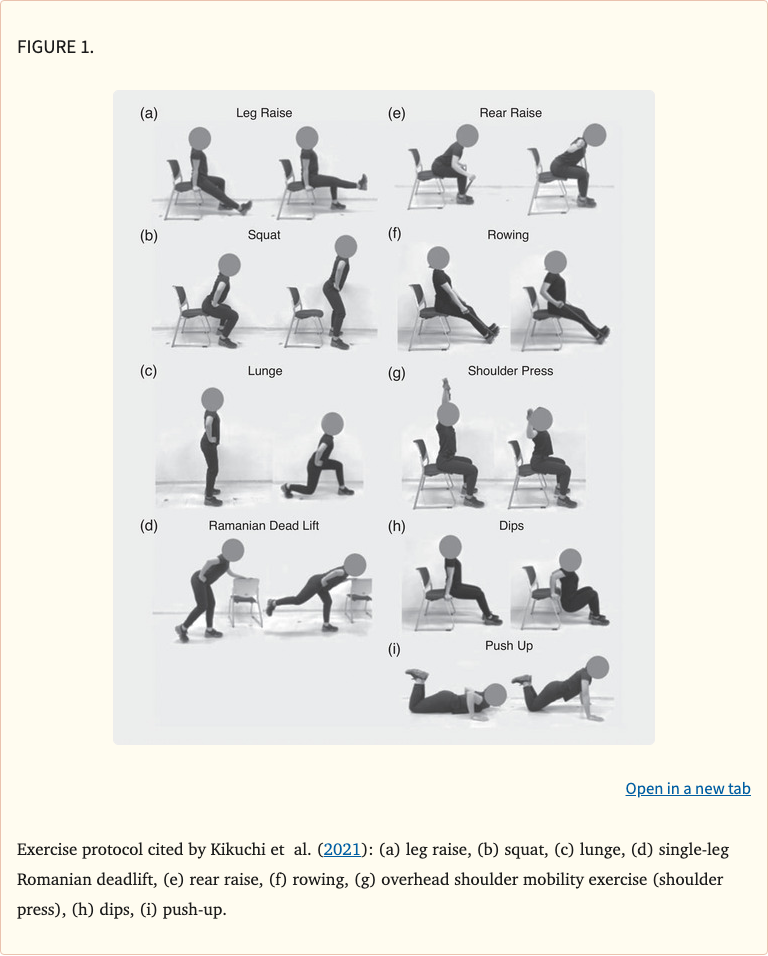 Figure 1
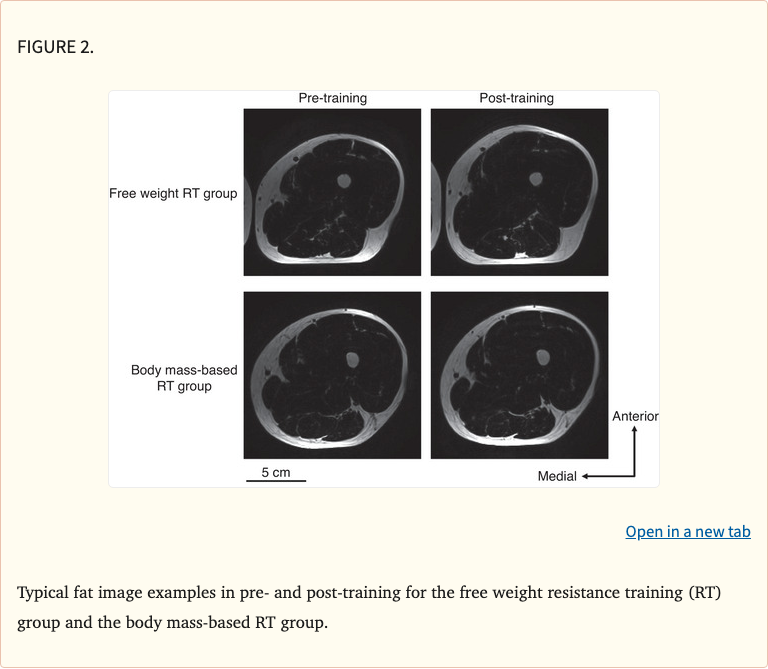 Figure 2
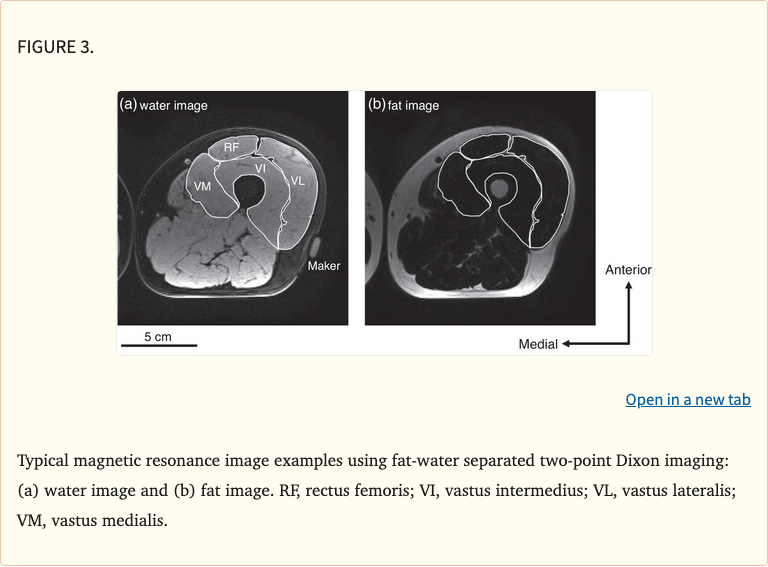 Figure 3
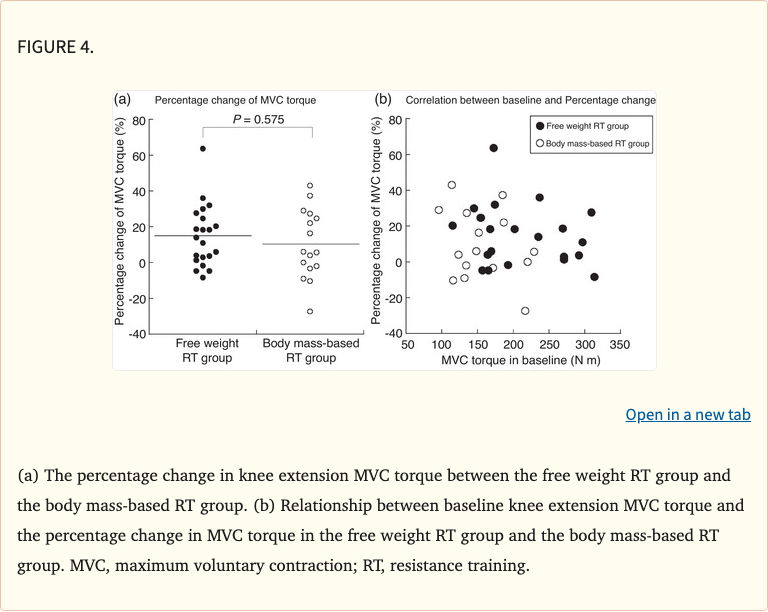 Figure 4
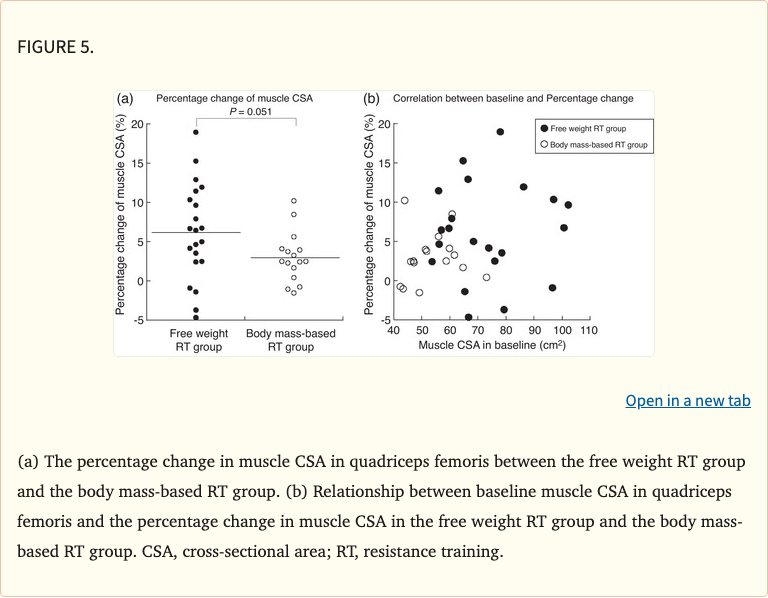 Figure 5
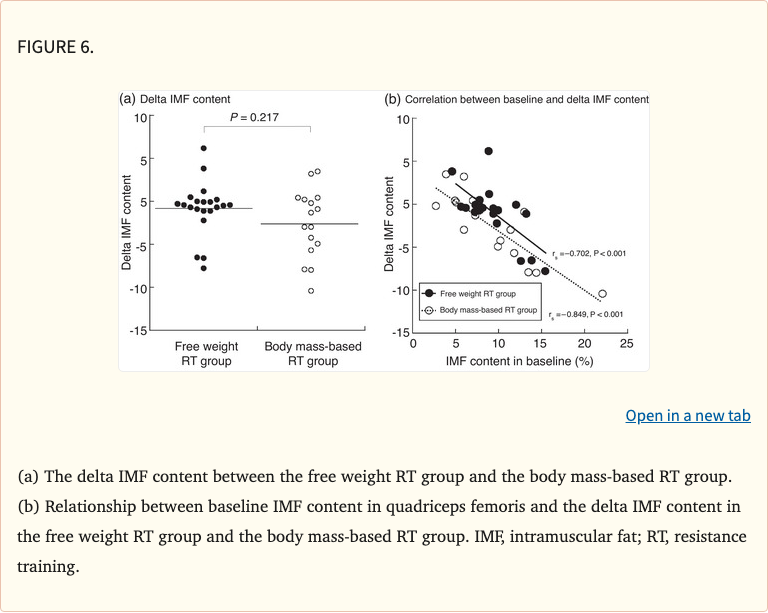 Figure 6
Limitations
- Moderate sample size (n=42)
- 8-week duration may be too short to detect longer-term differences in hypertrophy
- Only lower body muscles assessed
- Did not control for dietary intake or physical activity outside the study
- Mechanism for differential intramuscular fat changes was not fully elucidated