
Key Takeaway
Progressive bodyweight squat training produced comparable strength and muscle hypertrophy gains to barbell back squats in sedentary young women, though barbell training was more effective for reducing body fat.
Summary
This randomized controlled trial compared 8 weeks of progressive bodyweight squat training versus barbell back squat training in 30 sedentary young women. Participants were assigned to either a bodyweight squat group (progressing through single-leg and plyometric variations) or a barbell back squat group (progressing load from 40% to 80% 1RM).
Both groups trained 3 times per week for 8 weeks. Muscle thickness of the quadriceps was measured via ultrasound, isokinetic peak torque assessed knee extensor strength, and body composition was evaluated using bioelectrical impedance analysis.
Results showed that both groups achieved significant and comparable increases in quadriceps muscle thickness and isokinetic strength. However, the barbell group showed significantly greater reductions in body fat percentage compared to the bodyweight group. The study suggests that progressive bodyweight squat training is a viable alternative to barbell training for building lower-body strength and muscle size, particularly for beginners or those without gym access.
Methods
- 30 sedentary young women randomized to bodyweight squat (n=15) or barbell back squat (n=15) groups
- 8-week training program, 3 sessions per week
- Bodyweight group progressed through bilateral squats, split squats, single-leg squats, and plyometric variations
- Barbell group progressed load from 40% to 80% 1RM
- Outcomes: quadriceps muscle thickness (ultrasound), isokinetic peak torque, body fat percentage (BIA)
Key Results
- Both groups significantly increased quadriceps muscle thickness (no significant between-group difference)
- Both groups significantly improved isokinetic knee extension peak torque (no significant between-group difference)
- Barbell group showed significantly greater body fat reduction than bodyweight group
- Perceived exertion and movement quality scores were similar between groups
Figures
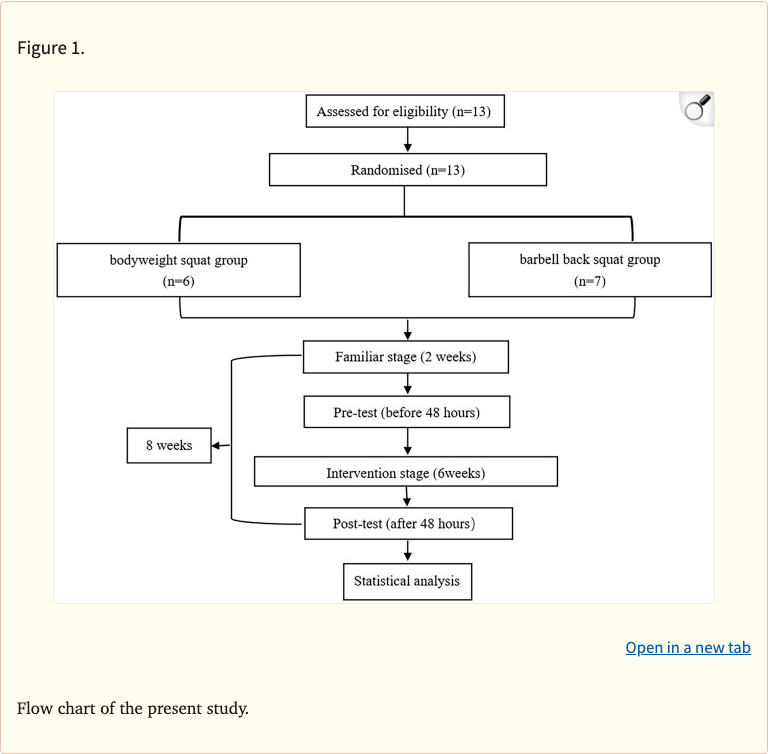 Figure 1
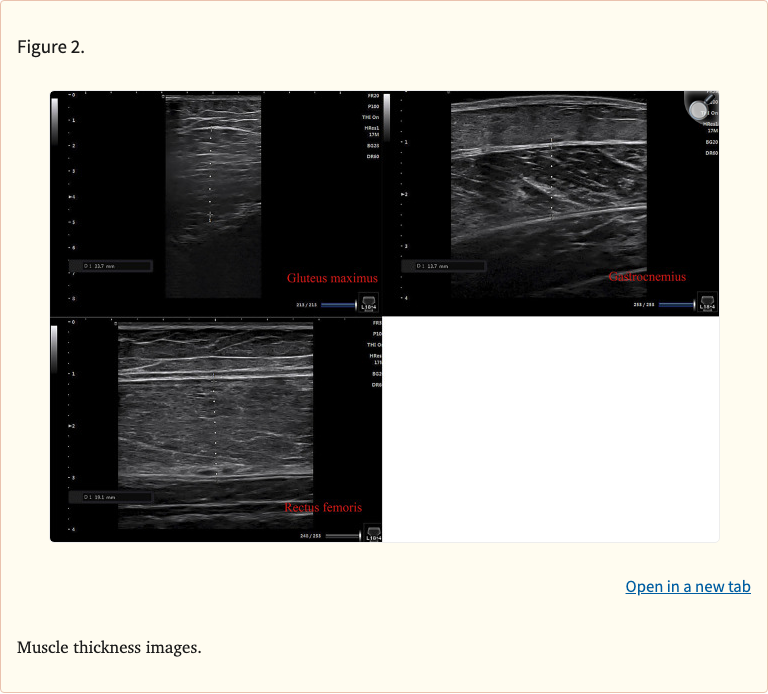 Figure 2
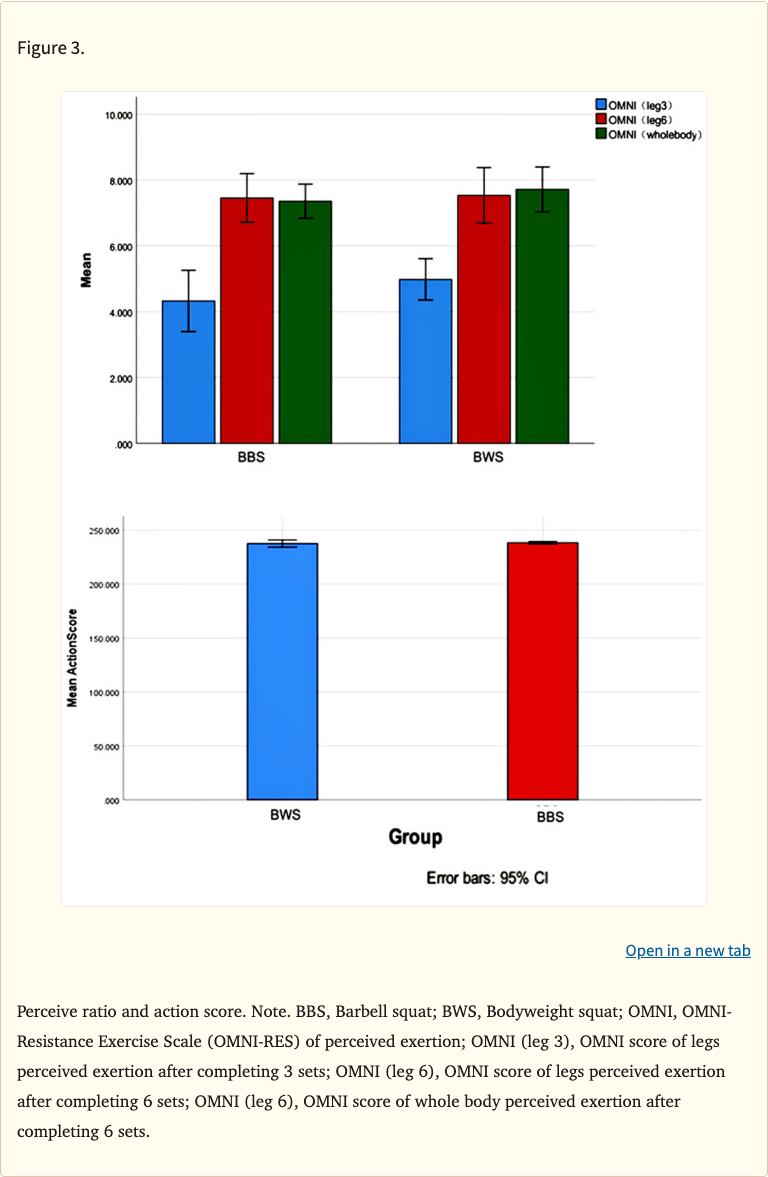 Figure 3
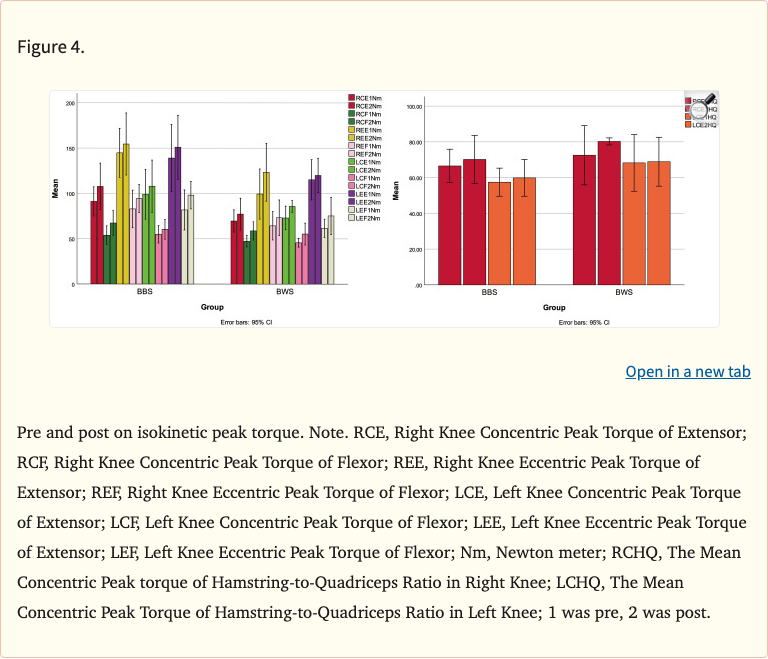 Figure 4
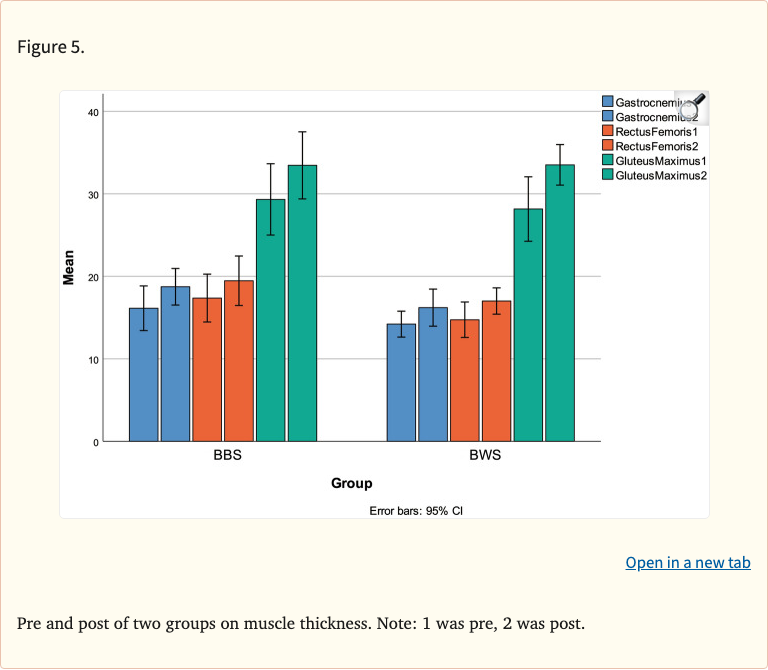 Figure 5
Limitations
- Small sample size (n=30)
- Only sedentary young women studied, limiting generalizability
- Short 8-week duration may not capture longer-term divergence between modalities
- Body composition measured via BIA rather than more precise methods (DXA, MRI)
- Did not control for dietary intake