Key Takeaway
Comprehensive NEJM review concluding that intermittent fasting improves health indicators and may slow aging processes through metabolic switching and cellular stress resistance.
Summary
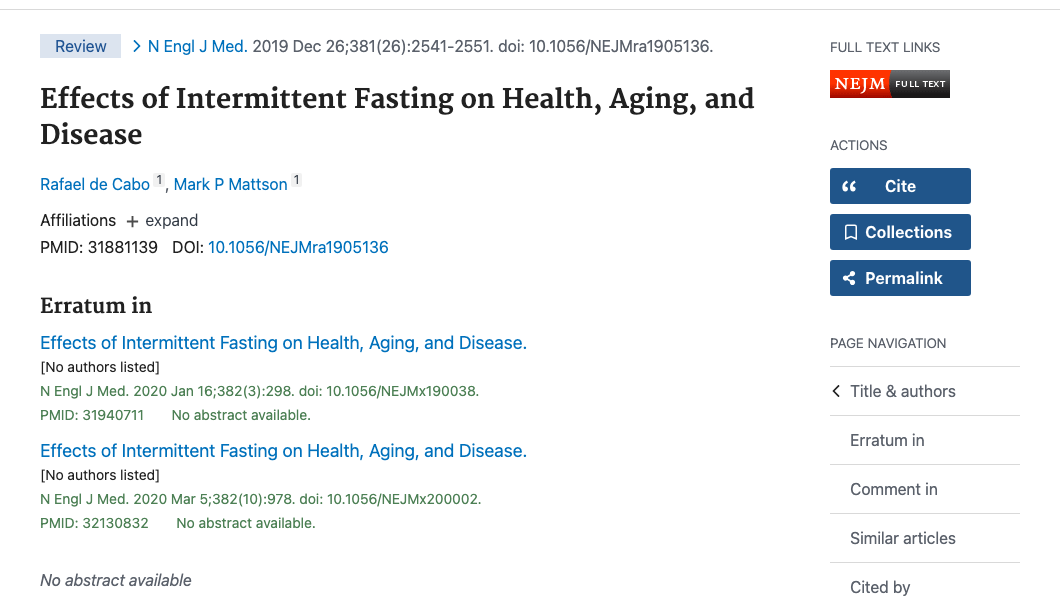
This authoritative review in the New England Journal of Medicine synthesized the evidence for intermittent fasting's effects on health and aging. Written by leading researchers from the National Institute on Aging and Johns Hopkins, it provided mainstream medical credibility to fasting interventions.
The authors propose that "metabolic switching" - the shift from glucose to ketone utilization during fasting - triggers cellular adaptations that improve glucose regulation, increase stress resistance, and suppress inflammation. These effects may underlie the observed benefits in animal models and preliminary human studies.
The review concludes that while more research is needed, existing evidence supports intermittent fasting as a legitimate health intervention worthy of clinical consideration.
Methods
- Comprehensive literature review
- Analysis of animal and human studies
- Focus on mechanisms and clinical implications
- Included time-restricted eating, alternate-day fasting, and periodic fasting
Key Results
Key findings from reviewed literature:
- Consistent improvements in glucose metabolism
- Reduced inflammation markers
- Enhanced cellular stress resistance
- Improved cardiovascular risk factors
- Potential benefits for brain health
- Weight loss when caloric intake is reduced
- Animal studies show lifespan extension
Limitations
- Review article, not original research
- Human studies smaller and shorter than animal studies
- Long-term human data limited
- Optimal fasting protocols not established
- Individual variation in response not well characterized
Related Interventions
Related Studies
Discussed In