Key Takeaway
Monthly 5-day fasting-mimicking diet cycles reduced biomarkers for aging, diabetes, cardiovascular disease, and cancer in humans without major adverse effects.
Summary
This study from Valter Longo's lab at USC tested whether periodic cycles of a fasting-mimicking diet (FMD) could reduce risk factors for age-related diseases in humans. The FMD provides specific nutrients while triggering fasting-like metabolic responses.
Three monthly cycles of the 5-day FMD reduced body weight, trunk fat, blood pressure, and IGF-1 (a growth factor associated with aging and cancer risk). Effects were most pronounced in participants who started with elevated risk factors.
This study helped establish periodic extended fasting (or fasting-mimicking) as a potential intervention for healthspan and disease prevention.
Methods
- 71 participants randomized to FMD or normal diet
- FMD group: 3 monthly cycles of 5-day fasting-mimicking diet (~750-1100 cal/day)
- Control group: normal diet
- Biomarkers measured at baseline and after 3 months
- Mouse studies for mechanistic insights
Key Results
- Body weight: -3.0% reduction
- Trunk fat: Significant reduction
- Blood pressure: Systolic reduced by 4.5 mmHg
- IGF-1: Significant reduction (−11.8%)
- Fasting glucose: Reduced in those with elevated baseline
- No major adverse effects reported
- Benefits most pronounced in at-risk individuals
Figures
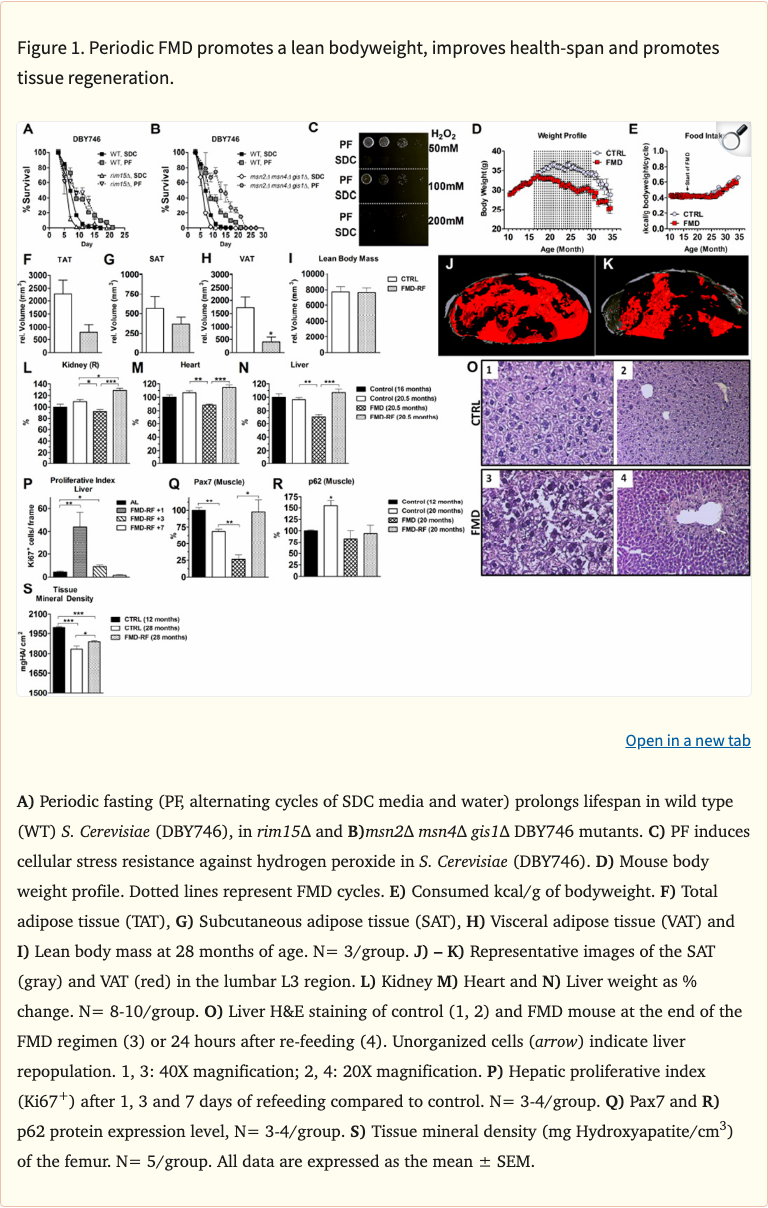 Figure 1
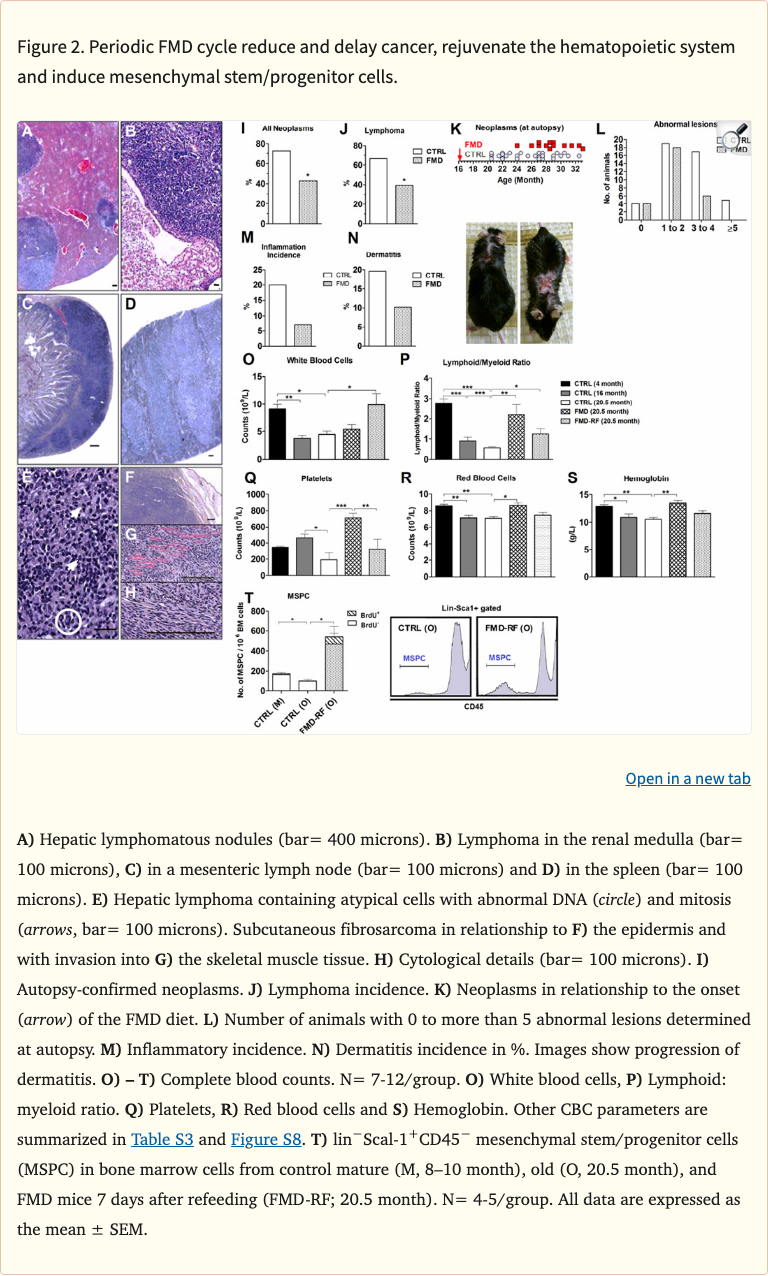 Figure 2
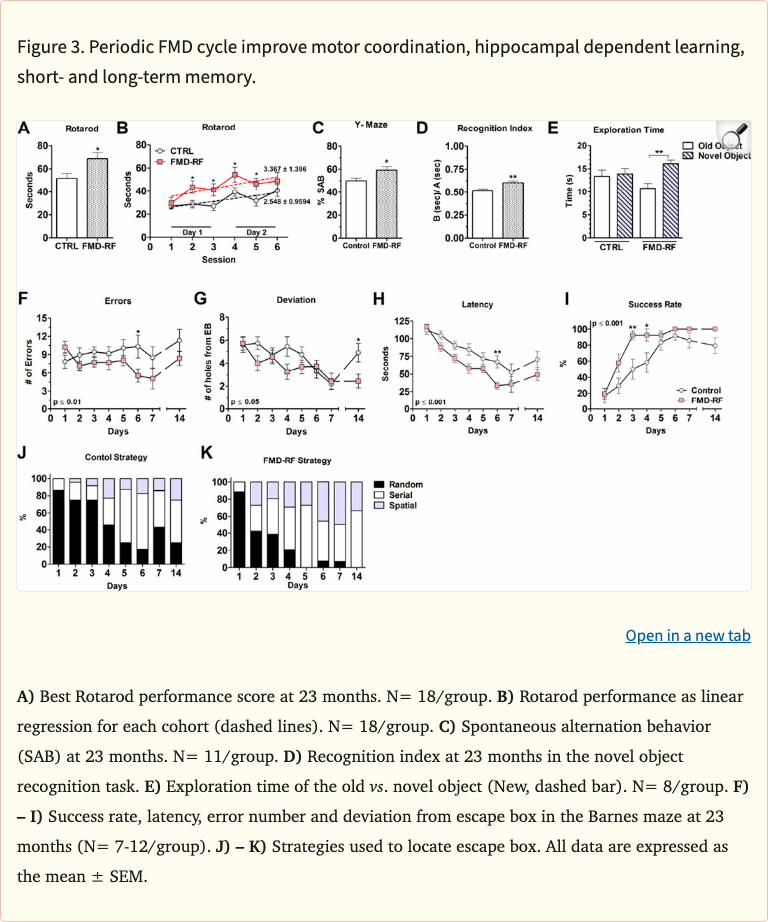 Figure 3
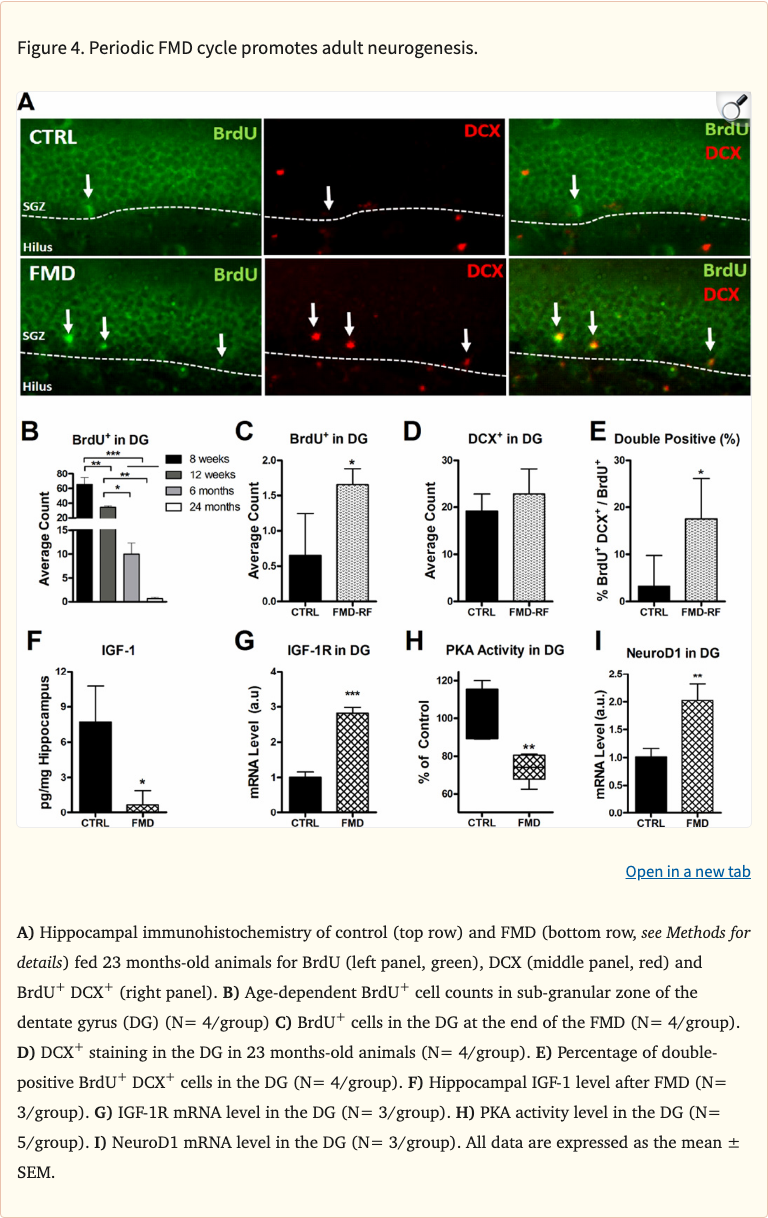 Figure 4
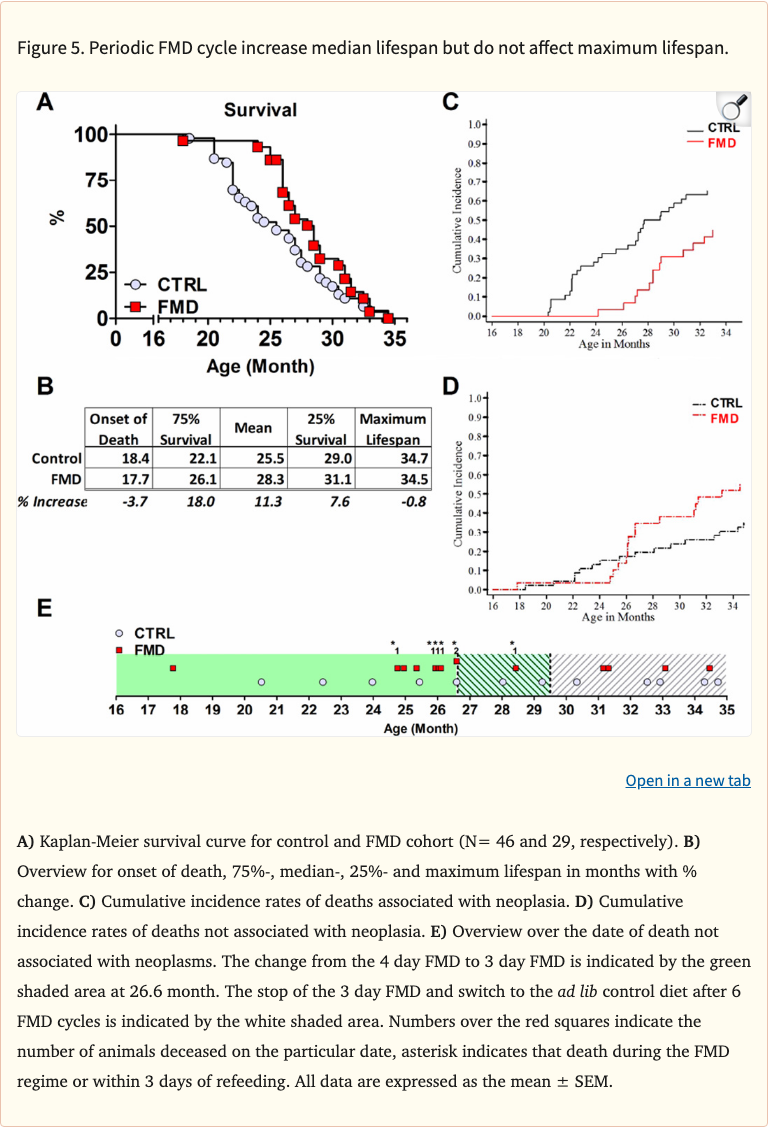 Figure 5
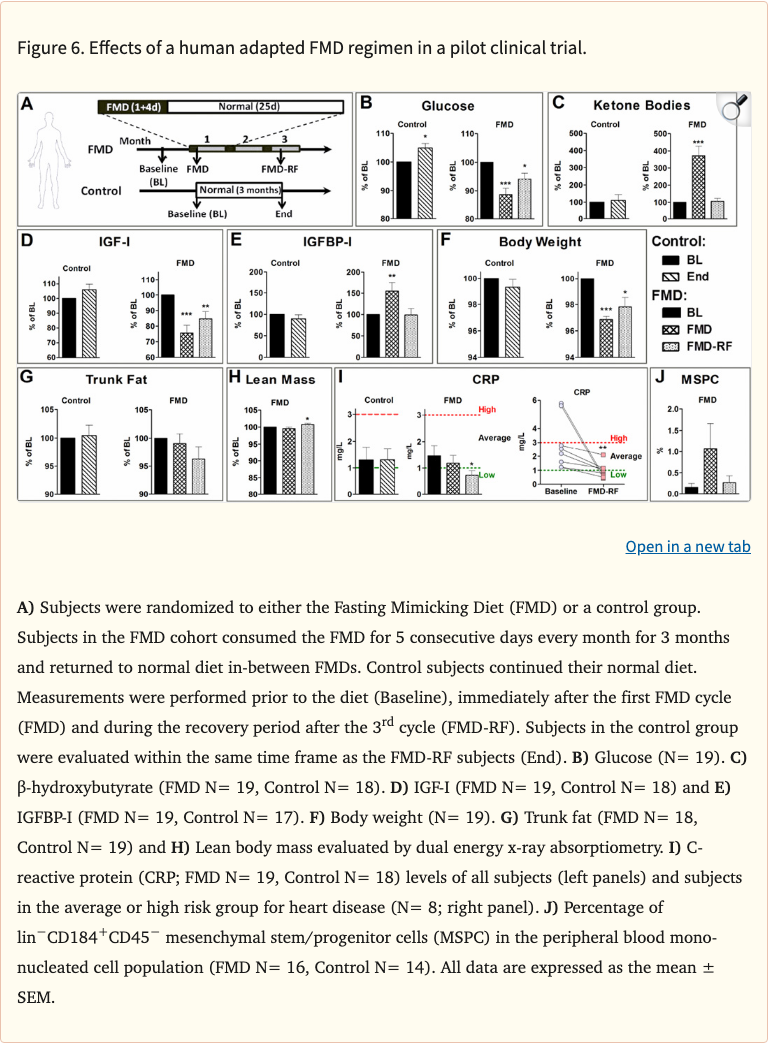 Figure 6
Limitations
- Small sample size (71 participants)
- Short duration (3 months)
- FMD is not true fasting (provides some calories)
- Long-term effects not studied
- Compliance challenges with diet restrictions
Related Interventions
Related Studies
Discussed In