Key Takeaway
Creatine supplementation during resistance training increased lean body mass by 1.14 kg, reduced body fat percentage by 0.88%, and reduced fat mass by 0.73 kg compared to training alone.
Summary
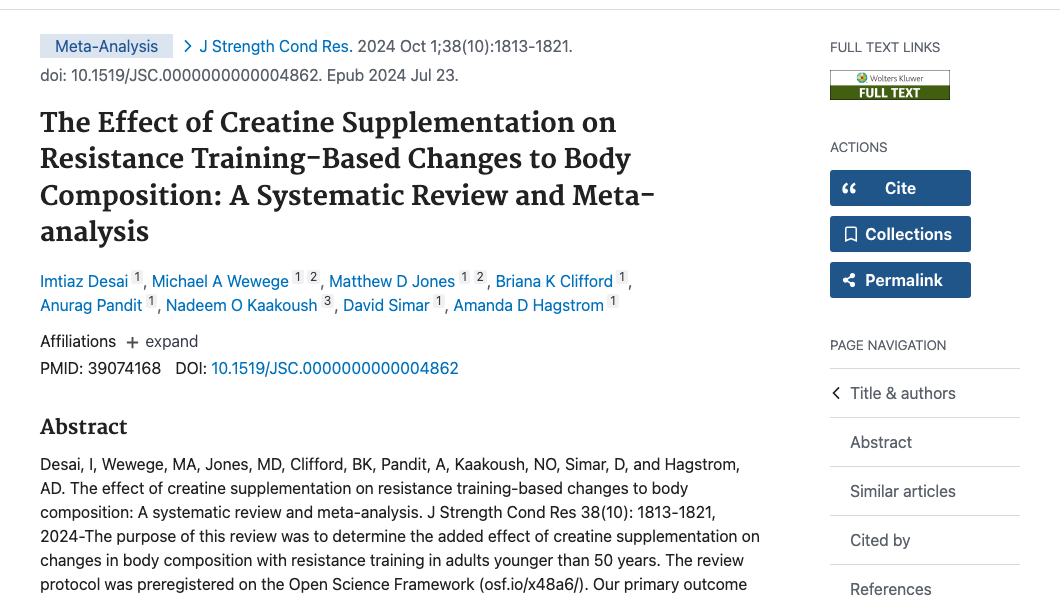
This systematic review and meta-analysis examined whether creatine supplementation provides additional body composition benefits beyond resistance training alone in adults under 50 years old. The review was preregistered and searched multiple databases, ultimately screening 1,694 records and including 12 studies in the quantitative analysis.
The meta-analysis found that creatine supplementation combined with resistance training significantly improved all three body composition outcomes compared to resistance training alone. Lean body mass increased by 1.14 kg, body fat percentage decreased by 0.88%, and body fat mass decreased by 0.73 kg. Subgroup analyses revealed no differences based on training status (trained vs. untrained) or concurrent carbohydrate ingestion.
The authors concluded that approximately 7 g or 0.3 g/kg body mass of creatine per day is likely sufficient to increase lean body mass by about 1 kg and reduce fat mass by about 0.7 kg more than resistance training alone. Concurrent carbohydrate intake did not enhance the hypertrophy benefits of creatine.
Methods
Systematic review and random-effects meta-analysis using the metafor package in R. Searched multiple databases and screened 1,694 records, with 67 full-text articles assessed for eligibility and 12 RCTs included. Risk of bias was assessed, with 52% low risk, 41% some concerns, and 7% high risk. Subgroup analyses examined training status and carbohydrate co-ingestion; meta-regression examined moderating effects of total training volume.
Key Results
Creatine supplementation with resistance training vs. resistance training alone: lean body mass increased by 1.14 kg (95% CI 0.69–1.59), body fat percentage decreased by 0.88% (95% CI -1.66 to -0.11), and body fat mass decreased by 0.73 kg (95% CI -1.34 to -0.11). No significant differences by training status or carbohydrate subgroups. Training volume was not associated with effect size.
Limitations
Only 12 studies met inclusion criteria, limiting statistical power for subgroup analyses. Restricted to adults under 50, so findings may not generalize to older populations. Most studies had short durations. Some heterogeneity in creatine dosing protocols across studies.
Related Interventions
Related Studies
Discussed In