Key Takeaway
Greater daytime light exposure, particularly in the morning, was associated with earlier sleep onset, reduced sleepiness, and better sleep timing in a real-world UK adult population.
Summary
This large-scale observational study examined how patterns of light exposure throughout the day relate to sleep timing and daytime sleepiness in UK adults going about their everyday lives. Using wearable light sensors and actigraphy, the researchers captured real-world light exposure patterns rather than relying on controlled laboratory conditions.
The study found that greater exposure to bright light during the daytime - especially during morning hours - was associated with earlier sleep onset at night, less daytime sleepiness, and more consistent sleep-wake timing. Conversely, greater light exposure in the evening was associated with later sleep timing and increased sleepiness the following day.
Published in PNAS, these findings provide strong ecological evidence that the timing and intensity of light exposure in everyday life meaningfully shapes circadian function and sleep behavior. The results reinforce the importance of maximizing morning and daytime light while minimizing evening light exposure for optimal sleep health.
Methods
- Observational cohort study of UK adults in real-world conditions
- Participants wore wrist-mounted light sensors and actigraphy devices for multiple days
- Light exposure measured continuously across the 24-hour cycle
- Sleep timing derived from actigraphy data (sleep onset, wake time, duration)
- Sleepiness assessed via validated self-report scales
- Statistical models controlled for age, sex, season, and other confounders
- Analyzed associations between light exposure at different times of day and sleep outcomes
Key Results
- Greater daytime light exposure was significantly associated with earlier sleep onset
- Morning light exposure showed the strongest association with improved sleep timing
- Higher daytime light linked to reduced daytime sleepiness
- Evening light exposure was associated with delayed sleep timing and increased next-day sleepiness
- Associations held after controlling for age, sex, season, and other demographic factors
- Effects were observed across a broad range of everyday light conditions
Figures
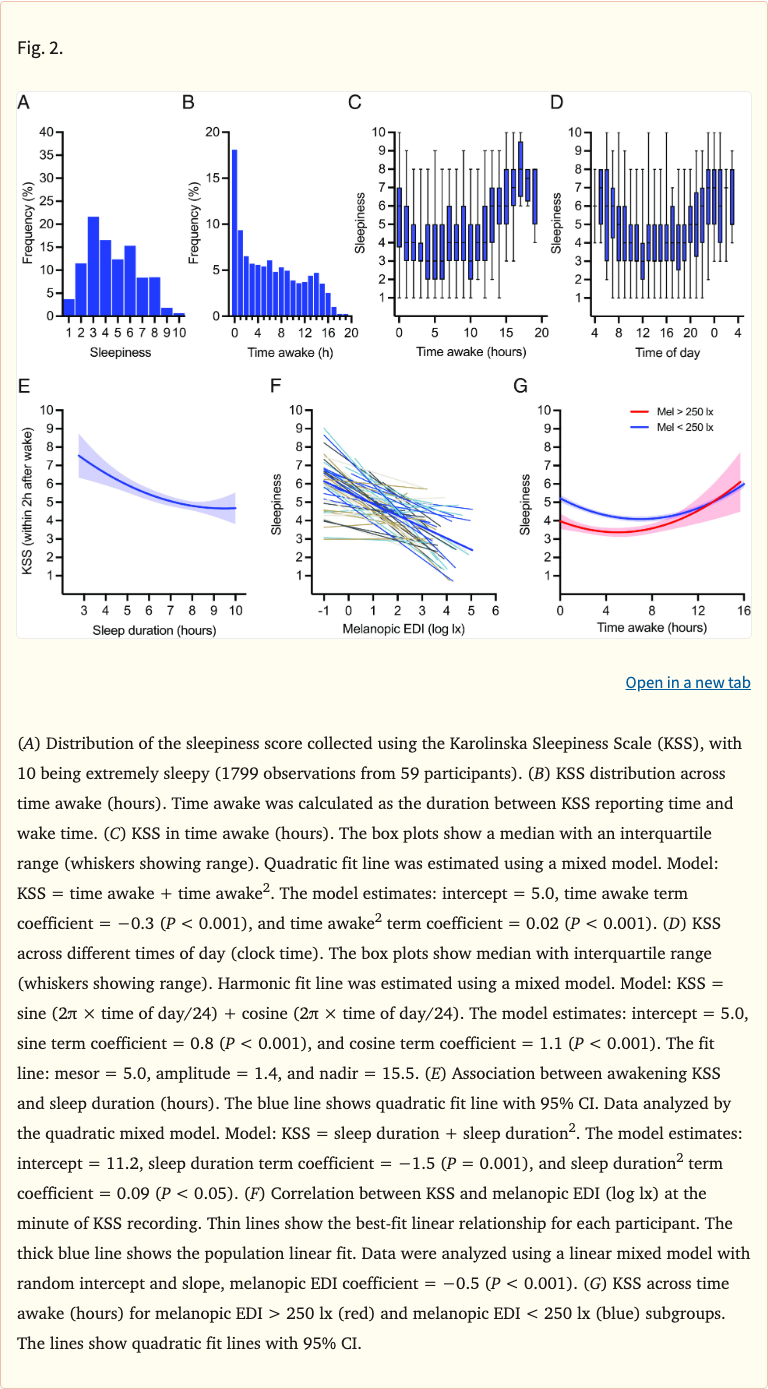 Figure 1
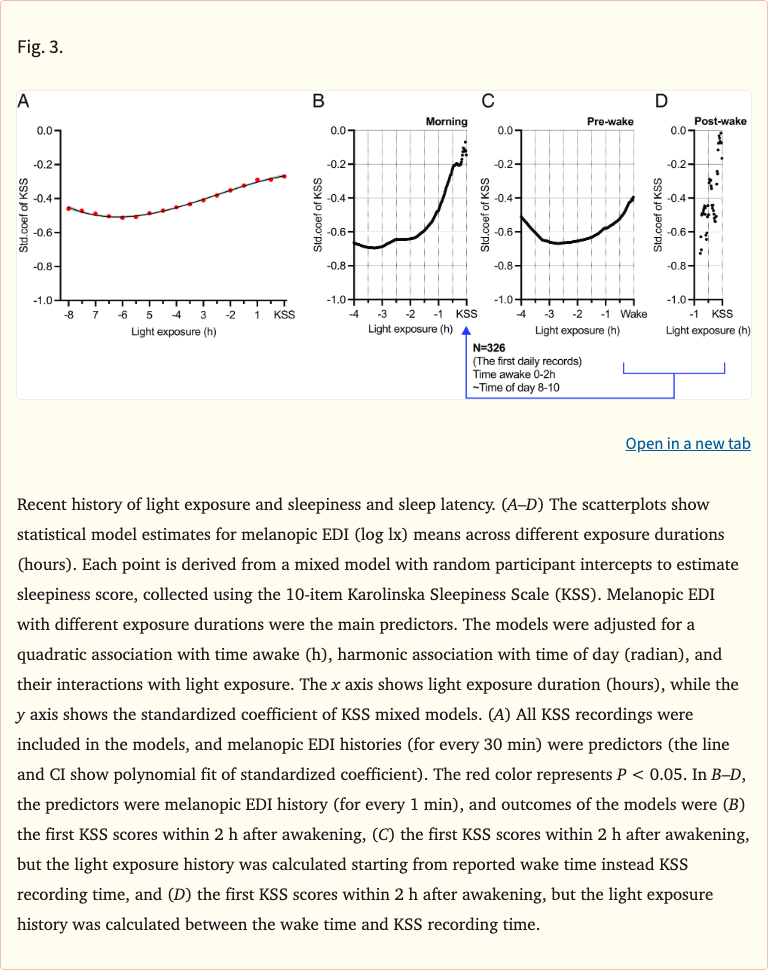 Figure 2
Limitations
- Observational design cannot establish causation - people with better sleep may simply go outside more
- Wrist-worn light sensors may not perfectly capture retinal light exposure
- UK-based sample may not generalize to populations at different latitudes or climates
- Self-reported sleepiness is subjective and prone to individual interpretation
- Could not fully account for all lifestyle factors (exercise, caffeine, screen use) that affect sleep
- Cross-sectional associations may not reflect long-term effects
Related Interventions
Related Studies
Discussed In