
Key Takeaway
Eight weeks of autogenic training significantly reduced migraine frequency and altered brain activation patterns in fear-processing regions, suggesting neuroplastic mechanisms underlying clinical improvement.
Summary
This randomized controlled trial investigated whether regular autogenic training (AT) practice could reduce migraine frequency and whether clinical improvements correlated with measurable changes in brain activity. Migraine patients were randomly assigned to an 8-week AT intervention or a waitlist control group, with functional MRI (fMRI) scans conducted before and after the intervention period.
Participants in the AT group experienced a significant reduction in monthly migraine days compared to controls. The fMRI data revealed that AT practice was associated with altered brain activation in response to fearful visual stimuli, particularly in regions involved in emotional processing and autonomic regulation, including the amygdala, insula, and prefrontal cortex. These neural changes correlated with the degree of clinical improvement.
The findings provide neuroimaging evidence that autogenic training may work partly by modulating the brain fear and stress-response circuitry, which is thought to play a role in migraine pathophysiology. The study supports AT as a non-pharmacological intervention for migraine prevention, with measurable effects on both clinical outcomes and underlying neural mechanisms.
Figures
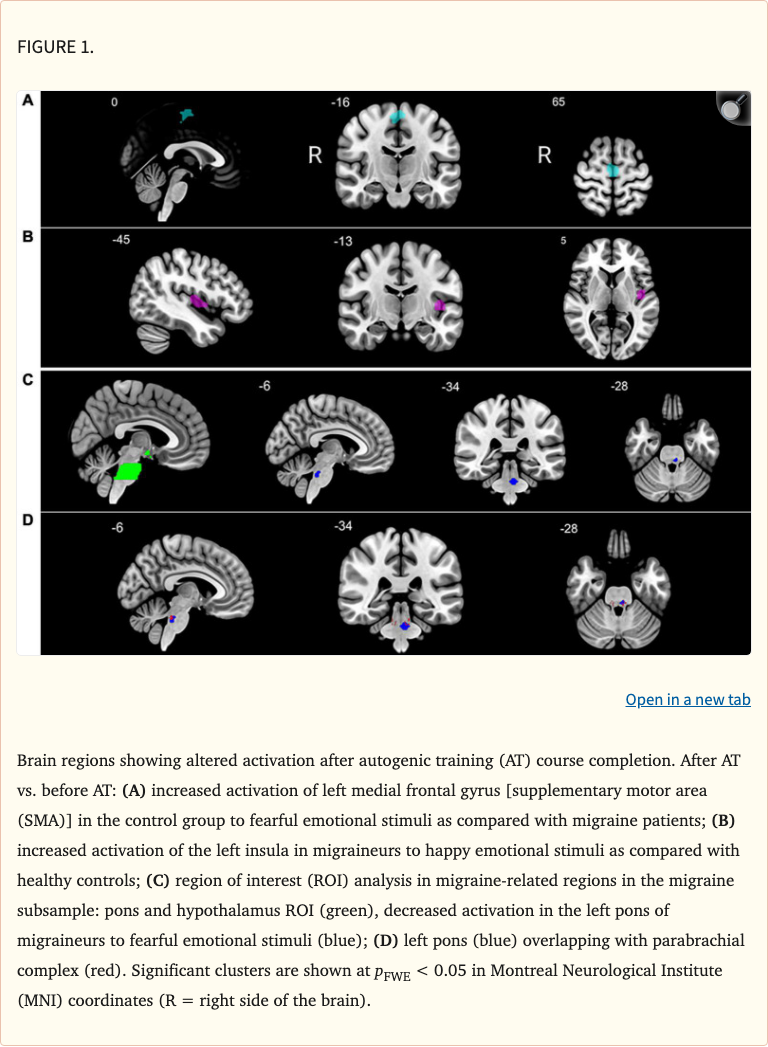 Figure 1
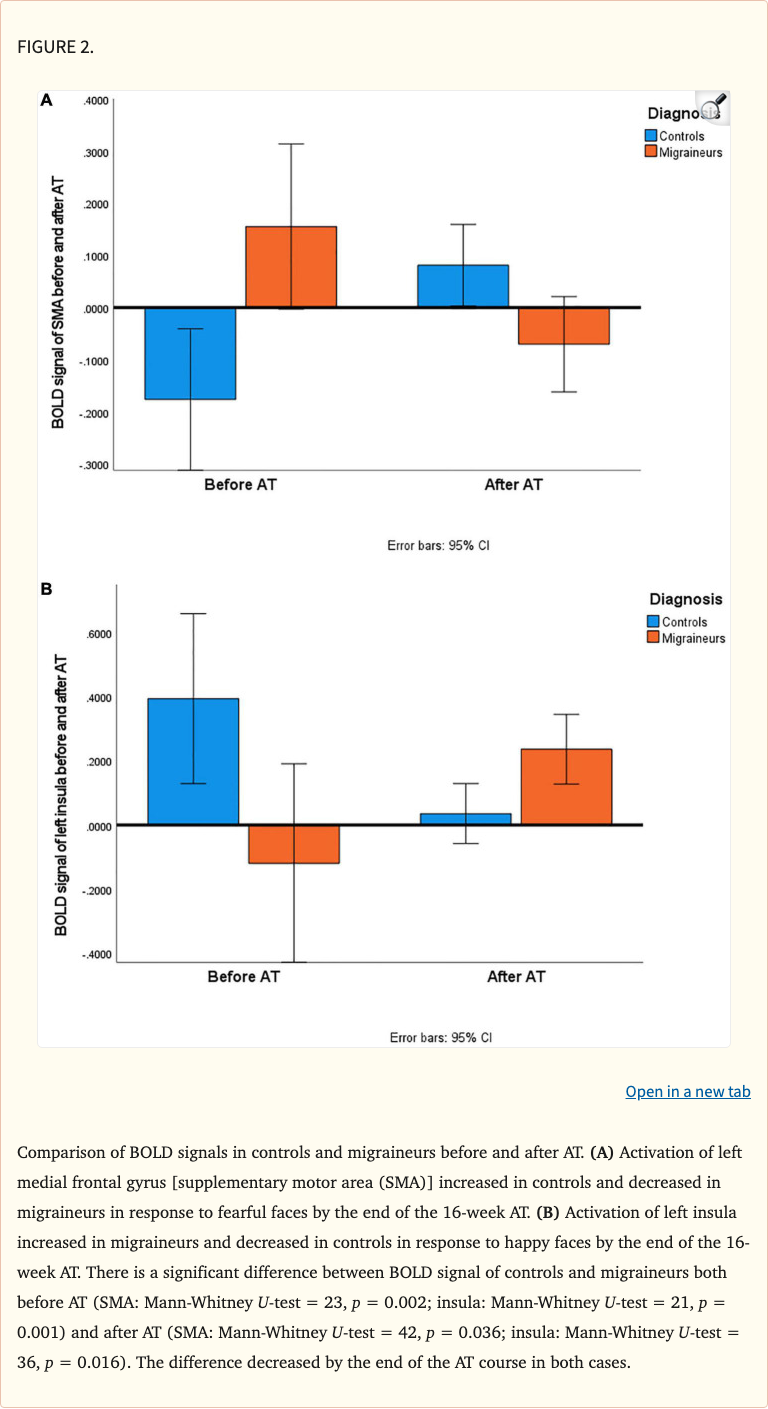 Figure 2