
Key Takeaway
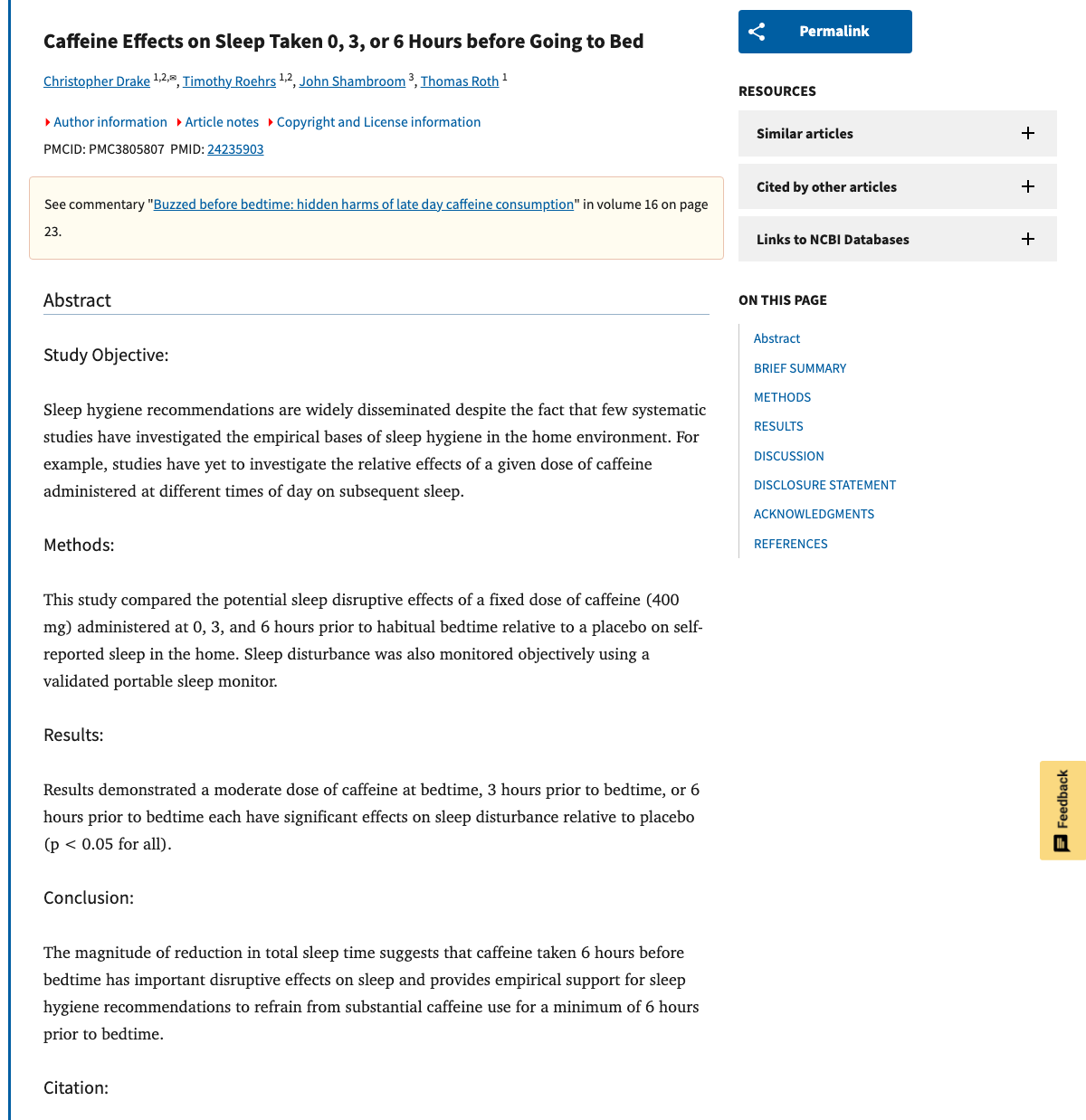
Caffeine consumed even 6 hours before bed significantly disrupted sleep, reducing total sleep time by over 1 hour and supporting delayed morning caffeine timing.
Summary
This double-blind study examined how caffeine timing affects sleep quality.
Results showed that 400mg caffeine (about 2 cups of coffee) disrupted sleep even when consumed 6 hours before bed, providing scientific basis for limiting caffeine to morning hours.
Methods
- Double-blind placebo-controlled
- 12 healthy adults
- Caffeine at 0, 3, or 6 hours before bed
- Sleep monitor measurements
Key Results
- 6-hour caffeine reduced sleep 1+ hour
- Disrupted sleep architecture
- Individual sensitivity varies
- Morning caffeine safest
Limitations
- Small sample size
- Single dose tested
- Young healthy adults only
Related Studies
Discussed In

Optimal Nutrition & Supplementation for Fitness
Huberman Lab
Using Caffeine to Optimize Mental & Physical Performance
Huberman Lab
Dr. Matthew Walker: The Science & Practice of Perfecting Your Sleep
Huberman Lab

#107 Why You Can't Sleep (and How to Fix It) | Dr. Michael Grandner
FoundMyFitness
#103 A Deep Dive on Using Coffee For Health & Longevity (Full Guide & Research)
FoundMyFitness
#096 How to Improve Metabolic Health with HIIT, Circadian-Timed Eating, & Sleep
FoundMyFitness
#065 Dr. Satchin Panda on Circadian Insights into Exercise Timing, Melatonin Biology, and Peak Cognition
FoundMyFitness

Andy Galpin — Rebooting Tim's Sleep, Nutrition, Supplements, and Training
The Tim Ferriss Show
Dr. Matthew Walker — How Sleep Ties Into Alzheimer's and Weight Gain, Effects of Caffeine, THC/CBD, and Fasting on Sleep
The Tim Ferriss Show
#045 Dr. Matthew Walker on Sleep for Enhancing Learning, Creativity, Immunity, and Glymphatic System
FoundMyFitness

221. How to optimize sleep
Paul Saladino MD Podcast
209. Why PEANUT BUTTER is one of the worst foods with Dave Asprey
Paul Saladino MD Podcast
The Best Vitality & Health Protocols | Dr. Rhonda Patrick
Huberman Lab