Key Takeaway
Bovine colostrum supplementation prevents exercise-induced increases in intestinal permeability by 2–3 fold, with 20 g/day for 14 days being the most commonly effective dose in athletes.
Summary
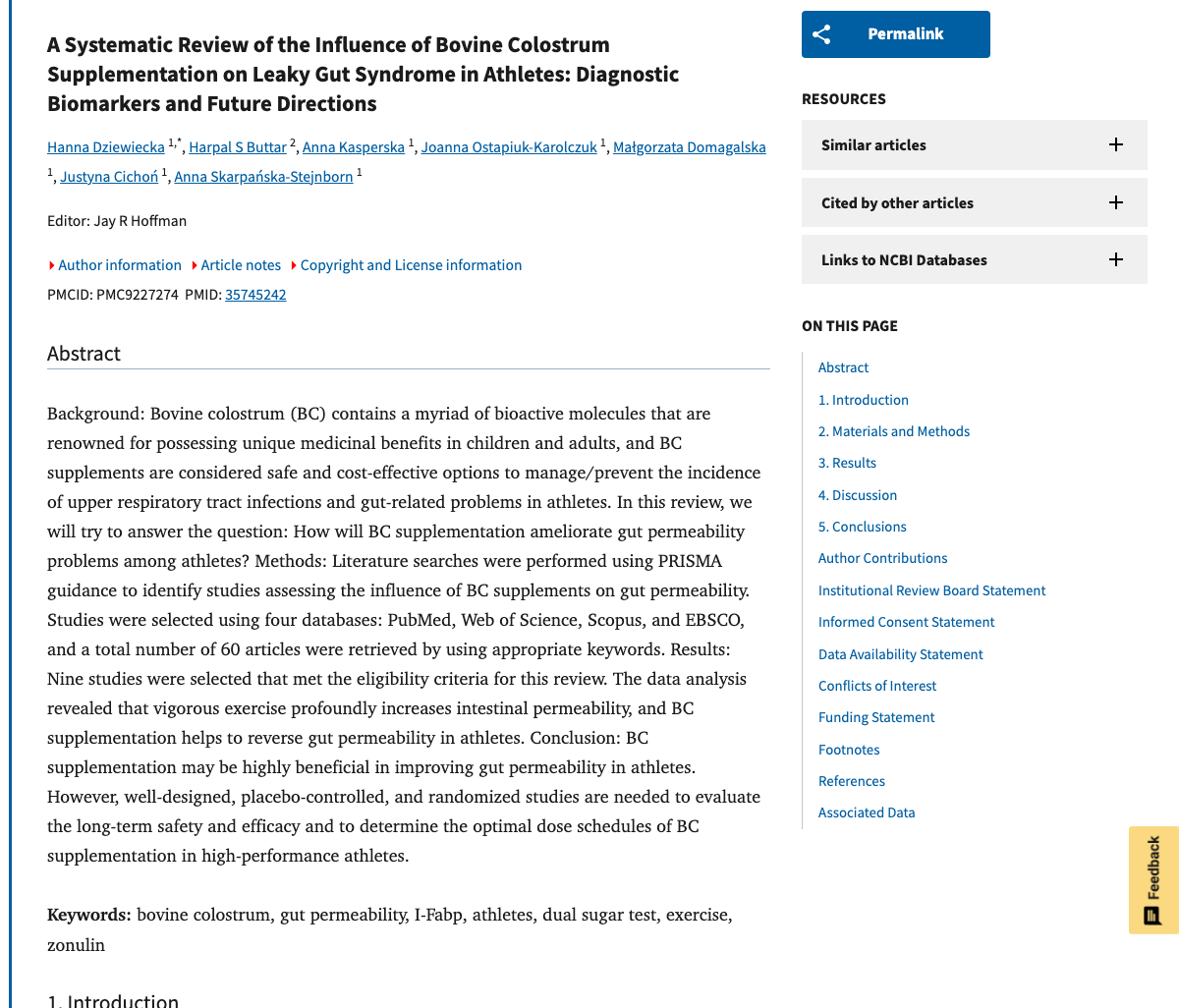
This systematic review examined the effects of bovine colostrum (BC) supplementation on leaky gut syndrome in athletes, focusing on diagnostic biomarkers such as intestinal permeability (IP), intestinal fatty acid-binding protein (I-FABP), and lipopolysaccharide (LPS). The authors searched multiple databases and identified studies involving athletes undergoing strenuous exercise, which is known to compromise gut barrier integrity.
The review found consistent evidence that BC supplementation attenuates exercise-induced increases in intestinal permeability. Most studies used a lactulose/rhamnose ratio test to measure IP and found that BC prevented the 2–3 fold increase in gut permeability typically seen after intense exercise. The most common effective dosing protocol was 20 g/day for 14 days prior to exercise testing. Growth factors (IGF-1, TGF-β) and immunoglobulins (IgG, IgA) in colostrum are proposed as the key bioactive components responsible for gut barrier protection.
The authors concluded that while the evidence supports BC as a promising intervention for exercise-induced leaky gut, more standardized research with consistent biomarkers and dosing protocols is needed. They highlighted I-FABP and zonulin as emerging biomarkers that could improve future study designs.
Methods
Systematic literature search across PubMed, Web of Science, and Scopus for studies examining bovine colostrum supplementation and intestinal permeability in athletes. Studies were screened using PRISMA guidelines and assessed for quality. Biomarkers evaluated included lactulose/rhamnose ratio, I-FABP, LPS, and zonulin.
Key Results
BC supplementation consistently prevented exercise-induced increases in intestinal permeability (measured by lactulose/rhamnose ratio) by approximately 2–3 fold compared to placebo. Effective dosing ranged from 10–60 g/day, with 20 g/day for 14 days being the most commonly studied protocol. Several studies also reported reductions in I-FABP and LPS levels, indicating improved gut barrier integrity and reduced endotoxemia.
Limitations
Heterogeneity in study designs, exercise protocols, and biomarker selection limited direct comparisons. Sample sizes were generally small. Most studies focused on male athletes, limiting generalizability. The review was qualitative rather than a formal meta-analysis, so no pooled effect sizes were calculated.