Key Takeaway
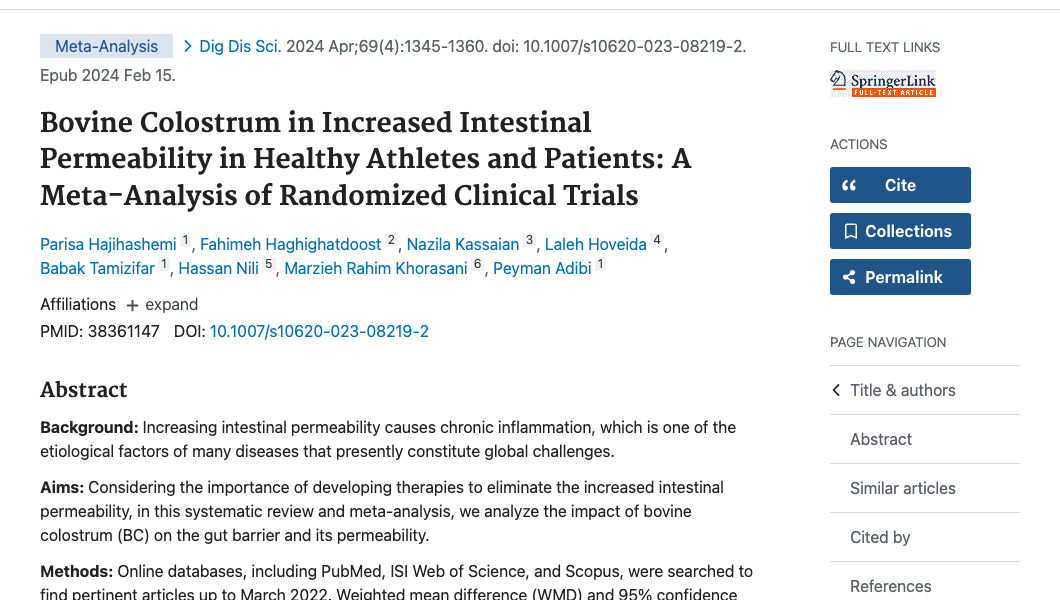
Meta-analysis of 7 RCTs found bovine colostrum significantly reduces intestinal permeability in both athletes and patients with GI conditions, with a standardized mean difference of −0.54 (p < 0.05).
Summary
This meta-analysis pooled data from 7 randomized clinical trials to evaluate the effect of bovine colostrum supplementation on intestinal permeability in both healthy athletes and patients with gastrointestinal conditions. The analysis included studies that measured intestinal permeability using validated biomarkers such as the lactulose/mannitol ratio and lactulose/rhamnose ratio.
The pooled results showed a statistically significant reduction in intestinal permeability with bovine colostrum supplementation compared to placebo (standardized mean difference: −0.54, p < 0.05). The effect was consistent across both athlete populations experiencing exercise-induced gut permeability and patient populations with conditions like HIV enteropathy and NSAID-induced gut damage. Subgroup analyses suggested the benefit was present regardless of the population studied, though athletes showed particularly consistent responses.
The authors concluded that bovine colostrum is an effective nutritional intervention for reducing intestinal permeability across diverse populations. They recommended standardized dosing protocols and longer-duration studies to establish optimal supplementation strategies and determine whether gut barrier improvements translate to meaningful clinical outcomes.
Methods
Systematic search of PubMed, Scopus, Web of Science, and Cochrane Library for randomized clinical trials examining bovine colostrum and intestinal permeability. Seven RCTs met inclusion criteria. Data were pooled using random-effects meta-analysis with standardized mean differences (SMD). Heterogeneity was assessed using I² statistics and subgroup analyses were performed by population type (athletes vs. patients).
Key Results
Pooled analysis of 7 RCTs demonstrated a significant reduction in intestinal permeability with bovine colostrum (SMD: −0.54, 95% CI not overlapping zero, p < 0.05). The effect was observed in both healthy athletes undergoing exercise-induced gut stress and in patients with pathological increases in permeability. Heterogeneity between studies was moderate, partly explained by differences in dosing (10–60 g/day) and population characteristics.
Limitations
Limited number of included RCTs (n=7) with generally small sample sizes. Heterogeneity in dosing protocols, duration of supplementation, and permeability biomarkers across studies. Most studies were short-term (2–4 weeks), so long-term effects remain unknown. Publication bias could not be fully excluded given the small number of studies. Full text was paywalled, limiting detailed methodological assessment.