
Key Takeaway
Melatonin shows benefits for sleep in children with neurodevelopmental and psychiatric disorders, though evidence quality varies by condition.
Summary
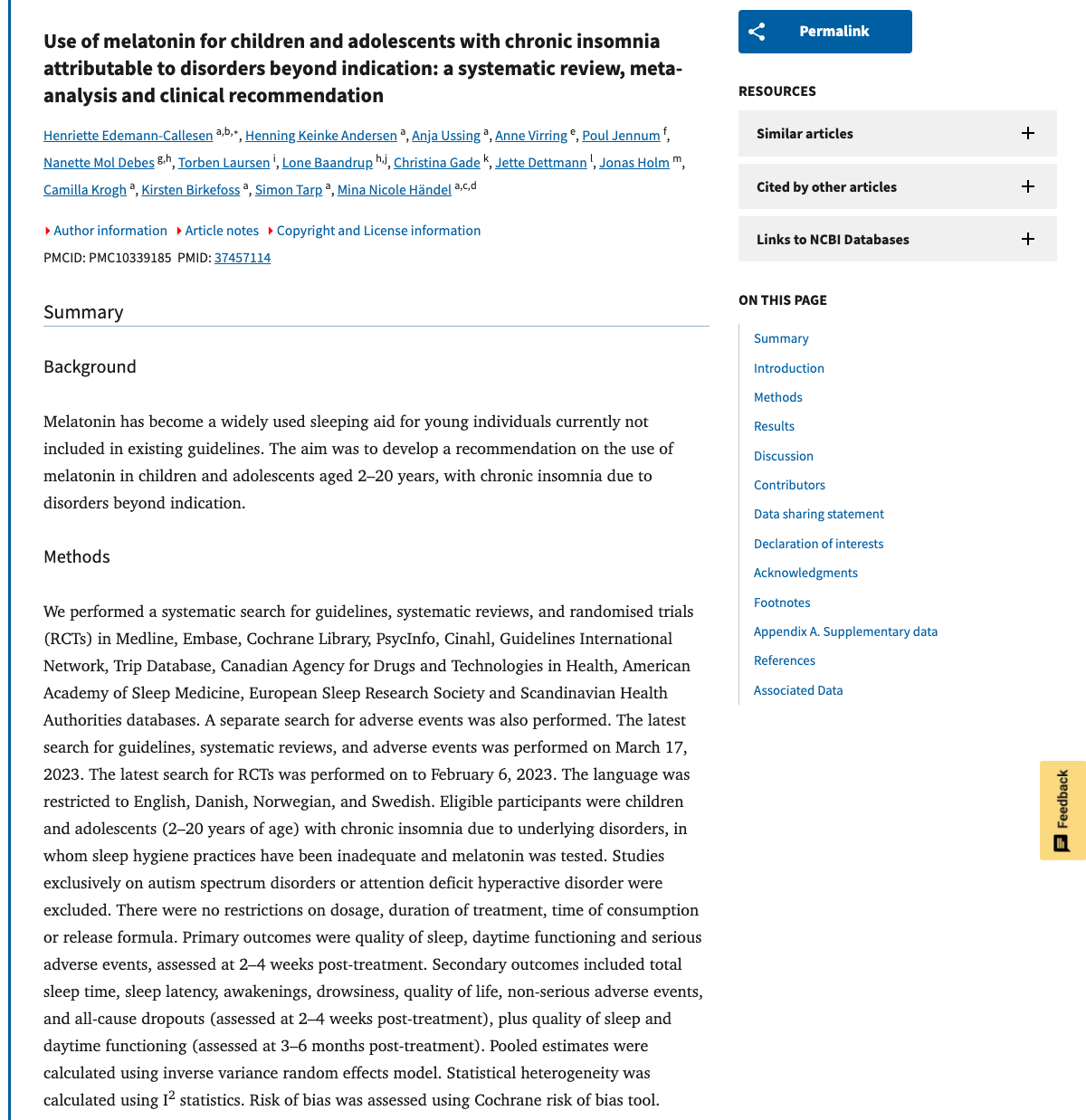
This systematic review and meta-analysis examined melatonin's efficacy for chronic insomnia in children and adolescents with underlying neurodevelopmental or psychiatric disorders, including autism spectrum disorder (ASD), ADHD, and other conditions.
The analysis pooled data from randomized controlled trials and found that melatonin improved sleep outcomes across multiple disorder categories. Children with ASD showed particularly consistent improvements in sleep onset latency and total sleep time. The evidence strength varied by condition, with stronger support for some populations than others.
The authors developed clinical recommendations acknowledging that melatonin may be especially valuable in these populations where behavioral interventions alone are often insufficient. They emphasized the importance of addressing the underlying disorder while using melatonin as an adjunctive treatment.
Methods
- Systematic review following PRISMA guidelines
- Comprehensive database search including PubMed, Embase, Cochrane Library
- Included RCTs of melatonin in children with disorders causing secondary insomnia
- Subgroup analyses by disorder type (ASD, ADHD, neurological conditions, etc.)
- Meta-analysis using random-effects models
- GRADE assessment for each disorder category
Key Results
- Improved sleep quality across most disorder categories
- Reduced sleep onset latency, particularly in ASD populations
- Increased total sleep time in several subgroups
- Evidence certainty varied from very low to moderate depending on disorder
- Favorable safety profile consistent with idiopathic insomnia studies
Figures
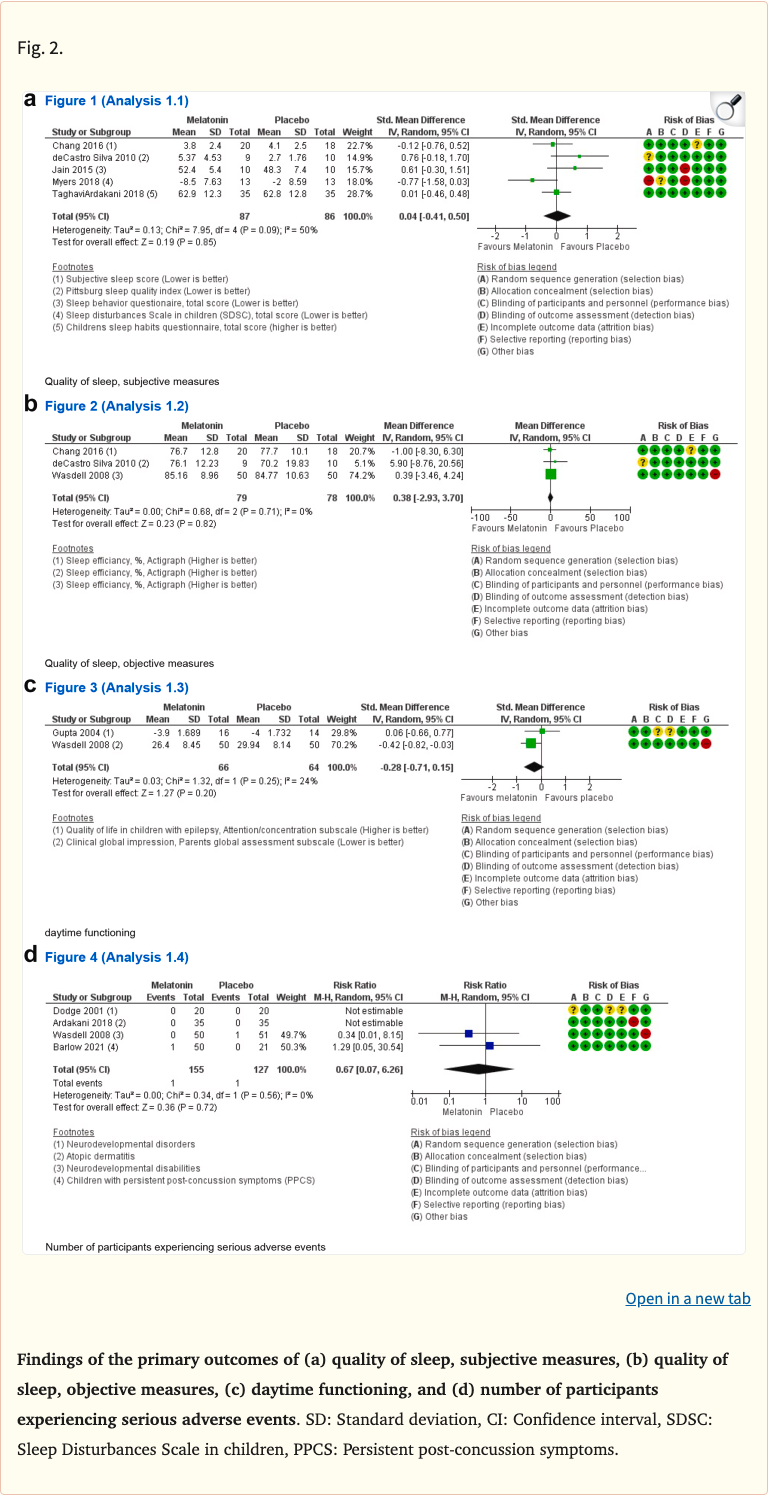 Figure 1
Limitations
- Heterogeneous patient populations
- Varying definitions of insomnia across studies
- Limited data for some disorder categories
- Short study durations in most trials
- Potential confounding from concurrent medications