
Key Takeaway
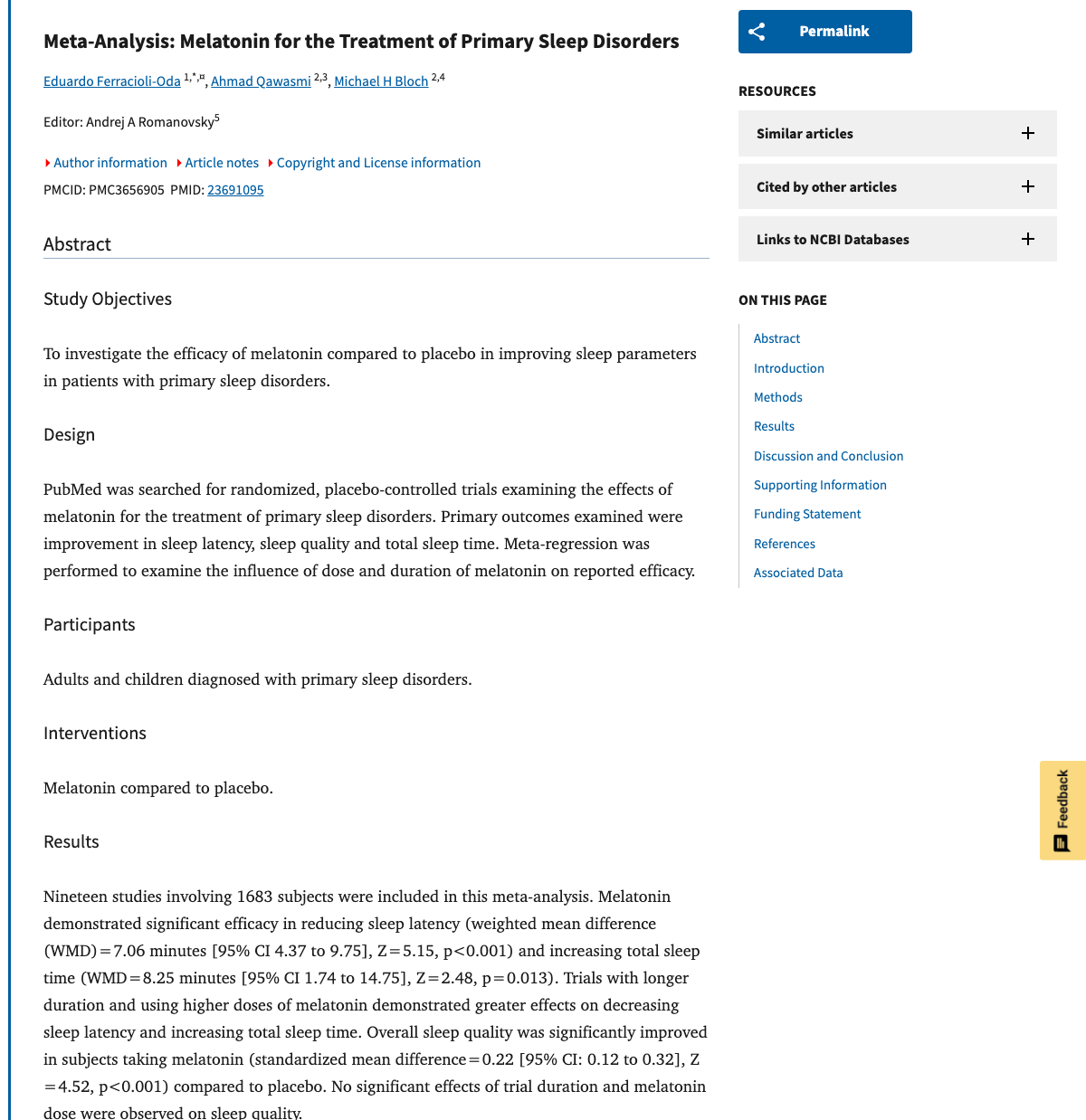
Melatonin significantly reduces sleep onset latency by 7.06 minutes, increases total sleep time by 8.25 minutes, and improves overall sleep quality.
Summary
This comprehensive meta-analysis examined 19 randomized controlled trials involving 1,683 participants to evaluate melatonin's effects on primary sleep disorders. It represents one of the most rigorous analyses of melatonin's sleep benefits.
The analysis found statistically significant improvements in sleep latency, total sleep time, and subjective sleep quality, establishing melatonin as an effective intervention for sleep disorders.
Methods
- Systematic review of PubMed and Cochrane databases
- 19 double-blind, randomized, placebo-controlled trials included
- 1,683 total participants analyzed
- Meta-analysis using random effects models
- Subgroup analyses for dose and duration
Key Results
- Sleep onset latency reduced by 7.06 minutes (95% CI: 4.37-9.75)
- Total sleep time increased by 8.25 minutes (95% CI: 1.74-14.75)
- Sleep quality improved (SMD 0.22, 95% CI: 0.12-0.32)
- Effects consistent across age groups
- No significant dose-response relationship
- Benefits maintained with prolonged use
Figures
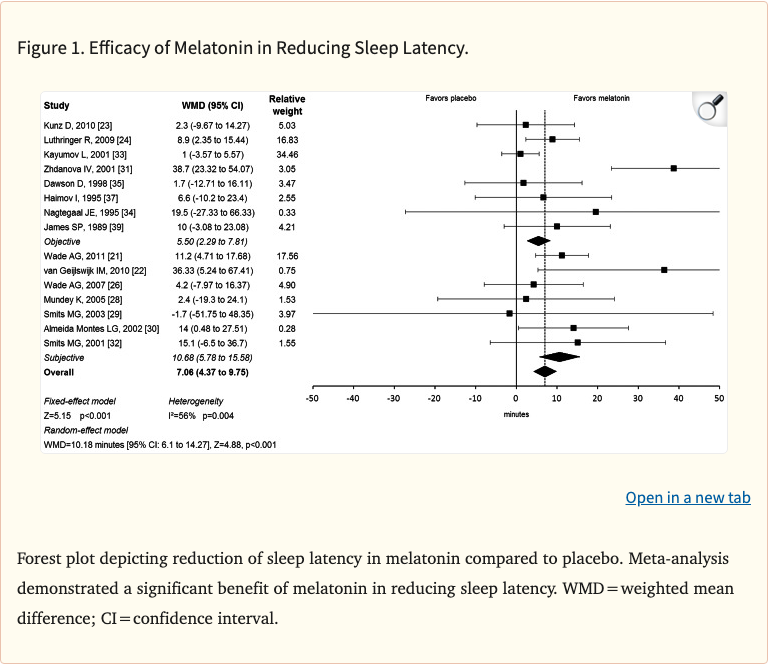 Figure 1
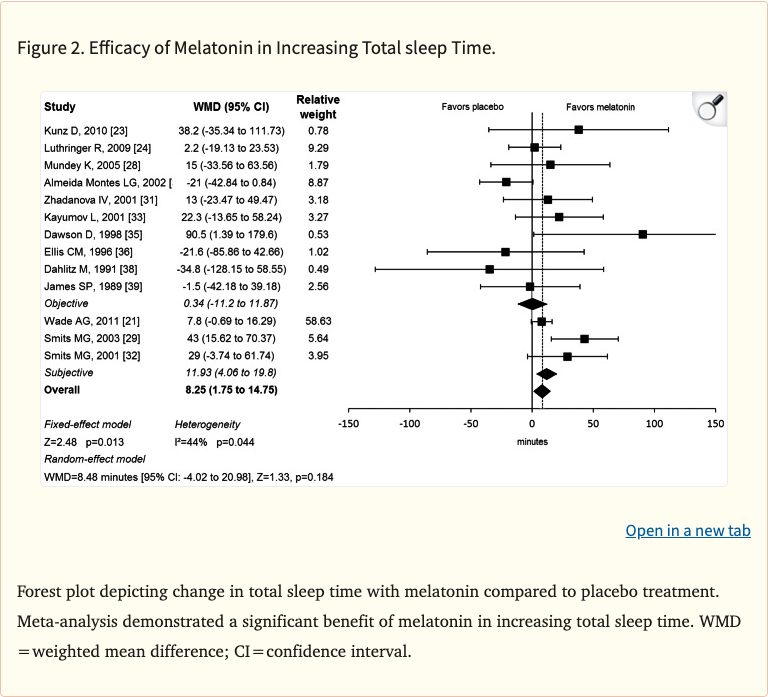 Figure 2
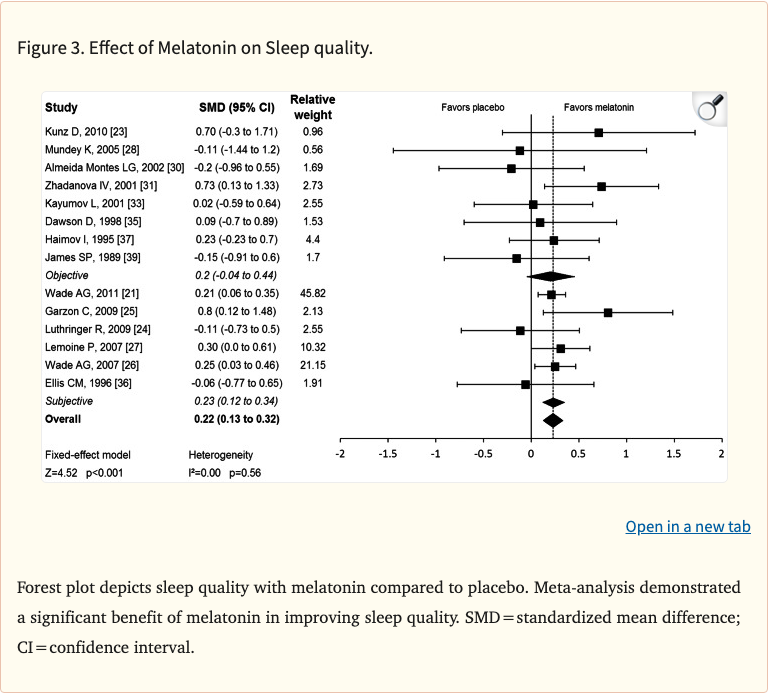 Figure 3
Limitations
- Heterogeneity in study populations
- Variable dosing protocols across studies
- Most studies focused on primary insomnia
- Limited data on optimal timing
- Short duration of most included trials
Related Interventions
Related Studies
Discussed In

#065 Dr. Satchin Panda on Circadian Insights into Exercise Timing, Melatonin Biology, and Peak Cognition
FoundMyFitness

Dr. Matthew Walker — The Hidden Dangers of Melatonin, Tools for Insomnia, Sleep Spindles, and Lucid Dreaming
The Tim Ferriss Show

Dr Matthew Walker - The Science Of Perfect Sleep
Modern Wisdom

The Best Way To Use Hydrogen For Health, Finding A Good Hormone Doctor, Why Alcohol ISN'T Always Bad For You (But Weed Might Be!) & More Solosode 496
Ben Greenfield Life

Tobacco-Free Nicotine's Nootropic Superpowers for Learning, Memory & Focus w/ Nicco Magnotto #540
The Life Stylist