Key Takeaway
Melatonin improves sleep quality and reduces sleep onset latency in children with idiopathic chronic insomnia, with low certainty evidence supporting its use.
Summary
This systematic review and meta-analysis evaluated the efficacy and safety of melatonin for treating idiopathic chronic insomnia in children and adolescents. The researchers searched multiple databases and included randomized controlled trials comparing melatonin to placebo.
The analysis found that melatonin improved sleep quality (measured by parent-reported outcomes) and reduced sleep onset latency compared to placebo. The evidence was graded as low certainty using GRADE methodology, primarily due to risk of bias and imprecision in the included studies.
Based on their findings, the authors developed clinical recommendations for the use of melatonin in pediatric populations with idiopathic insomnia, emphasizing that behavioral interventions should remain first-line treatment before considering melatonin supplementation.
Methods
- Systematic review following PRISMA guidelines
- Searched PubMed, Embase, Cochrane Library, and PsycINFO
- Included RCTs of melatonin vs placebo in children/adolescents with idiopathic chronic insomnia
- Meta-analysis using random-effects models
- GRADE assessment for certainty of evidence
- Clinical recommendations developed using GRADE-ADOLOPMENT framework
Key Results
- Melatonin improved parent-reported sleep quality vs placebo
- Sleep onset latency was reduced with melatonin treatment
- Evidence certainty rated as low due to study limitations
- No serious adverse events reported in included trials
- Clinical recommendation: Consider melatonin after behavioral interventions fail
Figures
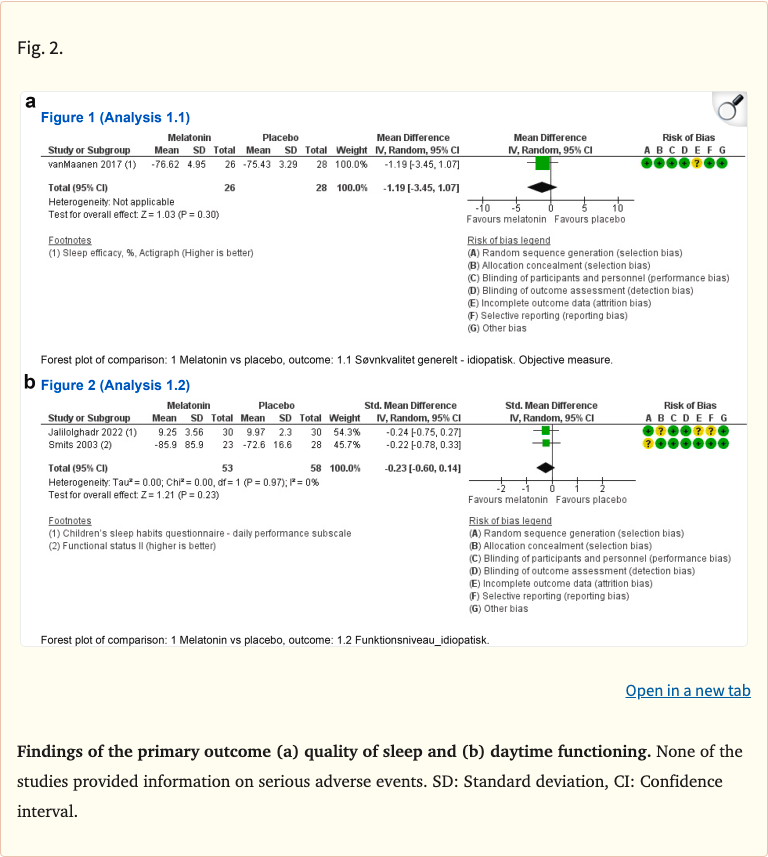 Figure 1
Limitations
- Low certainty evidence (GRADE assessment)
- Heterogeneity in outcome measures across studies
- Limited long-term follow-up data
- Most studies had small sample sizes
- Variability in melatonin dosing protocols