Key Takeaway
Moderate coffee consumption (3-4 cups/day) is associated with reduced risk of stroke, cardiovascular disease, and dementia compared to non-drinkers.
Summary
This umbrella review synthesized evidence from multiple meta-analyses examining the relationship between coffee consumption and three major health outcomes: stroke, cardiovascular heart disease (CHD), and dementia. The study aimed to provide a comprehensive overview of the highest-level evidence available.
Across the included meta-analyses, moderate coffee consumption consistently showed protective associations. For stroke, coffee drinkers had a 15-20% lower risk compared to non-drinkers, with the strongest effects at 3-4 cups daily. Similar protective patterns emerged for cardiovascular disease and all-cause mortality.
The dementia findings were particularly notable, showing that regular coffee consumption was associated with reduced risk of cognitive decline and dementia, potentially through caffeine's effects on adenosine receptors and neuroinflammation. The authors concluded that moderate coffee consumption can be part of a healthy lifestyle for most adults.
Methods
- Umbrella review methodology (meta-analysis of meta-analyses)
- Systematic search of PubMed, Cochrane Library, and other databases
- Included meta-analyses of observational studies on coffee and health outcomes
- Quality assessment of included meta-analyses
- Primary outcomes: Stroke, cardiovascular heart disease, dementia
- Dose-response relationships examined where data available
Key Results
- Stroke: 15-20% risk reduction with moderate coffee consumption (3-4 cups/day)
- Cardiovascular disease: Significant protective association with moderate intake
- Dementia: Reduced risk with regular coffee consumption vs non-drinkers
- J-shaped dose-response for CVD outcomes (moderate intake optimal)
- Consistent findings across different populations and study designs
- No increased risk at higher consumption levels for most outcomes
Figures
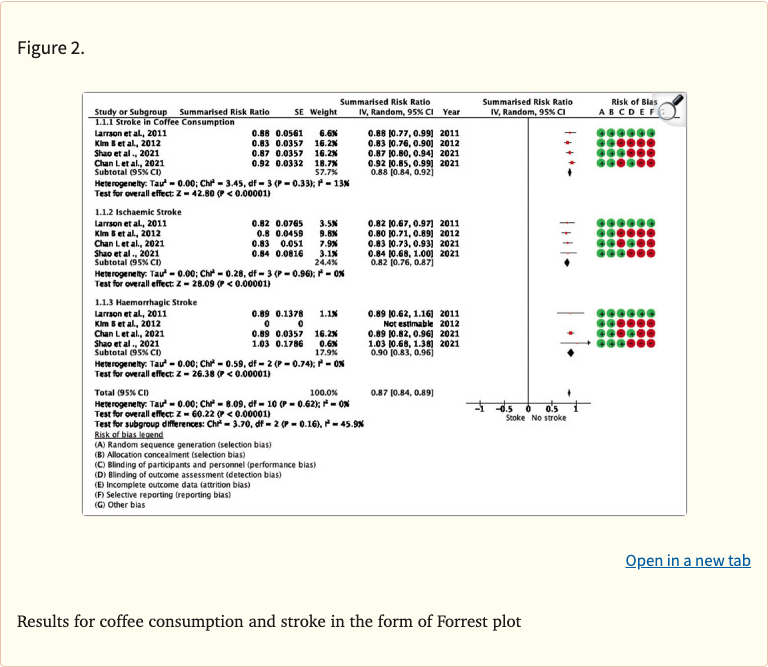 Figure 1
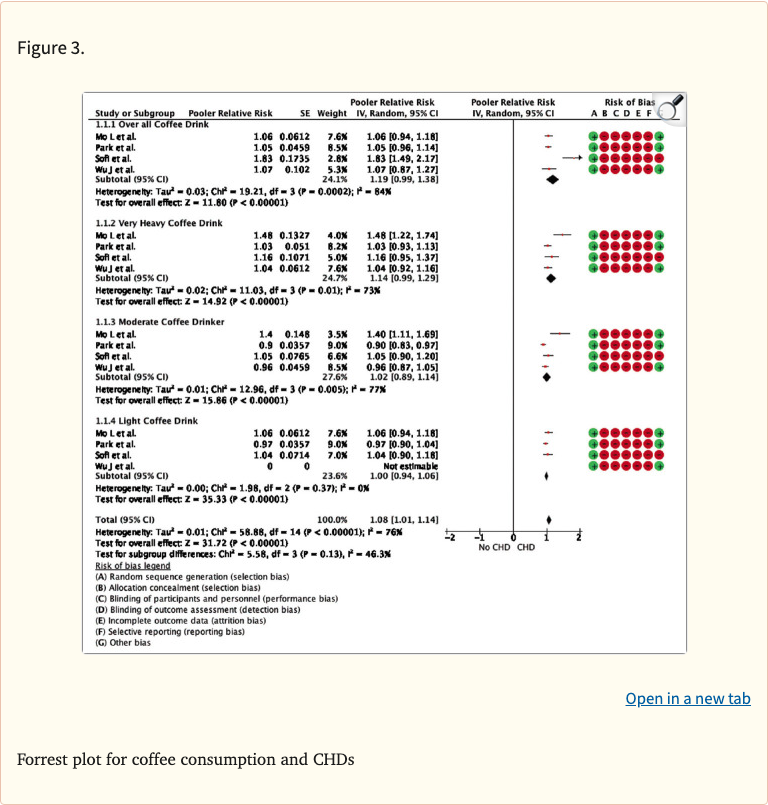 Figure 2
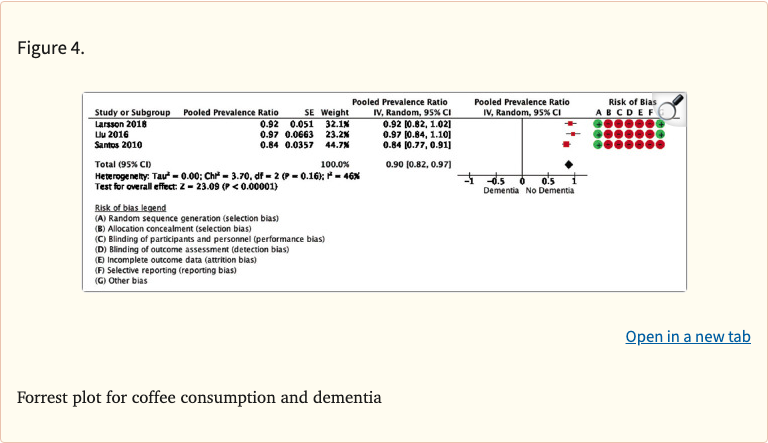 Figure 3
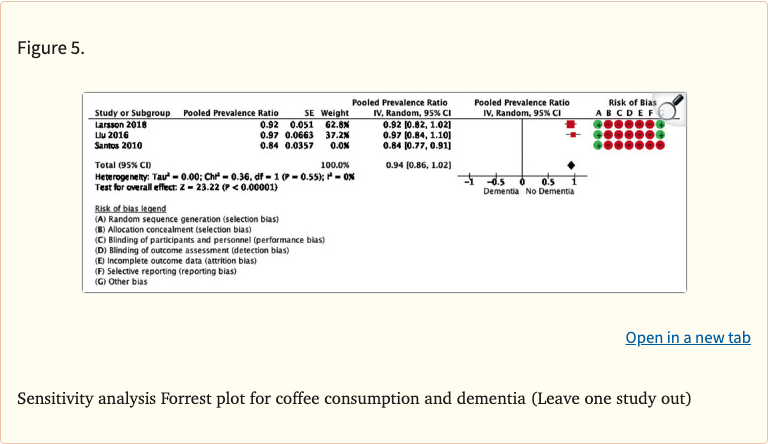 Figure 4
Limitations
- Based on observational studies - cannot establish causation
- Heterogeneity in coffee preparation methods and serving sizes across studies
- Potential confounding by healthy lifestyle factors in coffee drinkers
- Publication bias possible in underlying meta-analyses
- Limited data on decaffeinated coffee for some outcomes
- Most studies from Western populations