
Key Takeaway
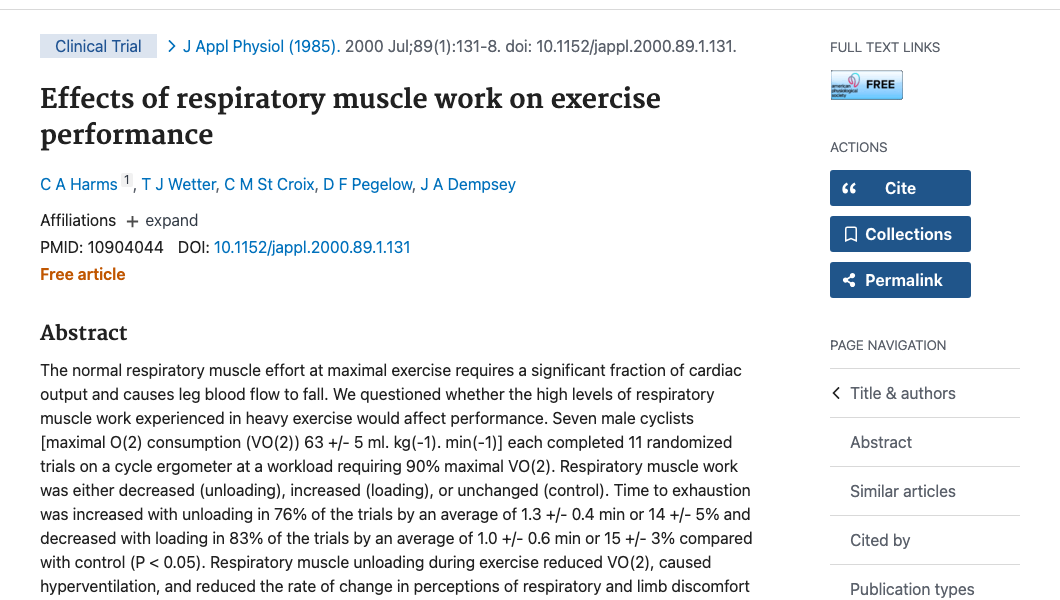
Reducing respiratory muscle work improved exercise performance by 14%, demonstrating that breathing muscles can be a limiting factor in endurance.
Summary
This landmark study examined how respiratory muscle fatigue affects whole-body exercise performance by mechanically unloading the breathing muscles during maximal cycling.
Results showed that when the respiratory muscles don't have to work as hard, more blood flow goes to the legs and performance improves substantially, supporting the value of respiratory muscle training.
Methods
- Mechanically assisted breathing during exercise
- Maximal cycling to exhaustion
- Leg blood flow measurements
- VO2max testing
Key Results
- 14% improvement in time to exhaustion
- Increased leg blood flow with unloaded breathing
- Reduced perceived dyspnea
- Delayed respiratory muscle fatigue
Limitations
- Artificial unloading not achievable in practice
- Small sample of trained cyclists
- Acute effects only