
Key Takeaway
Higher cardiorespiratory fitness is associated with lower all-cause mortality regardless of BMI, suggesting that fitness matters more than weight for longevity.
Summary
This systematic review and meta-analysis investigated the joint and independent associations of cardiorespiratory fitness (CRF) and body mass index (BMI) with all-cause mortality. The study aimed to determine whether being fit can offset the mortality risk associated with higher BMI, addressing the long-debated "fat but fit" question.
The analysis synthesized data from prospective cohort studies that assessed both CRF (via exercise testing) and BMI as predictors of all-cause mortality. The results demonstrated that CRF is a stronger predictor of mortality than BMI across weight categories. Individuals classified as fit but overweight or obese had significantly lower mortality risk than those who were unfit but normal weight, supporting the notion that cardiorespiratory fitness can substantially attenuate or eliminate the excess mortality risk associated with higher BMI.
The findings have important implications for public health messaging, suggesting that improving fitness should be prioritized alongside weight management. The study reinforces the case for routine CRF assessment in clinical practice and supports exercise-based interventions as a primary strategy for reducing mortality risk, irrespective of body composition.
Methods
Systematic review and meta-analysis following PRISMA guidelines. The authors searched multiple databases for prospective cohort studies that reported associations between both CRF (measured or estimated via graded exercise testing) and BMI with all-cause mortality. Studies were required to categorize participants by both fitness and BMI levels. Risk estimates were pooled using random-effects meta-analysis. Subgroup analyses examined the joint effects of fitness-BMI combinations, comparing groups such as fit-overweight vs. unfit-normal weight. Study quality was assessed using the Newcastle-Ottawa Scale.
Key Results
- Higher CRF was consistently associated with lower all-cause mortality regardless of BMI category
- Fit individuals with overweight or obesity had significantly lower mortality risk than unfit individuals with normal BMI
- CRF demonstrated a stronger independent association with mortality than BMI
- A dose-response relationship was observed, with each incremental improvement in fitness category associated with progressively lower mortality
- The protective effect of fitness was maintained across all BMI categories, including class I and II obesity
- Unfit-normal weight individuals had comparable or higher mortality risk relative to fit-obese individuals
Figures
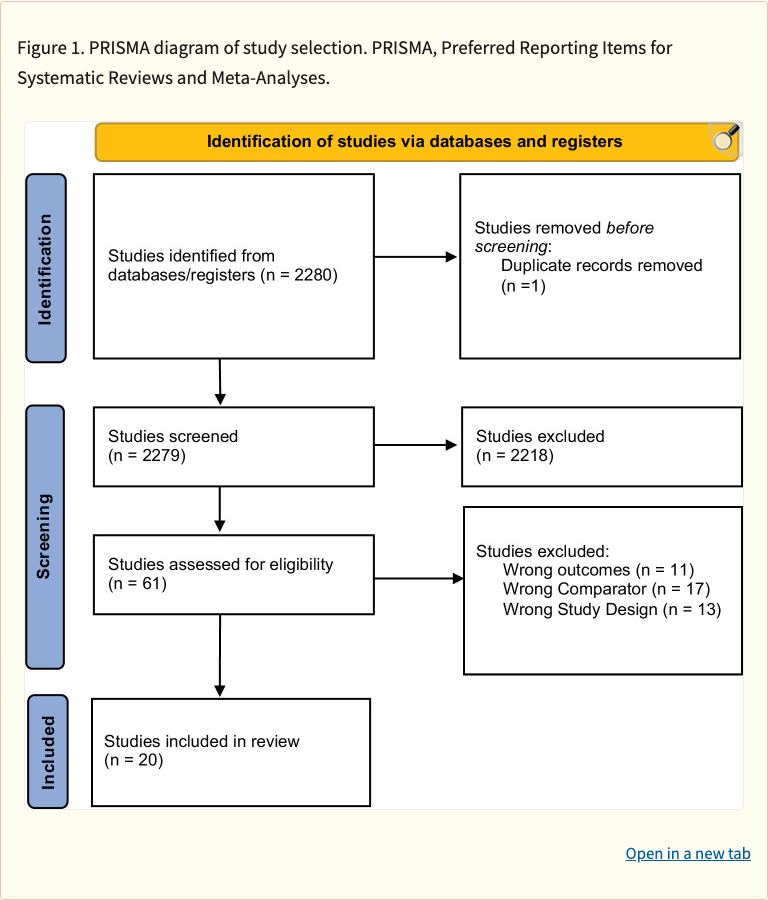 Figure 1
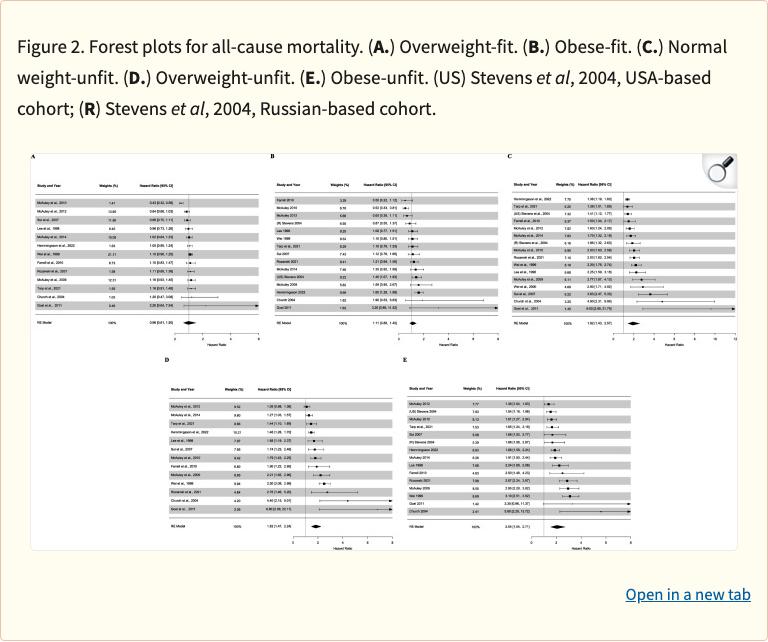 Figure 2
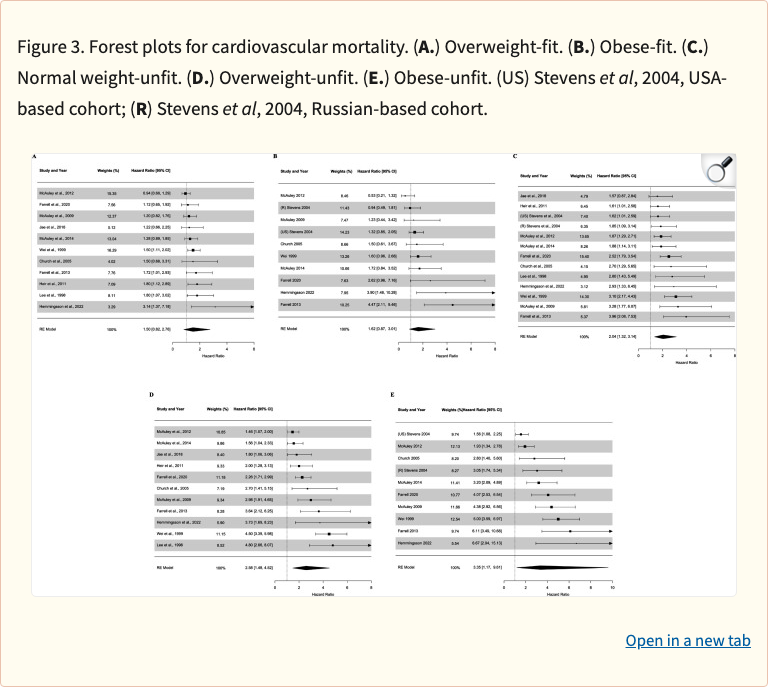 Figure 3
Limitations
- Relies on observational cohort data, precluding causal conclusions
- BMI is an imperfect measure of body composition (does not distinguish fat from lean mass)
- CRF measurement methods varied across studies (maximal vs. submaximal testing, estimated vs. directly measured VO2max)
- Single baseline assessments of both CRF and BMI may not capture changes over the follow-up period
- Potential residual confounding from physical activity, diet, socioeconomic status, and other lifestyle factors
- Most study populations were from Western countries, limiting generalizability
- Publication bias cannot be fully excluded