Key Takeaway
Higher cardiorespiratory fitness consistently predicts lower all-cause mortality, CVD mortality, and reduced incidence of cancer, heart failure, and depression across 20.9 million observations.
Summary
This umbrella review synthesized evidence from 26 meta-analyses encompassing 199 unique cohort studies and over 20.9 million participant observations to evaluate the association between cardiorespiratory fitness (CRF) and health outcomes in adults. It represents the most comprehensive overview to date of CRF as a predictor of morbidity and mortality.
The review found strong and consistent evidence that higher CRF is associated with reduced risk of all-cause mortality, cardiovascular disease mortality, and incident cardiovascular disease across both apparently healthy adults and clinical populations. Higher fitness levels were also linked to lower risk of several cancers, heart failure, depression, and dementia. Dose-response analyses showed that even modest improvements in CRF confer meaningful health benefits, with the steepest reductions in risk occurring when moving from the least fit to moderately fit categories.
The findings reinforce that CRF should be considered a clinical vital sign and routinely assessed in healthcare settings. The authors argue that low CRF carries a population-attributable risk comparable to or exceeding traditional risk factors like smoking, diabetes, and hypertension, making it one of the most important modifiable predictors of long-term health.
Methods
Umbrella review methodology following PRISMA guidelines. The authors systematically searched PubMed, Embase, SPORTDiscus, and the Cochrane Library for meta-analyses of cohort studies examining associations between CRF and health outcomes. CRF was defined as directly measured or estimated VO2max or performance on graded exercise tests. Twenty-six meta-analyses were included, covering 199 unique cohort studies with over 20.9 million total observations. Quality was assessed using AMSTAR-2, and results were synthesized narratively with attention to dose-response relationships and population subgroups (apparently healthy vs. clinical populations).
Key Results
- Higher CRF was associated with significantly lower risk of all-cause mortality (HR range 0.27-0.55 for highest vs. lowest fitness categories across meta-analyses)
- CVD mortality risk was reduced by 40-60% in the most fit compared to least fit individuals
- Each 1 MET increase in CRF was associated with approximately 11-17% reduction in all-cause mortality risk
- Strong inverse associations found for incident CVD, heart failure, atrial fibrillation, stroke, and several cancers
- CRF showed protective effects for depression and dementia risk
- Benefits were consistent across age groups, sexes, and clinical populations (including those with existing CVD, diabetes, and cancer)
- Dose-response relationships showed the greatest marginal benefit from moving out of the lowest fitness category
Figures
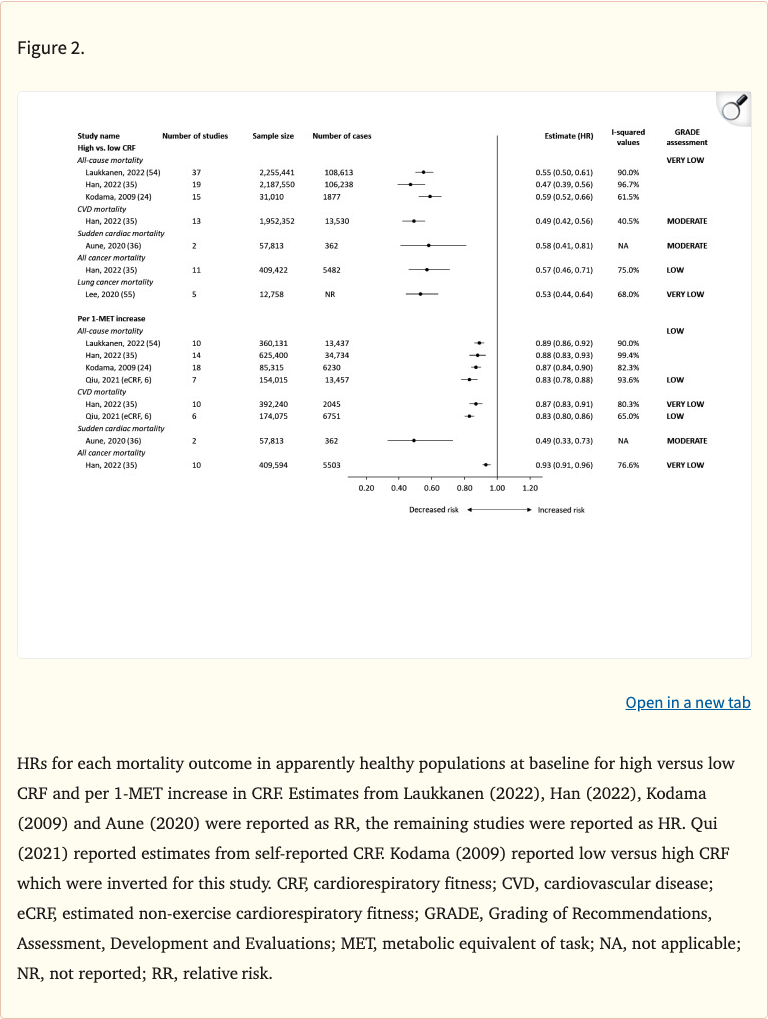 Figure 1
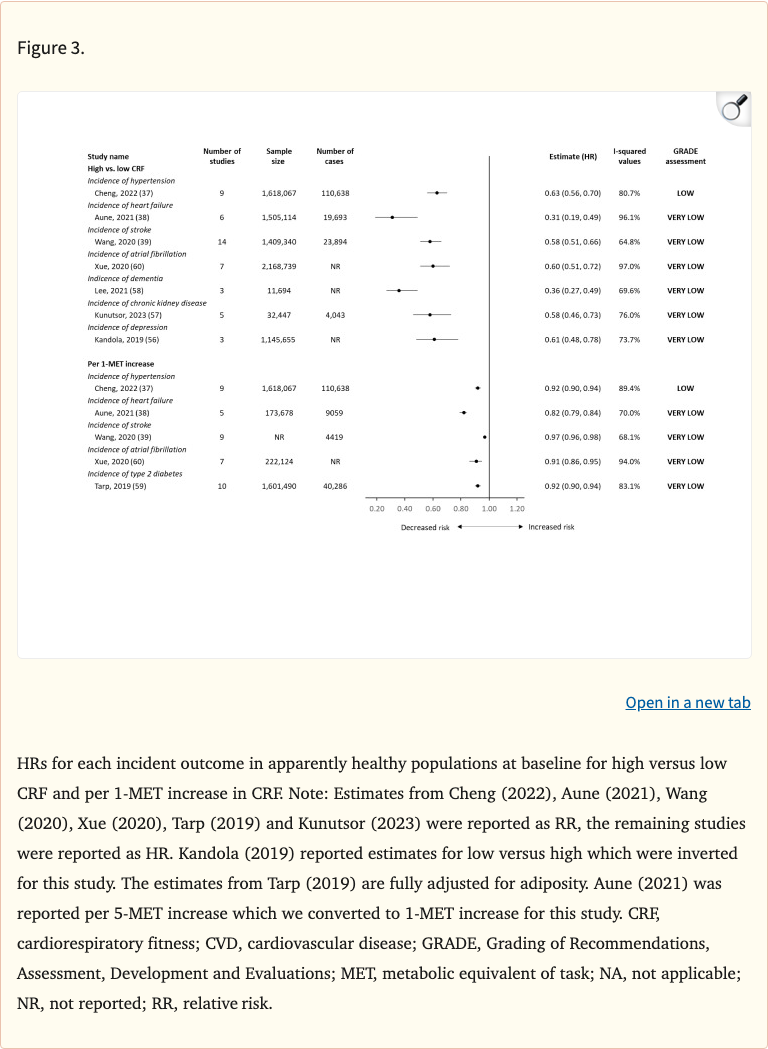 Figure 2
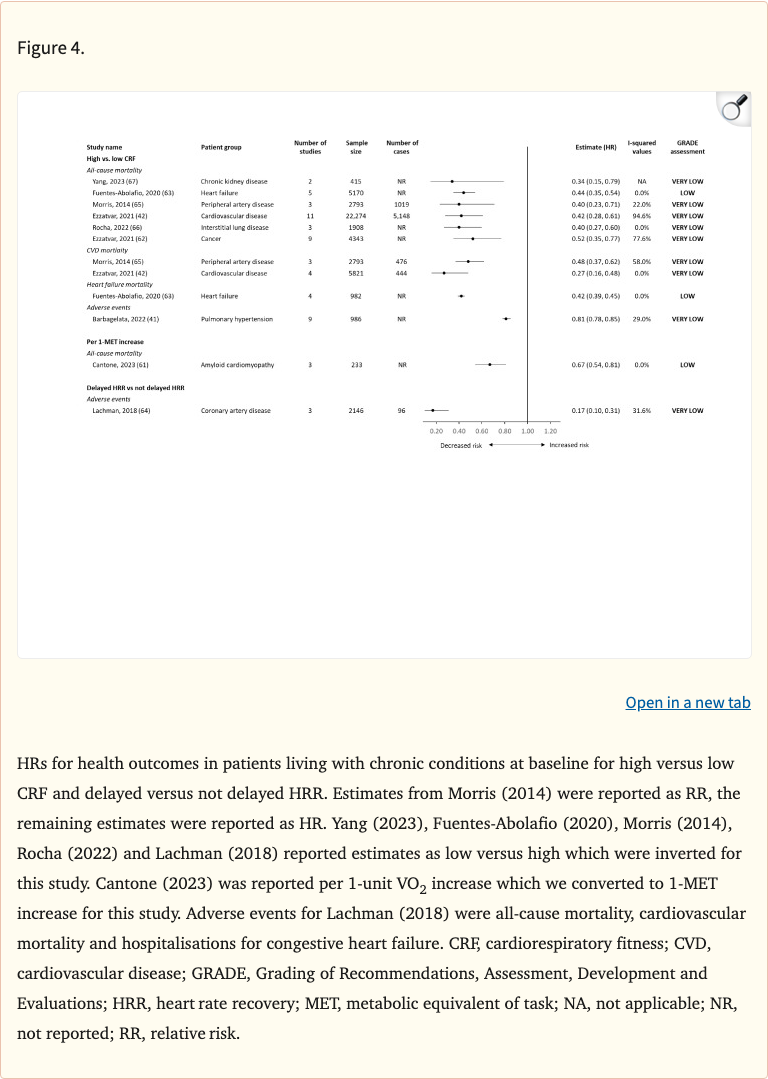 Figure 3
Limitations
- As an umbrella review, it relies on the quality of the underlying meta-analyses and original cohort studies
- Most included studies used estimated rather than directly measured VO2max, which introduces measurement error
- Observational design of underlying studies limits causal inference
- Potential for residual confounding from physical activity levels, diet, and other lifestyle factors
- Heterogeneity in CRF measurement methods and fitness categorization across studies
- Publication bias may overestimate effect sizes
- Limited data on certain outcomes (e.g., mental health) compared to mortality endpoints