
Key Takeaway
Aerobic training produces significantly greater VO2max improvements than resistance training in middle-aged and older adults, while resistance training is superior for lean mass gains.
Summary
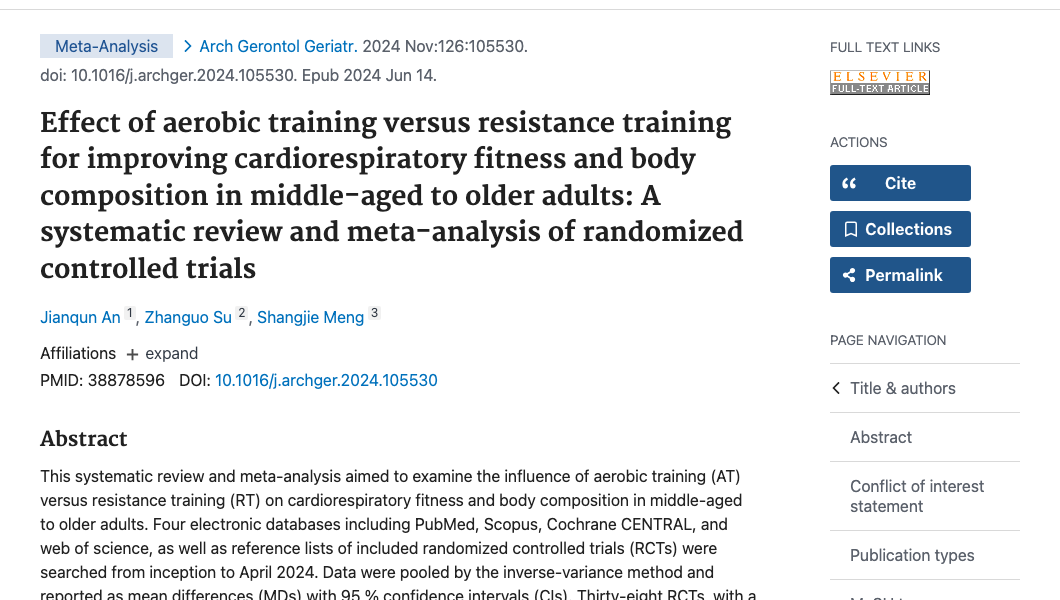
This systematic review and meta-analysis compared the effects of aerobic training versus resistance training on cardiorespiratory fitness and body composition in middle-aged to older adults (aged 45+). The study synthesized evidence from randomized controlled trials to help clarify which exercise modality delivers greater benefits for key health outcomes in aging populations.
The analysis found that aerobic training produced significantly greater improvements in VO2max compared to resistance training, confirming that cardio-based exercise remains the most effective approach for building cardiorespiratory fitness in older adults. Conversely, resistance training was superior for improving lean body mass and body composition metrics. Both modalities contributed to reductions in body fat percentage, though neither showed clear superiority for fat loss.
These findings support current exercise guidelines recommending that older adults incorporate both aerobic and resistance training into their routines. For individuals specifically targeting VO2max improvement, aerobic training protocols (including high-intensity intervals) should be the primary modality. However, the complementary benefits of resistance training for preserving muscle mass and functional capacity make a combined approach optimal for overall healthspan in aging populations.
Methods
Systematic review and meta-analysis of randomized controlled trials following PRISMA guidelines. The authors searched PubMed, Embase, Cochrane Library, Web of Science, and SPORTDiscus for RCTs comparing aerobic training to resistance training in adults aged 45 years and older. Outcomes included VO2max or peak oxygen uptake, body composition measures (body fat percentage, lean body mass, BMI), and body weight. Meta-analyses were conducted using random-effects models with standardized mean differences. Subgroup analyses examined effects by age group, training duration, and exercise intensity. Risk of bias was assessed using the Cochrane RoB 2 tool.
Key Results
- Aerobic training produced significantly greater improvements in VO2max compared to resistance training (SMD favoring aerobic training)
- Resistance training was significantly superior for lean body mass gains
- Both modalities reduced body fat percentage with no significant difference between them
- No significant difference in BMI changes between aerobic and resistance training
- Subgroup analyses showed aerobic training benefits for VO2max were consistent across age categories (45-64 and 65+)
- Longer training durations (>12 weeks) tended to produce larger between-group differences in VO2max
- High-intensity aerobic protocols showed the largest VO2max improvements
Limitations
- Heterogeneity in exercise protocols (intensity, frequency, duration) across included RCTs
- Many studies had relatively small sample sizes
- Training programs varied in supervision and adherence monitoring
- Most studies did not include combined aerobic + resistance training arms for comparison
- Limited follow-up data on long-term maintenance of fitness gains
- Potential selection bias as participants who volunteer for exercise RCTs may not represent the general aging population
- VO2max was estimated in some studies rather than directly measured
- Did not account for baseline fitness levels as a moderating variable in all analyses
Related Interventions
Related Studies
Discussed In
