
Key Takeaway
Four weeks of slow-paced breathing with HRV biofeedback significantly reduced the pro-inflammatory cytokine TNF-alpha and improved HRV in individuals with panic disorder.
Summary
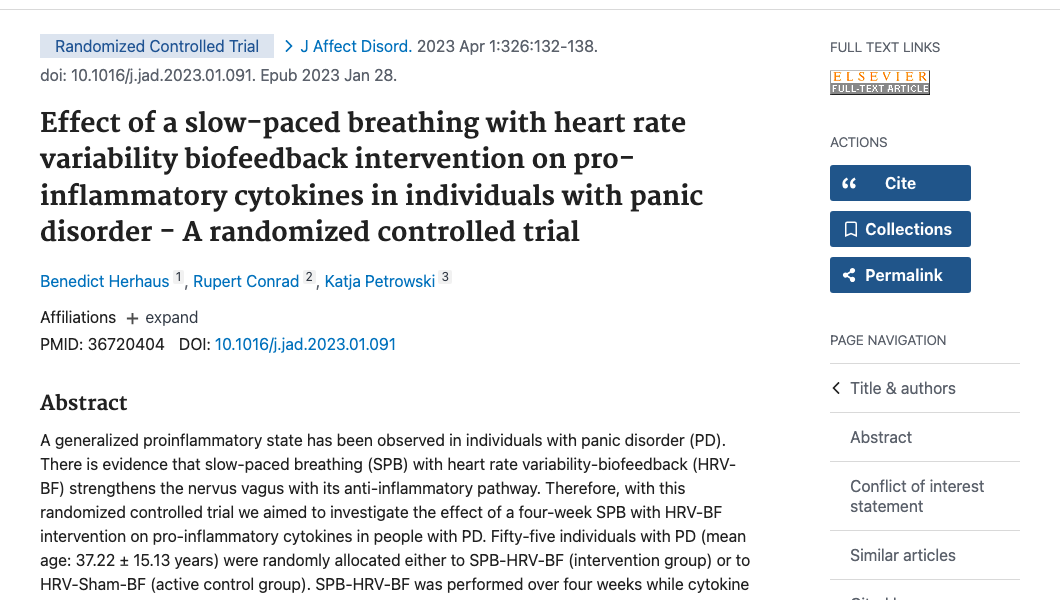
This randomized controlled trial examined whether a slow-paced breathing (SPB) intervention combined with heart rate variability biofeedback (HRV-BF) could reduce pro-inflammatory cytokines in individuals with panic disorder. Panic disorder is associated with a generalized pro-inflammatory state, and vagus nerve stimulation through controlled breathing may activate anti-inflammatory pathways.
Fifty-five individuals with panic disorder were randomly allocated to either SPB with HRV biofeedback (intervention) or HRV sham biofeedback (active control). The intervention was performed over four weeks, with cytokine concentrations and HRV measured before and after the intervention period.
The SPB-HRV-BF group showed a significant decrease in tumor necrosis factor alpha (TNF-alpha) concentration compared to the control group. Additionally, the intervention group demonstrated increases in HRV time and frequency domain parameters (SDNN, Total Power, and LF) during short-term resting conditions. No intervention effects were observed in the sham biofeedback group.
These findings suggest that slow-paced breathing may reduce systemic inflammation via the cholinergic anti-inflammatory pathway, offering a non-pharmacological approach to managing the pro-inflammatory state associated with panic disorder and potentially reducing cardiovascular and metabolic disease risk.
Methods
RCT with 55 individuals diagnosed with panic disorder (mean age 37.22 years). Participants were randomized to slow-paced breathing with HRV biofeedback (SPB-HRV-BF) or HRV sham biofeedback (active control). The intervention lasted four weeks. Pro-inflammatory cytokine concentrations and HRV during a short-term resting condition were measured at baseline and post-intervention.
Key Results
- SPB-HRV-BF significantly decreased TNF-alpha concentration (F(1,53) = 4.396, p ≤ .05, η² = 0.077)
- SPB-HRV-BF increased HRV parameters: SDNN, Total Power, and LF during rest
- No significant intervention effects in the sham biofeedback control group
- Effect size for TNF-alpha reduction was small-to-medium (η² = 0.077)
Limitations
- Relatively small sample size (n=55)
- Limited to individuals with panic disorder — may not generalize to healthy populations
- Only TNF-alpha was significantly affected; other cytokines (IL-6, IL-10) were not reported as significant
- Four-week intervention duration — long-term sustainability of effects unknown
- Active control (sham biofeedback) rather than no-treatment control