
Key Takeaway
Cupping therapy significantly reduces chronic musculoskeletal pain and improves associated symptoms like anxiety, depression, and sleep quality according to this BMJ Open meta-analysis.
Summary
Published in BMJ Open, this systematic review and meta-analysis examined the effects of cupping therapy on chronic musculoskeletal pain and its collateral problems — the secondary symptoms that often accompany chronic pain conditions, such as anxiety, depression, sleep disturbance, and reduced quality of life. The comprehensive search covered multiple databases and focused on randomized controlled trials.
The meta-analysis found that cupping therapy significantly reduced chronic musculoskeletal pain compared to control interventions. Beyond pain relief, the analysis revealed meaningful improvements in collateral outcomes: patients receiving cupping therapy reported reduced anxiety and depressive symptoms, better sleep quality, and improved overall quality of life. These multi-dimensional benefits suggest cupping may address the broader burden of chronic pain rather than just the pain signal itself.
The authors noted that cupping therapy appeared safe with minimal adverse events across the included studies. They highlighted the clinical relevance of addressing both pain and its associated psychological and functional impacts, positioning cupping as a holistic complementary therapy for chronic musculoskeletal conditions. The study called for more large-scale, well-designed RCTs to confirm these findings and establish optimal treatment parameters.
Figures
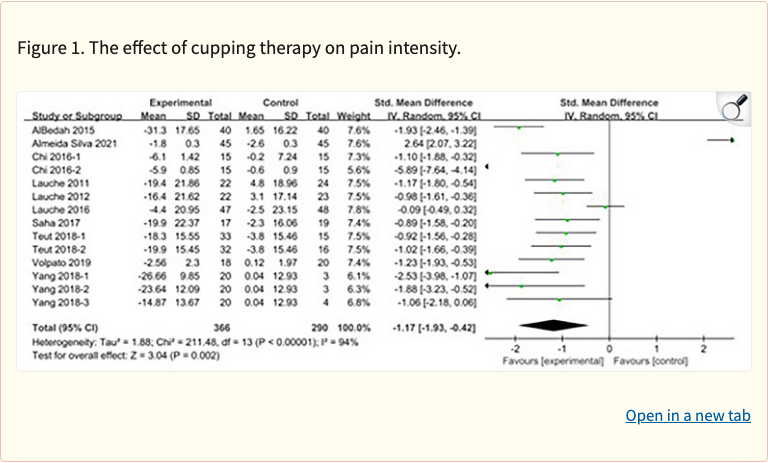 Figure 1
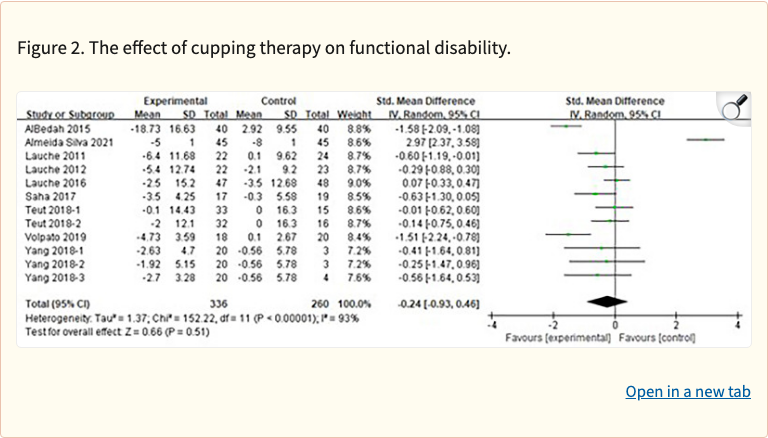 Figure 2
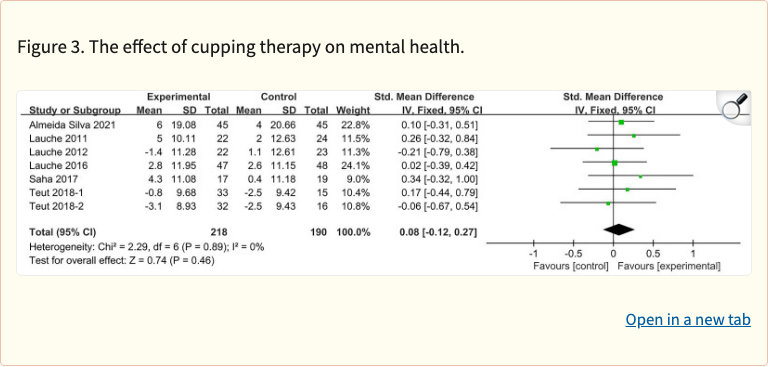 Figure 3