Key Takeaway
Systematic review of 16 studies found cupping therapy significantly reduced chronic back pain intensity (p = 0.001), though treatment protocols varied widely across studies.
Summary
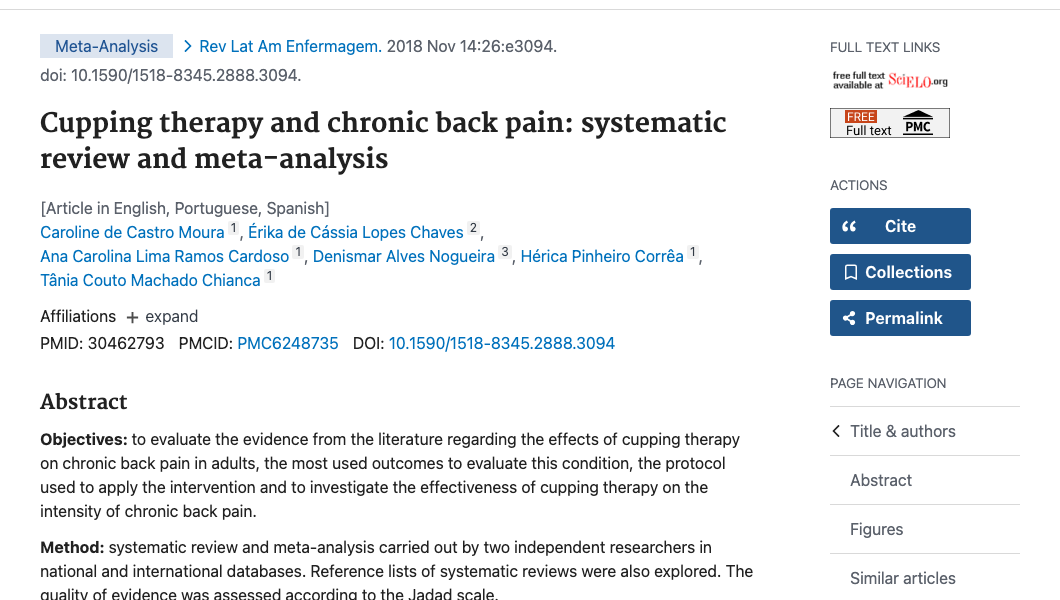
This systematic review and meta-analysis assessed the effectiveness of cupping therapy for chronic back pain in adults. Two independent researchers searched national and international databases, identifying 611 studies initially, narrowing to 16 for qualitative analysis and 10 for quantitative meta-analysis. Study quality was assessed using the Jadad scale.
The meta-analysis found a statistically significant reduction in pain intensity with cupping therapy (p = 0.001). Outcomes measured included pain intensity, physical incapacity, quality of life, and nociceptive threshold before mechanical stimulus. The results showed positive effects across these domains for chronic back pain patients.
Despite the positive findings, the authors noted a major limitation: there is no standardization in treatment protocols across studies, making it difficult to determine optimal cupping parameters (duration, frequency, type, placement). They concluded that cupping therapy is a promising method for treating chronic back pain but emphasized the need for establishing standardized application protocols and further high-quality research.
Methods
- Systematic review and meta-analysis
- Two independent researchers searched national and international databases
- Reference lists of existing systematic reviews also searched
- 611 studies identified, 16 included in qualitative analysis, 10 in meta-analysis
- Study quality assessed using Jadad scale
- Focus on adults with chronic back pain
- Outcomes: pain intensity, physical incapacity, quality of life, nociceptive threshold
Key Results
- Significant reduction in pain intensity (p = 0.001)
- Positive results across chronic back pain outcomes
- Benefits observed for physical incapacity and quality of life
- Cupping described as "promising method" for chronic back pain treatment
Limitations
- No standardization of treatment protocols across studies
- Varied cupping methods, duration, and frequency
- Quality of included studies variable
- Specific effect sizes not reported for all outcomes
- Blinding challenges inherent to cupping research