
Key Takeaway
Intermittent palm and sole cooling showed no ergogenic benefit for resistance exercise volume across three protocols (pullups, pushups, leg extensions) in 41 physically active adults, and palm cooling actually reduced pullup repetitions.
Summary
This study investigated the effects of intermittent palm cooling (PC) and sole cooling (SC) on acute training volume during resistance exercise. Three separate randomized crossover protocols were conducted with 41 healthy, physically active adults (12 female, mean age 23.9 years). The protocols tested commonly practiced bodyweight and machine exercises: pullups, pushups, and leg extensions.
Contrary to the proposed ergogenic benefits of palmar cooling, the results were largely null. Palm cooling actually led to significantly fewer total repetitions during pullups compared to no cooling (p < 0.001). Neither pushups nor leg extensions showed any benefit from palm or sole cooling. Additional measurements during the leg extension protocol — tympanic temperature, rate of perceived exertion, and quadriceps EMG — were also unaffected by sole cooling.
The authors conclude that intermittent palm and sole cooling have limited effectiveness for enhancing training volume during resistance exercise in physically active adults, and call for future research under more controlled conditions with comprehensive physiological measurements.
Methods
Three randomized crossover protocols with healthy, physically active adults (n=41 total). Protocol 1: pullups (PC vs NC). Protocol 2: pushups (PC vs NC). Protocol 3: leg extensions (PC vs SC vs NC) with tympanic temperature, RPE, and EMG measurements. Cooling was applied intermittently between sets.
Key Results
Palm cooling resulted in significantly fewer repetitions during pullups compared to no cooling (p < 0.001). No significant ergogenic benefits were found for palm or sole cooling during pushups or leg extensions (all p > 0.05). Sole cooling had no effect on tympanic temperature, RPE, or EMG amplitudes during leg extensions (all p > 0.05).
Figures
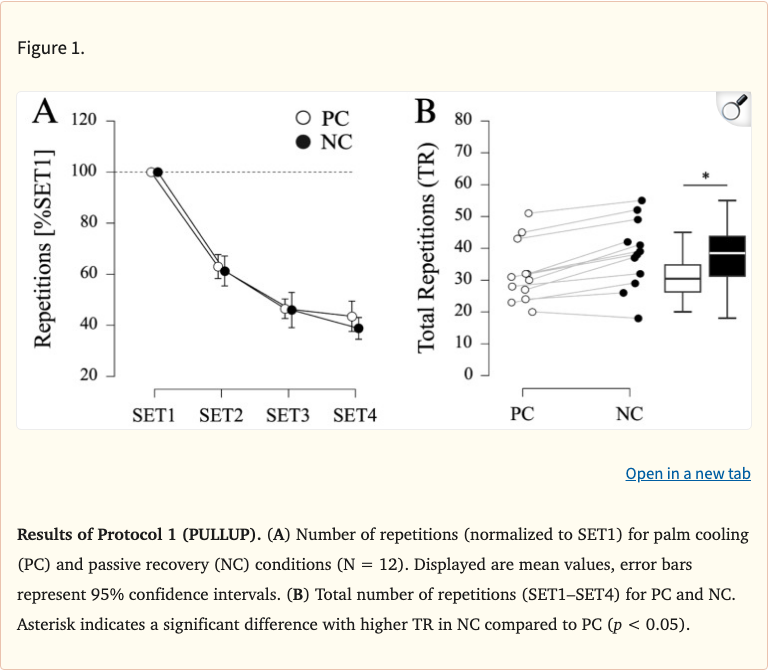 Figure 1
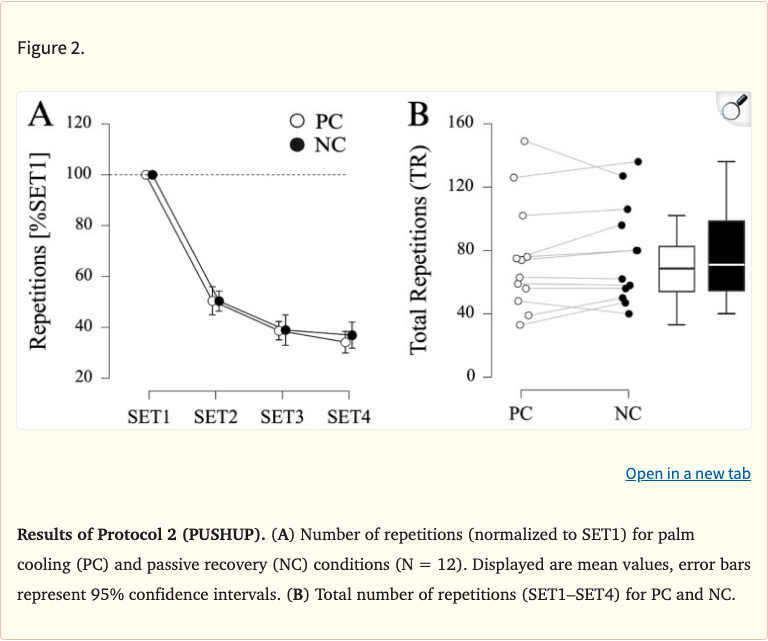 Figure 2
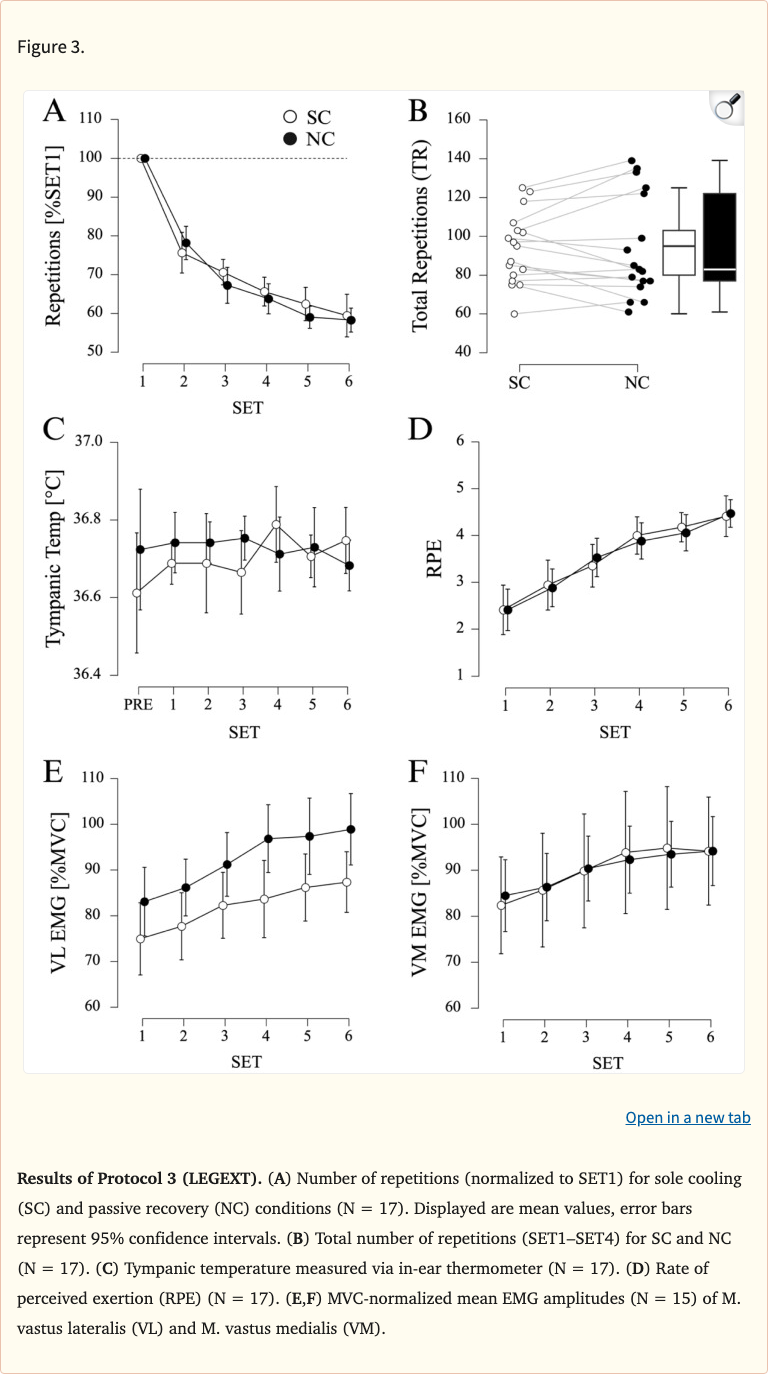 Figure 3
Limitations
Relatively young, physically active sample may not generalize to trained athletes or older adults. Cooling protocols and durations may not have been optimized. No core temperature measurement was used in all protocols. Environmental conditions were not standardized to heat stress, which may be where palm cooling shows the most benefit.