
Key Takeaway
Comprehensive review found tissue flossing produces acute ROM improvements through fascial shearing, blood flow changes, and neurological mechanisms
Summary
This narrative review examined the proposed mechanisms and current evidence for tissue flossing (compression band flossing) as a mobility and recovery intervention.
Methods
- Narrative review of tissue flossing literature
- Examined proposed mechanisms
- Reviewed clinical applications
- Assessed quality of existing evidence
- Identified gaps in research
Key Results
- Consistent findings for acute ROM improvements
- Multiple proposed mechanisms:
- Fascial shearing between tissue layers
- Occlusion and reperfusion effects
- Fluid displacement (edema reduction)
- Neurological (novel sensory input)
- Limited evidence for performance enhancement
- Generally safe when protocols followed
- Most research on ankle and knee joints
Figures
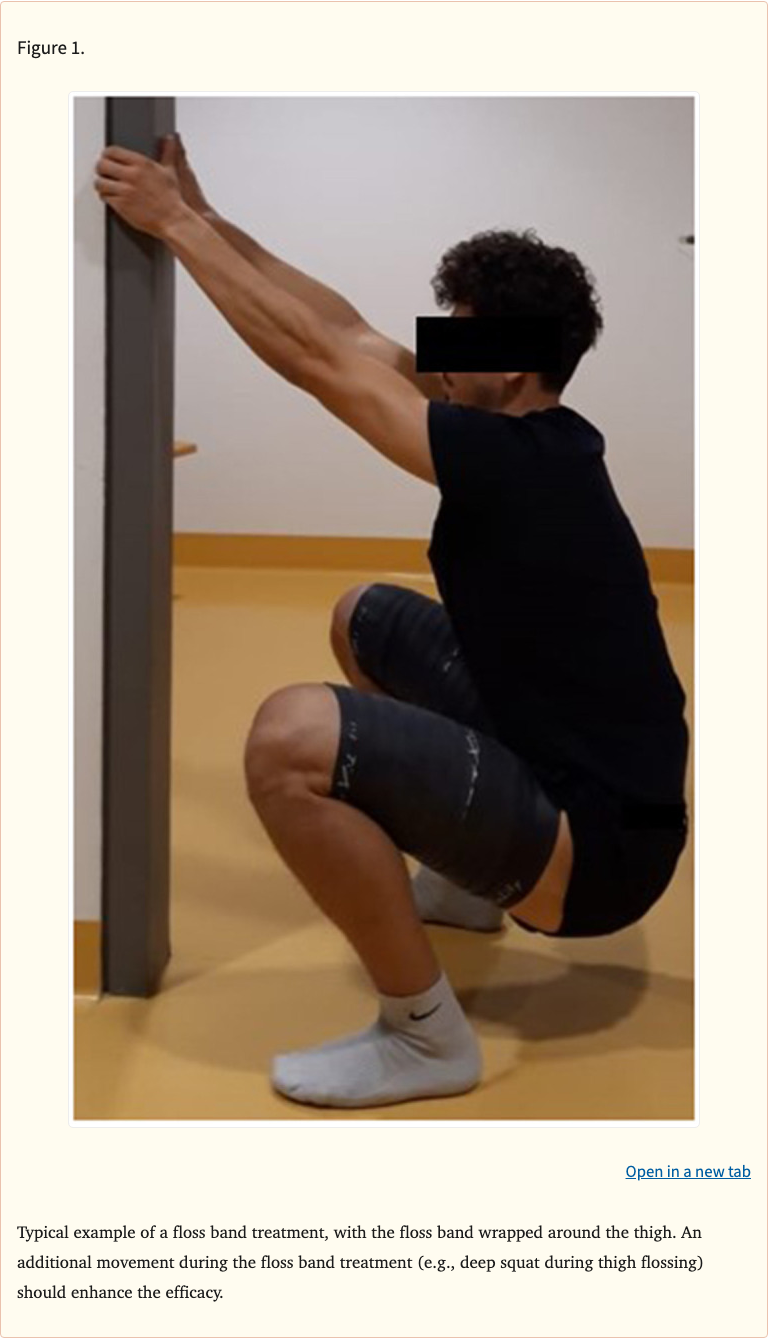 Figure 1
Limitations
- Many studies low quality (small samples, no blinding)
- Mechanisms remain theoretical
- Long-term effects unstudied
- Optimal protocols not established
- Limited research on upper extremity
- Publication bias possible