
Key Takeaway
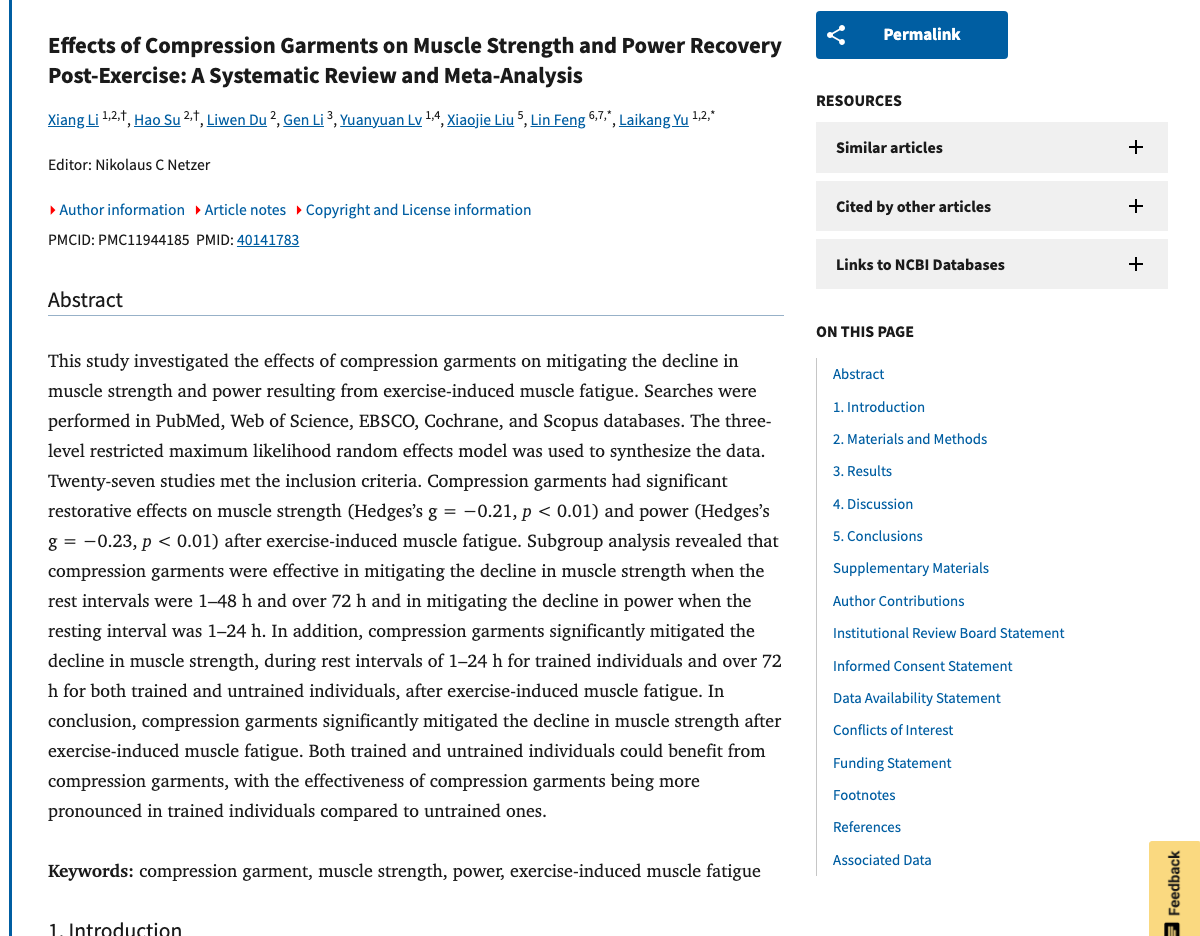
Latest meta-analysis of 27 studies confirms compression garments significantly aid muscle strength (g=-0.21, p<0.01) and power recovery (g=-0.23, p<0.01), with strongest effects during 1-48h rest intervals.
Summary
Li and colleagues published the most recent and comprehensive meta-analysis on compression garments and post-exercise recovery, synthesizing data from 27 studies. The review focused specifically on muscle strength and power outcomes, which are critical measures for athletes evaluating recovery interventions. The systematic search covered literature through 2024, making this the most up-to-date synthesis available.
The pooled analysis found statistically significant effects of compression garments on both muscle strength recovery (Hedges' g = -0.21, p < 0.01) and power recovery (g = -0.23, p < 0.01). While these effect sizes are smaller than those reported in earlier meta-analyses like Hill et al. (2014), they remain significant and practically relevant, particularly given the larger and more diverse study pool. The negative Hedges' g values indicate reduced performance decrements in the compression groups compared to controls.
Subgroup analyses revealed that the timing of compression wear matters considerably. The strongest recovery benefits were observed during the 1-48 hour post-exercise window, which aligns with the period of greatest exercise-induced muscle damage and inflammation. The authors also explored moderating factors including compression type (gradient vs. uniform), garment coverage area, and exercise modality. These findings reinforce that compression garments are a safe and effective passive recovery tool, though the effect sizes suggest they should be viewed as one component of a broader recovery strategy rather than a standalone solution.
Figures
 Figure 1