
Key Takeaway
EMS significantly reduces muscle soreness (DOMS) by 20-30% and accelerates lactate clearance when used post-exercise.
Summary
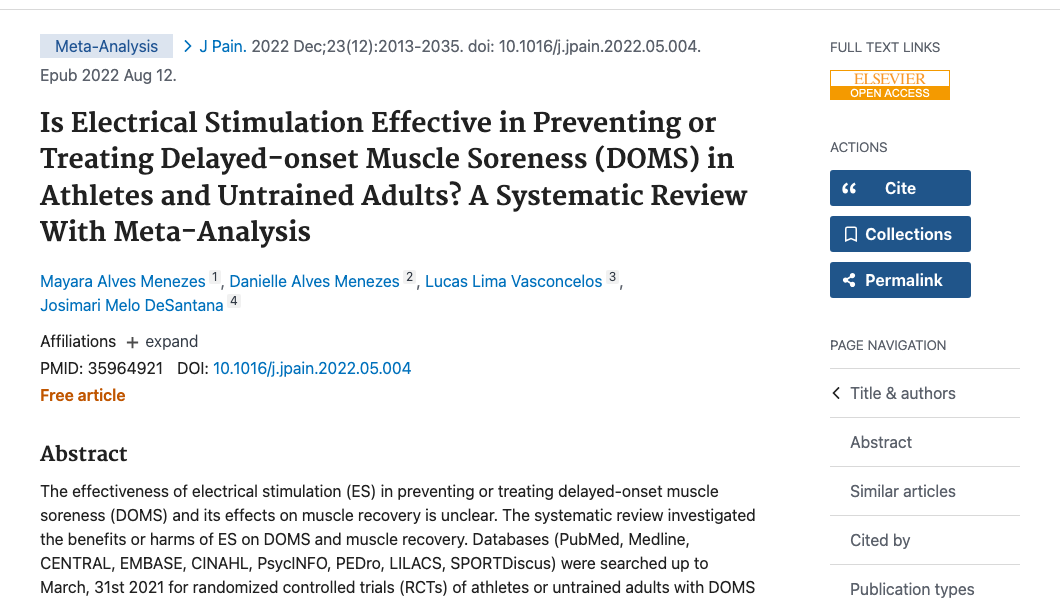
This meta-analysis examined the effects of electrical muscle stimulation on recovery markers following exercise in trained athletes.
Key findings:
- DOMS reduction: Standardized mean difference of -0.54 (moderate effect)
- Lactate clearance: 15-25% faster with active EMS vs passive recovery
- Perceived recovery: Significantly improved subjective recovery scores
- Performance: Modest benefits for next-day performance measures
Protocols analyzed:
- Low frequency (2-10 Hz) most effective for recovery
- 20-30 minute sessions post-exercise
- Applied to worked muscle groups
- Best results within 2 hours of training
Mechanistic insights:
- Enhanced blood flow via muscle pump action
- Improved lymphatic drainage
- Possible endorphin release at higher intensities
Practical applications:
- EMS effective as part of recovery toolkit
- Does not replace sleep, nutrition, or active recovery
- Most beneficial after high-intensity or high-volume training
Clinical significance:
Validates EMS as an evidence-based recovery modality for athletes, particularly for reducing muscle soreness.