
Key Takeaway
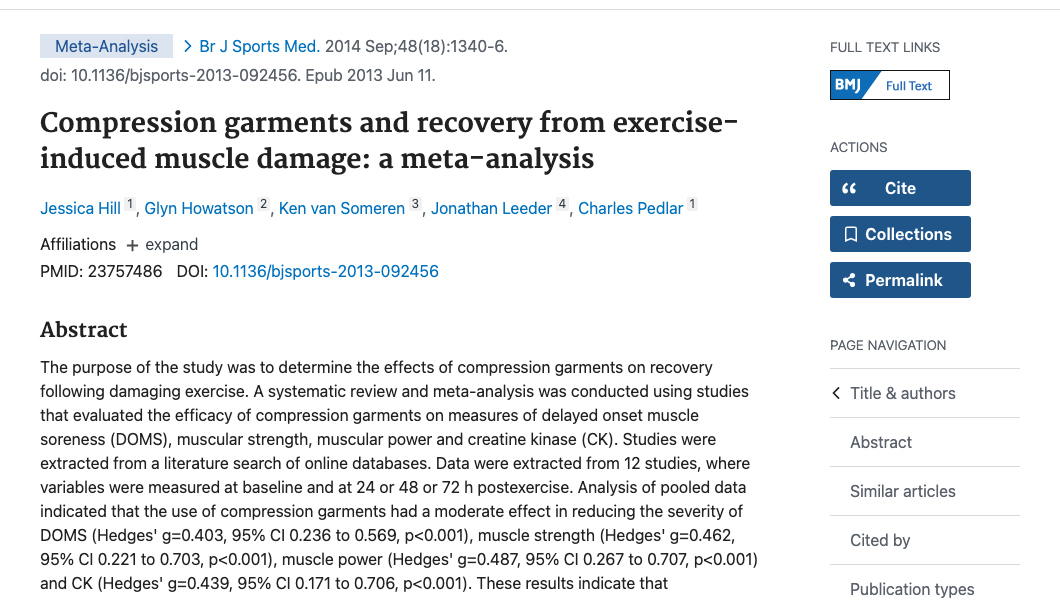
Meta-analysis of 12 studies shows compression garments have moderate effects on reducing DOMS (g=0.40), improving muscle strength recovery (g=0.46), power (g=0.49), and reducing CK levels (g=0.44), all significant at p<0.001.
Summary
This meta-analysis by Hill and colleagues systematically reviewed the evidence for compression garments as a recovery tool following exercise-induced muscle damage. The authors searched multiple databases and identified 12 studies meeting inclusion criteria, encompassing a range of exercise modalities and compression garment types.
The pooled analysis revealed statistically significant moderate effects across all primary outcomes. Compression garments reduced delayed-onset muscle soreness (Hedges' g = 0.40, p < 0.001), accelerated muscle strength recovery (g = 0.46, p < 0.001), improved power recovery (g = 0.49, p < 0.001), and lowered creatine kinase levels (g = 0.44, p < 0.001). These effect sizes represent a meaningful practical benefit for athletes concerned with recovery between training sessions or competitions.
The authors noted that while the effects were consistent across studies, there was heterogeneity in compression garment types, pressures applied, and duration of wear. The mechanisms likely involve reduced edema and swelling through enhanced venous return and lymphatic drainage, which may accelerate clearance of metabolic byproducts and reduce secondary tissue damage. The findings support the use of compression garments as a practical, accessible recovery strategy, particularly when athletes have limited time between exercise bouts.