Key Takeaway
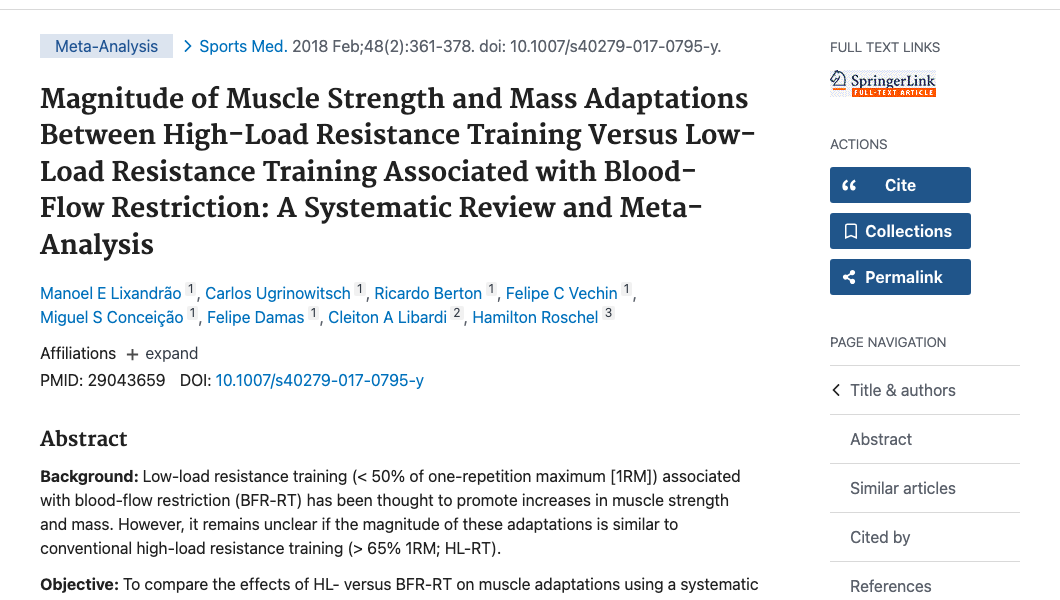
Meta-analysis confirming low-load BFR training produces similar hypertrophy to high-load training, though strength gains are slightly lower.
Summary
This comprehensive meta-analysis compared muscle adaptations between high-load resistance training and low-load BFR training. The researchers analyzed multiple randomized controlled trials measuring both muscle size and strength outcomes.
The key finding was that BFR training with low loads (20-40% 1RM) produced statistically similar muscle hypertrophy compared to traditional high-load training (70%+ 1RM). However, strength gains were somewhat lower with BFR, suggesting neural adaptations differ between methods.
This provides strong evidence that BFR is a legitimate hypertrophy tool, particularly valuable when heavy loads aren't feasible or desirable.
Methods
- Systematic review and meta-analysis
- Included RCTs comparing high-load vs. low-load BFR
- Analyzed both hypertrophy and strength outcomes
- Used standardized effect sizes
Key Results
- Similar hypertrophy between high-load and low-load BFR
- Strength gains slightly favored high-load training
- Effect consistent across different muscle groups
- Both upper and lower body responded to BFR
Limitations
- Heterogeneity in BFR protocols across studies
- Most studies relatively short duration
- Varied pressure protocols
- Limited data on trained populations
Related Interventions
Related Studies
Discussed In