Key Takeaway
Early landmark study showing BFR training produces acute increases in growth hormone and other anabolic hormones.
Summary
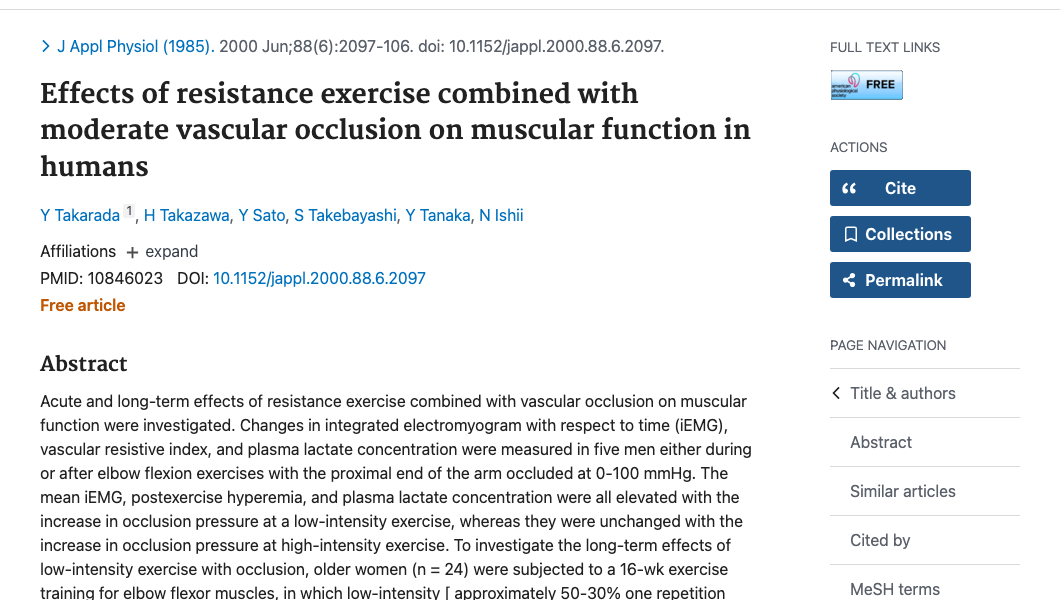
This early and influential study examined the acute hormonal responses to resistance exercise with blood flow restriction. The researchers measured growth hormone, testosterone, and other hormones before and after BFR training sessions.
The key finding was dramatic increases in growth hormone following BFR exercise - much greater than with traditional training at the same intensity. This acute hormonal response was proposed as a mechanism for BFR's muscle-building effects.
While subsequent research has questioned whether acute hormone spikes drive chronic adaptations, this study was foundational in establishing BFR as a legitimate area of research.
Methods
- Compared BFR vs. non-BFR exercise
- Measured acute hormonal responses
- Used trained athletes
- Controlled exercise intensity
Key Results
- Dramatic growth hormone increase with BFR
- Greater hormonal response than traditional training
- Acute response, not chronic measurement
- Consistent across participants
Limitations
- Acute responses only
- Small sample size
- Link to chronic adaptations unclear
- Systemic hormone effects debated