
Key Takeaway
Acupuncture's pain-relieving effects persist for at least 12 months after treatment ends, with only about 15% of the benefit lost over time, indicating durable rather than short-lived improvements.
Summary
This individual patient data meta-analysis investigated a critical question in acupuncture research: do the benefits last after treatment stops? Using data from high-quality randomized controlled trials, the Acupuncture Trialists' Collaboration examined long-term follow-up outcomes in patients with chronic musculoskeletal pain, headache/migraine, and osteoarthritis.
The study pooled individual patient data from trials that included follow-up assessments at least 3 months after the end of acupuncture treatment. This approach allowed for more precise estimates of treatment persistence than traditional meta-analysis methods. The conditions studied included chronic back and neck pain, shoulder pain, osteoarthritis, and chronic headache disorders.
Results showed that approximately 85% of the pain-relieving benefit observed at the end of acupuncture treatment was retained at 12-month follow-up. The decline in effect over time was small and gradual, indicating that acupuncture produces durable improvements rather than temporary relief that disappears when treatment stops. This finding is particularly important because a common criticism of acupuncture has been that any benefits are short-lived.
The persistence of effects was consistent across different pain conditions and was observed in comparisons with both sham acupuncture and no-acupuncture controls, strengthening the conclusion that acupuncture triggers lasting physiological changes beyond simple placebo effects.
Methods
Individual patient data (IPD) meta-analysis conducted by the Acupuncture Trialists' Collaboration. Data were obtained from 20 high-quality RCTs (n = 6,376 patients) with follow-up assessments at least 3 months post-treatment. Conditions included chronic musculoskeletal pain, osteoarthritis, and chronic headache. IPD meta-analysis allows examination of individual patient trajectories over time, providing more precise estimates than aggregate data approaches. The primary analysis modeled the rate of decline in acupuncture's effects from end-of-treatment to follow-up using mixed-effects regression.
Key Results
At 12 months post-treatment, approximately 85% of the pain reduction achieved at end of treatment was maintained. The rate of decline in treatment effect was estimated at about 15% over 12 months. Effects persisted significantly in comparisons against both sham acupuncture and no-acupuncture controls. Persistence was consistent across pain conditions (musculoskeletal, headache, osteoarthritis). The treatment effect versus sham at 12 months remained statistically significant (p < 0.001), confirming durable benefits beyond non-specific effects of needling.
Figures
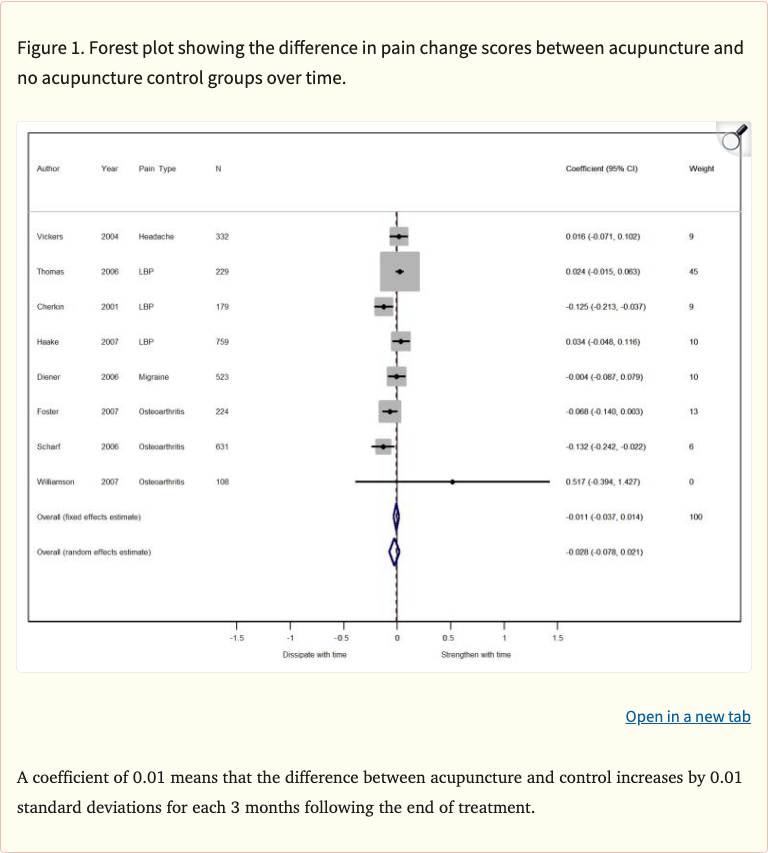 Figure 1
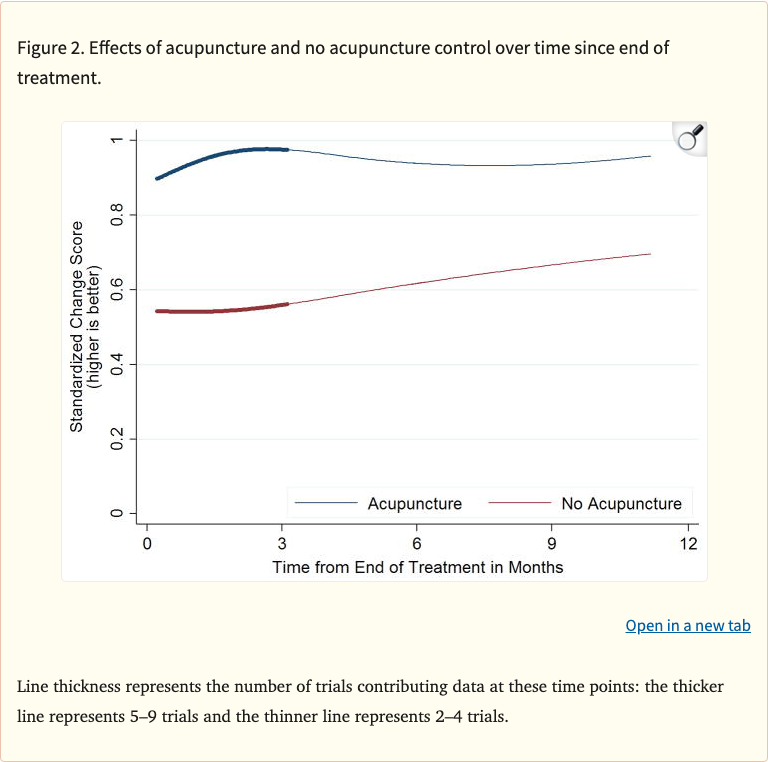 Figure 2
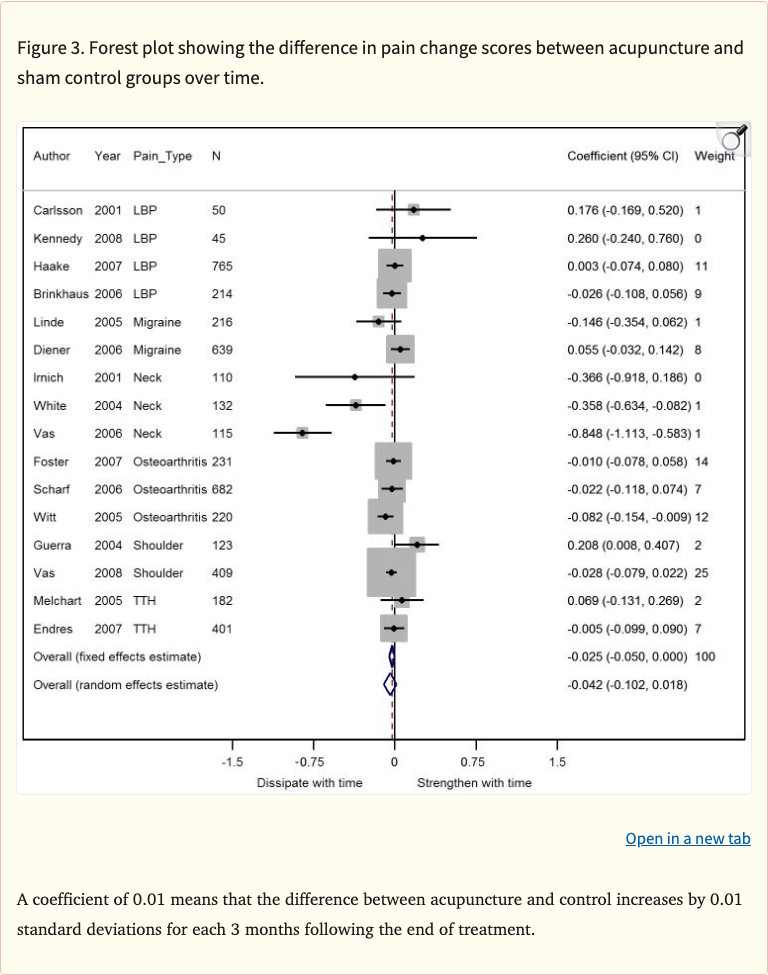 Figure 3
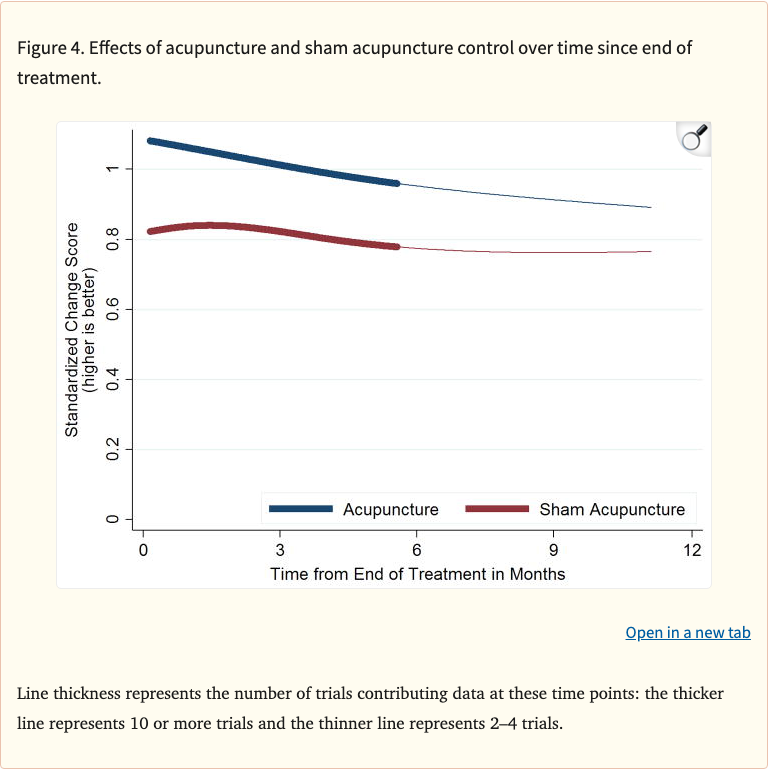 Figure 4
Limitations
Not all original trials had long-term follow-up data, which could introduce selection bias. Follow-up time points varied across studies. Patients were not re-randomized at follow-up, so differential use of rescue treatments or other interventions during follow-up could influence results. Some trials had higher dropout rates at follow-up. The analysis could not determine the optimal treatment "dose" for maximizing persistence. IPD was not available for all eligible trials, though the included studies were of generally high quality.