
Key Takeaway
Acupuncture significantly reduces pain intensity across multiple pain conditions with a favorable safety profile, showing clinically meaningful improvements over sham and conventional treatments.
Summary
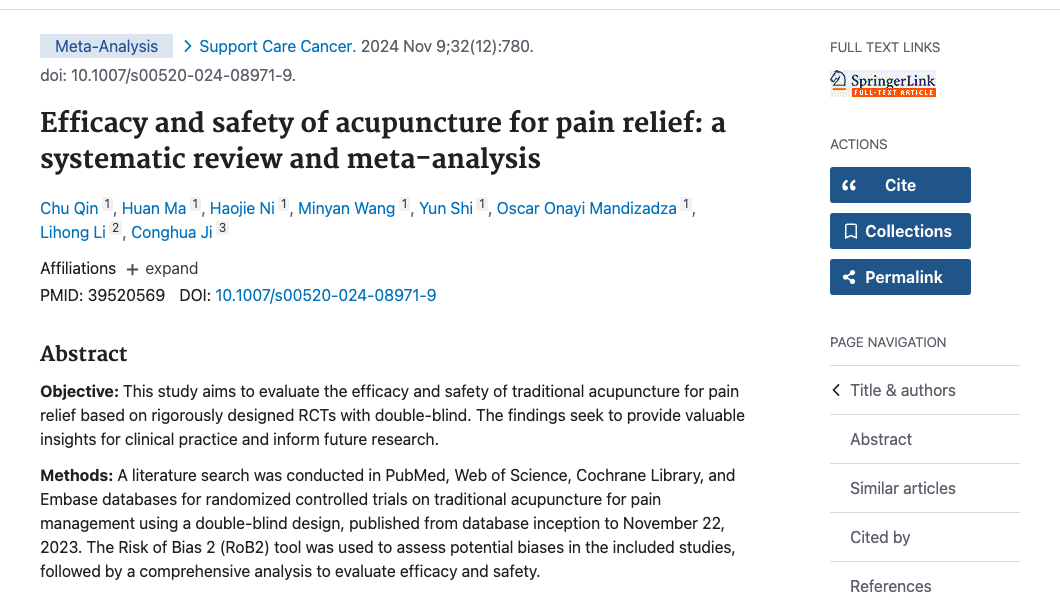
This systematic review and meta-analysis evaluated the efficacy and safety of acupuncture for pain relief across a broad range of pain conditions. The researchers searched multiple databases through 2024 and synthesized evidence from randomized controlled trials comparing acupuncture to sham acupuncture, conventional treatment, or no treatment.
The analysis included studies covering various chronic and acute pain conditions, providing a comprehensive overview of acupuncture's analgesic effects. The pooled results demonstrated statistically significant reductions in pain intensity favoring acupuncture over control conditions, with effect sizes indicating clinically meaningful improvements for many patients.
Safety data showed that acupuncture was well-tolerated across studies, with adverse events being predominantly mild and self-limiting (bruising, minor bleeding, temporary soreness). Serious adverse events were extremely rare. The authors concluded that acupuncture is both effective and safe for pain management, supporting its integration into multimodal pain treatment strategies.
Methods
Systematic review and meta-analysis following PRISMA guidelines. The authors searched PubMed, Embase, Cochrane Library, and other databases for randomized controlled trials comparing acupuncture to sham acupuncture, conventional treatment, or no treatment for pain conditions. Risk of bias was assessed using the Cochrane tool. Meta-analysis was performed using random-effects models with pain intensity as the primary outcome. Subgroup analyses were conducted by pain condition and comparator type. Publication bias was evaluated using funnel plots and Egger's test.
Key Results
The meta-analysis found that acupuncture significantly reduced pain intensity compared to sham acupuncture and conventional treatments. Effect sizes were statistically significant across multiple pain conditions. Subgroup analyses showed benefits for musculoskeletal pain, cancer-related pain, and postoperative pain. The safety profile was favorable, with serious adverse events being extremely rare across all included trials. Heterogeneity between studies was present but expected given the range of pain conditions studied.
Limitations
Heterogeneity across included studies due to varying pain conditions, acupuncture protocols, and outcome measures. Many individual trials had relatively small sample sizes. Blinding challenges are inherent in acupuncture research, as sham acupuncture itself may have physiological effects. Publication bias toward positive results cannot be fully excluded. The broad scope, while comprehensive, may mask condition-specific nuances in acupuncture's effectiveness.