
Key Takeaway
Cochrane review of 22 trials found acupuncture reduces migraine frequency, with effects comparable to prophylactic drugs but fewer side effects
Summary
This Cochrane systematic review provided high-quality evidence that acupuncture is effective for migraine prevention. Adding acupuncture to symptomatic treatment reduced headache frequency, and acupuncture was at least as effective as prophylactic drug treatment with fewer adverse effects.
Methods
- Design: Cochrane systematic review and meta-analysis
- Trials included: 22 RCTs
- Participants: 4,985 patients with episodic migraine
- Comparisons: Acupuncture vs sham, vs no treatment, vs prophylactic drugs
- Outcomes: Headache frequency, responder rates, adverse events
- Follow-up: Various, typically 3-6 months
Key Results
- Acupuncture vs sham acupuncture:
- Moderate reduction in headache frequency
- Consistent effect across trials
- Acupuncture vs no acupuncture:
- Large reduction in headache frequency
- High quality evidence
- Acupuncture vs prophylactic drugs:
- Similar effectiveness
- Fewer adverse effects with acupuncture
- Lower dropout rates with acupuncture
- Responder rate (50% reduction):
- 41% with true acupuncture
- 17% with sham acupuncture
- Effects maintained at follow-up
Figures
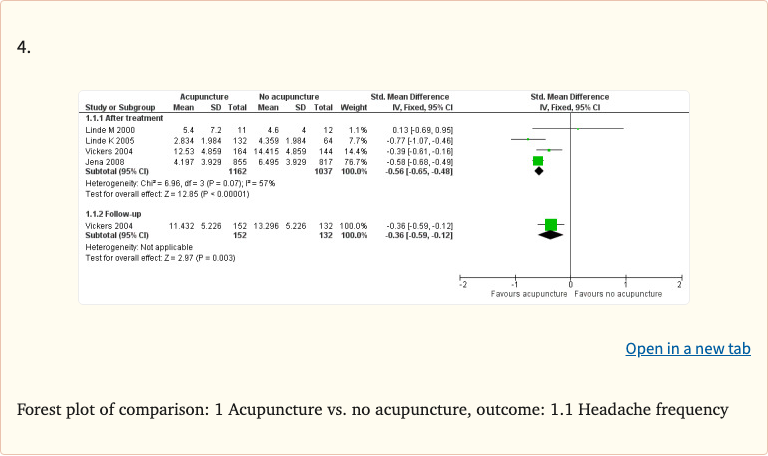 Figure 1
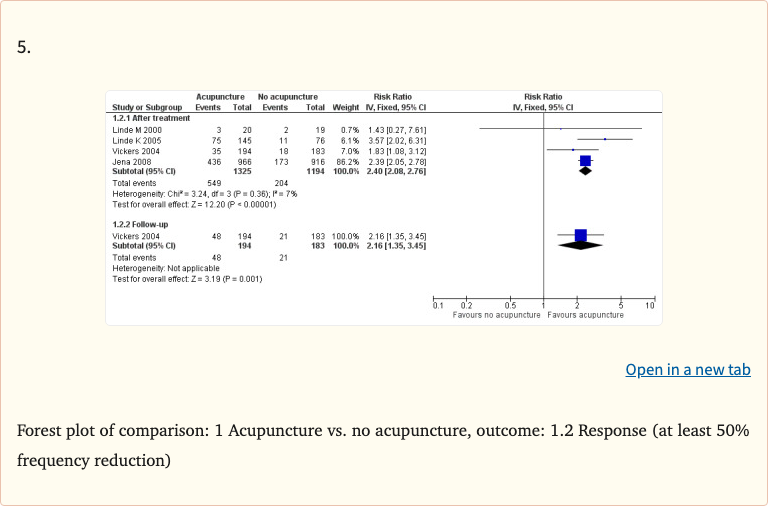 Figure 2
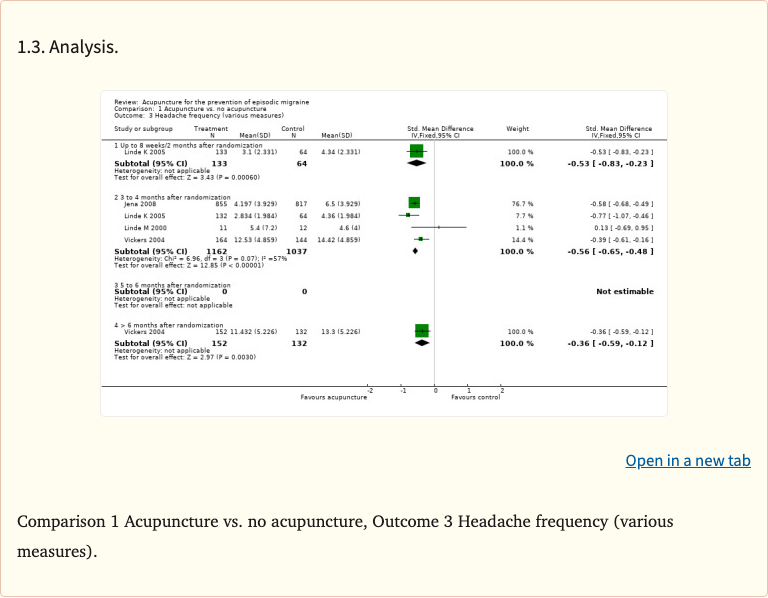 Figure 3
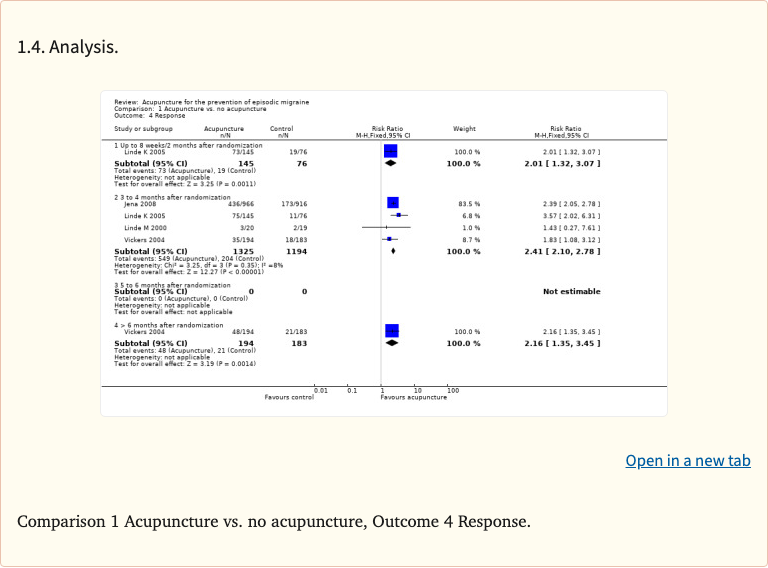 Figure 4
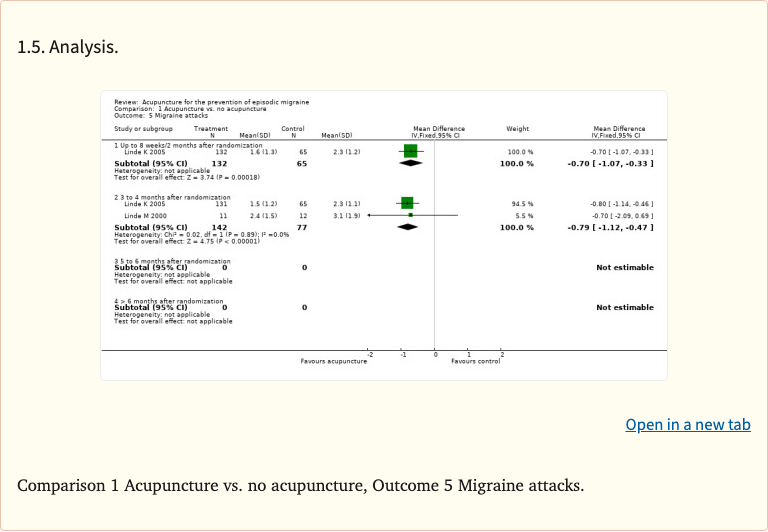 Figure 5
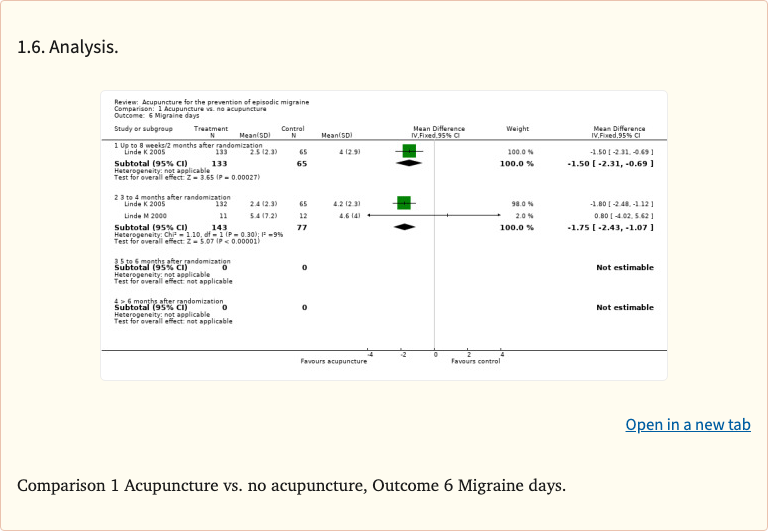 Figure 6
Limitations
- Sham acupuncture may have physiological effects
- Perfect blinding difficult in acupuncture trials
- Heterogeneity in acupuncture protocols
- Optimal treatment frequency not established
- Most trials from China or Germany