Key Takeaway
Muscle-strengthening activities are associated with a 15% lower risk of all-cause mortality, with maximum risk reduction occurring at approximately 30-60 minutes per week.
Summary
This comprehensive systematic review and meta-analysis synthesized data from 16 prospective cohort studies to evaluate the association between muscle-strengthening activities and the risk of mortality and major non-communicable diseases. Seven of these studies specifically examined all-cause mortality outcomes.
The analysis found that engaging in muscle-strengthening activities was associated with a 15% lower risk of all-cause mortality. Importantly, the dose-response analysis revealed a J-shaped curve with maximum risk reduction occurring at approximately 30-60 minutes per week of muscle-strengthening activity. Beyond this optimal range, the protective effect appeared to attenuate, suggesting that more is not necessarily better for mortality reduction.
The study also examined disease-specific outcomes, finding protective associations with cardiovascular disease, diabetes, lung cancer, and total cancer. These results provide important guidance for public health recommendations, supporting the inclusion of regular but moderate-duration muscle-strengthening activities as part of a comprehensive exercise program.
Methods
Systematic review and meta-analysis of prospective cohort studies following PRISMA guidelines. Databases searched included PubMed, Scopus, and the Cochrane Library. Sixteen studies were included in the analysis. Random-effects models were used for pooled estimates. Linear and nonlinear dose-response analyses were conducted using restricted cubic splines to characterize the relationship between duration of muscle-strengthening activities and health outcomes.
Key Results
- All-cause mortality: ~15% lower risk with muscle-strengthening activities (7 studies)
- Optimal dose: maximum risk reduction at approximately 30-60 min/week
- J-shaped dose-response curve — benefits diminish beyond 130-140 min/week
- Protective associations also found for cardiovascular disease, diabetes, and cancer
- 16 prospective cohort studies included across all outcomes
Figures
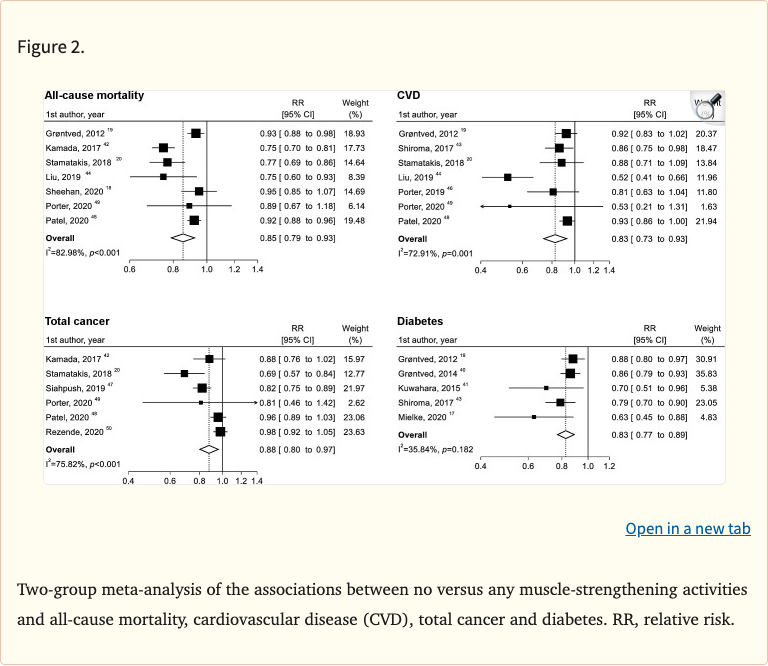 Figure 1
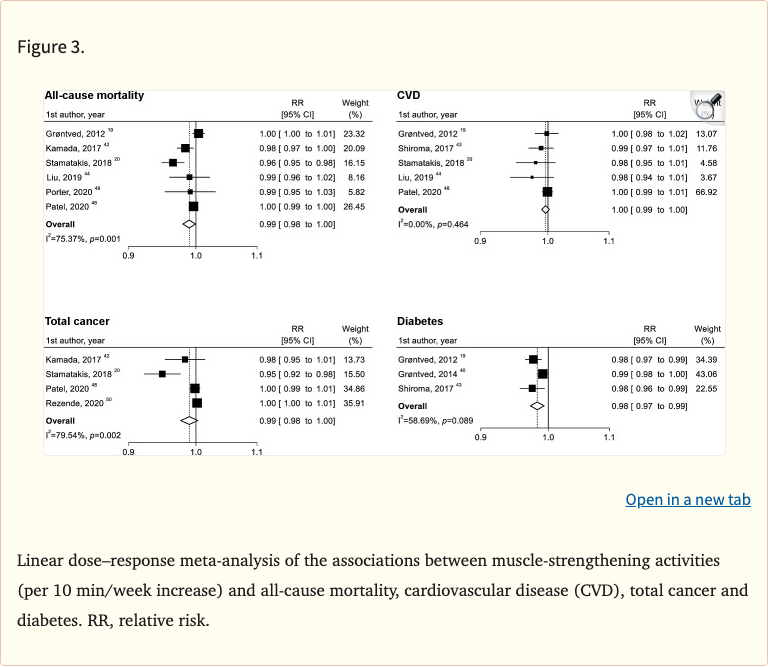 Figure 2
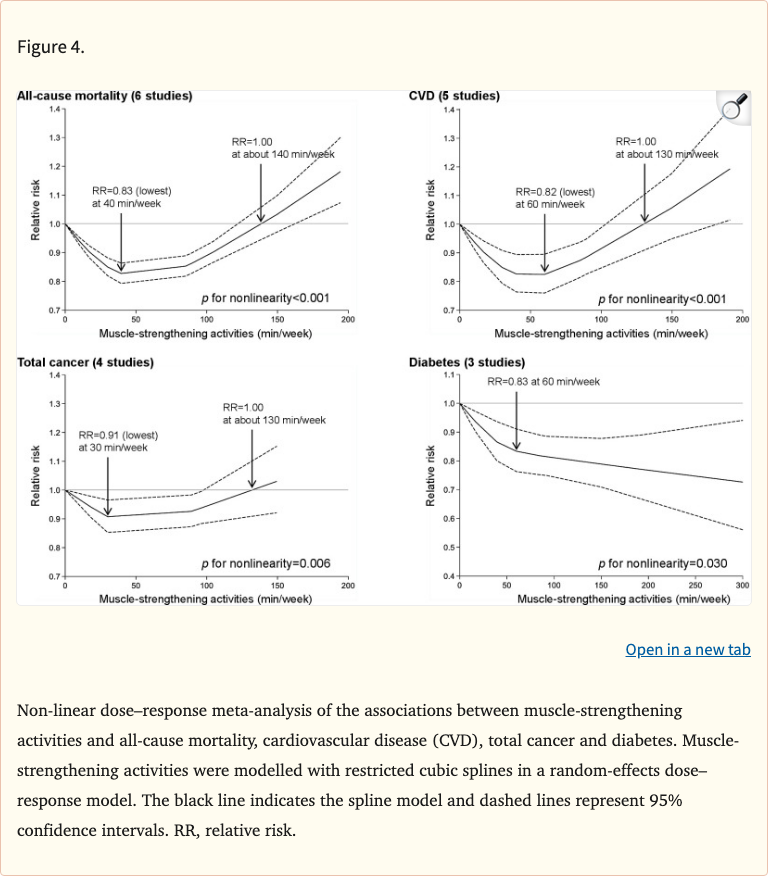 Figure 3
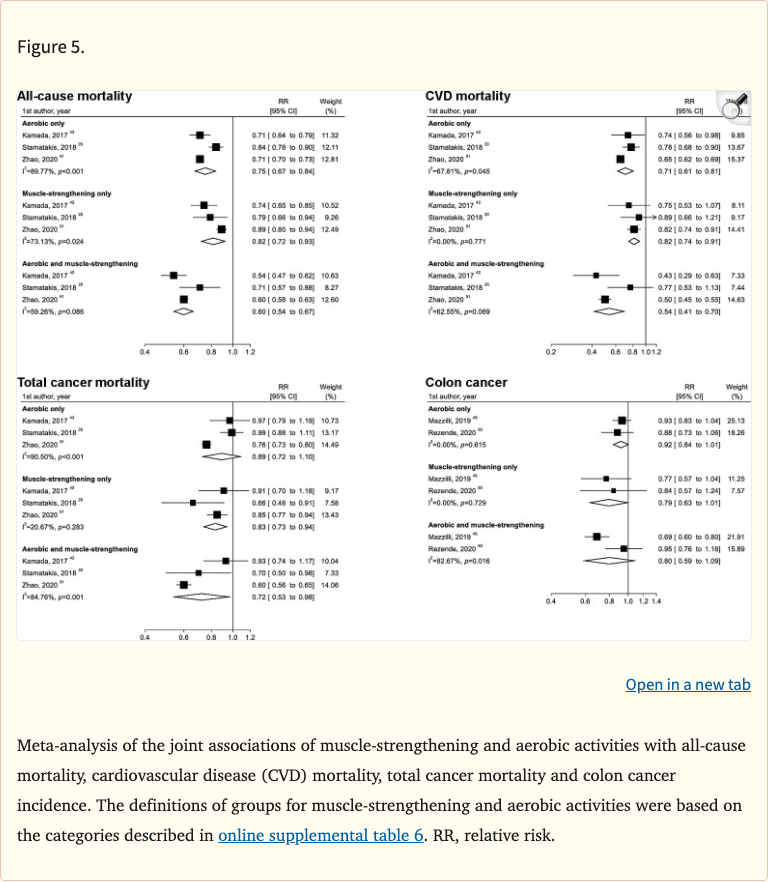 Figure 4
Limitations
- Observational study design precludes causal conclusions
- Heterogeneous definitions of "muscle-strengthening activities" across studies
- Most studies relied on self-reported activity measures
- Limited information on intensity, type of exercises, and training variables
- Potential healthy-user bias among those who engage in muscle-strengthening activities
- Relatively small number of studies for some disease-specific outcomes