
Key Takeaway
Heat exposure during sleep significantly reduces slow-wave sleep (deep sleep) and REM sleep, while a cool environment facilitates the natural drop in core body temperature needed for sleep onset.
Summary
This comprehensive review examined the effects of thermal environment on sleep quality and circadian rhythm.
Key findings:
- Heat exposure (>26°C/79°F) reduces slow-wave sleep
- Heat exposure reduces REM sleep
- Cold environments are better tolerated than hot
- Core body temperature must drop for sleep onset
- Humid heat is more disruptive than dry heat
Temperature mechanisms:
- Sleep onset linked to peripheral vasodilation (heat loss)
- Cool room facilitates core temperature drop
- Hot room blocks thermoregulation → poor sleep initiation
- Distal skin warming (hands/feet) helps initiate sleep
Practical implications:
Ambient temperature of 17-21°C (63-70°F) is optimal for most people. Prioritize cooling over heating for sleep optimization.
Figures
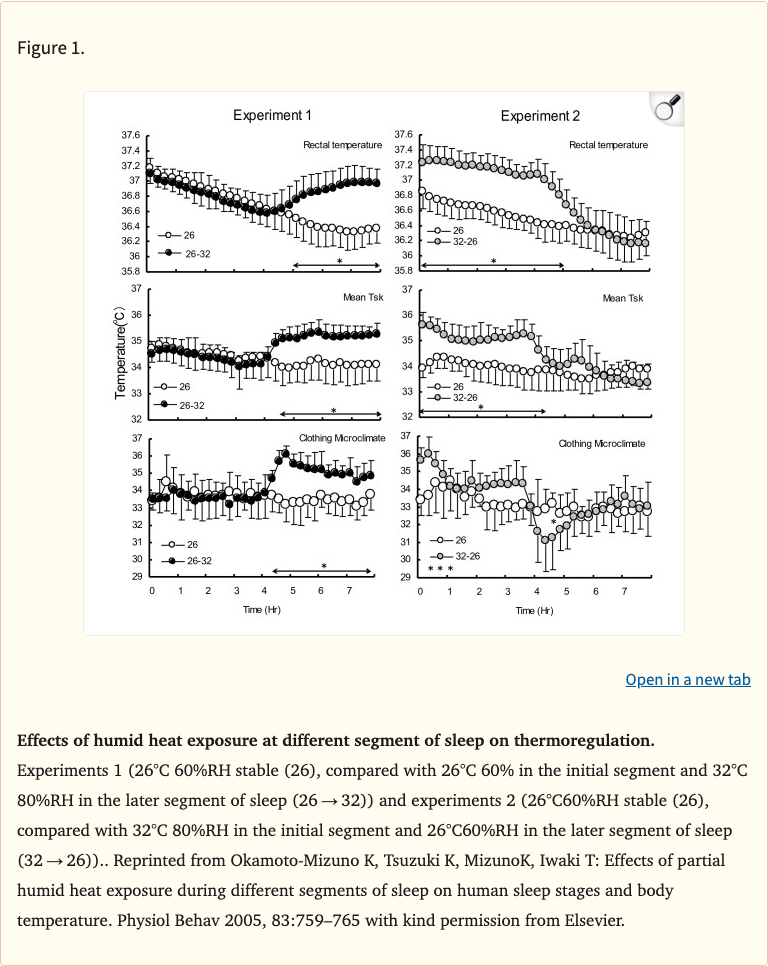 Figure 1
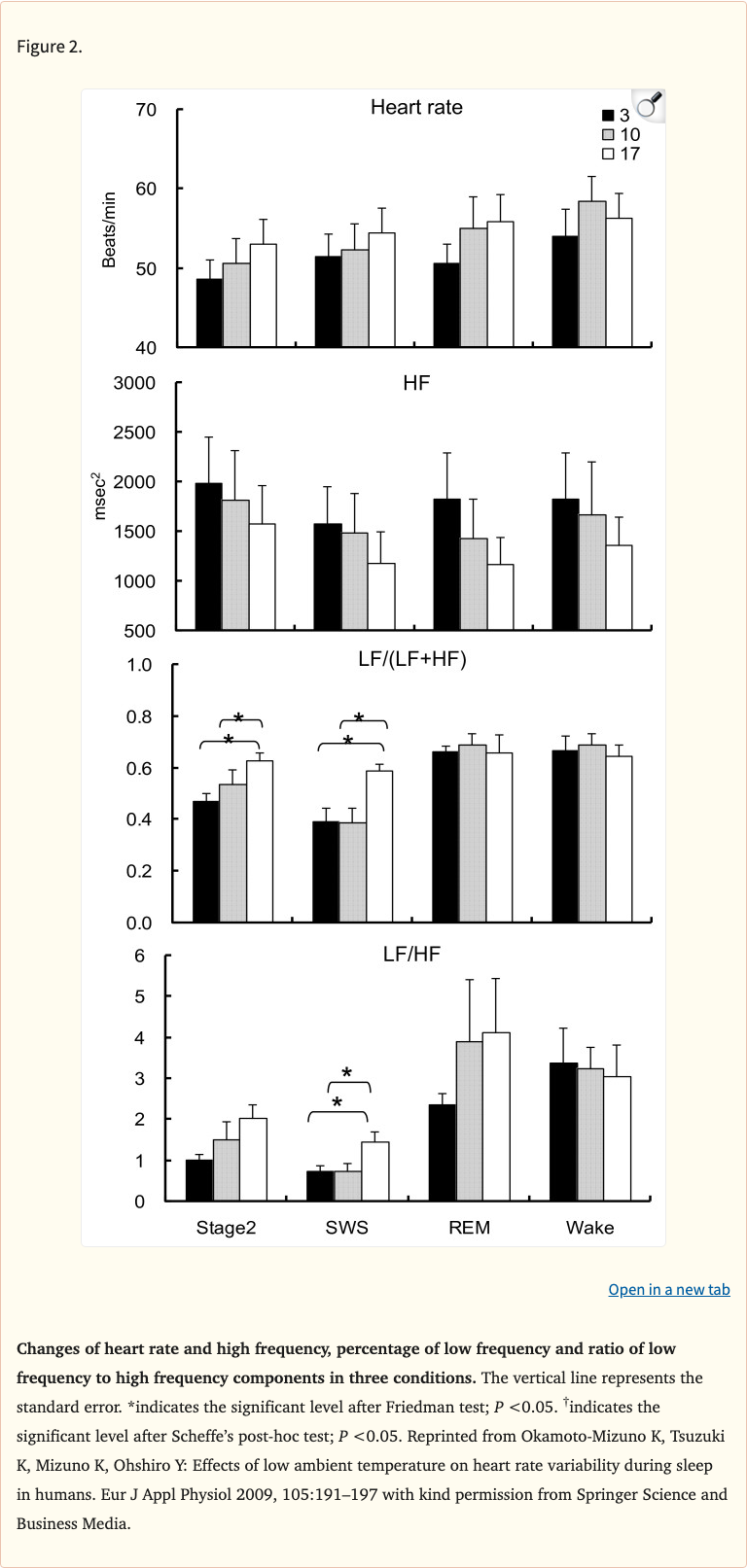 Figure 2
Related Interventions
Related Studies
Discussed In

#080 How Heat Therapy Improves Slow Wave Sleep
FoundMyFitness

Dr. Matthew Walker — How Sleep Ties Into Alzheimer's and Weight Gain, Effects of Caffeine, THC/CBD, and Fasting on Sleep
The Tim Ferriss Show
#045 Dr. Matthew Walker on Sleep for Enhancing Learning, Creativity, Immunity, and Glymphatic System
FoundMyFitness

GUEST SERIES | Dr. Matt Walker: The Biology of Sleep & Your Unique Sleep Needs
Huberman Lab
Journal Club with Dr. Peter Attia | Effects of Light & Dark on Mental Health & Treatments for Cancer
Huberman Lab