Key Takeaway
Exposure to light at night is associated with a 22% increased prevalence of sleep problems, with indoor light exposure (74% increase) far more disruptive than outdoor light pollution (19% increase).
Summary
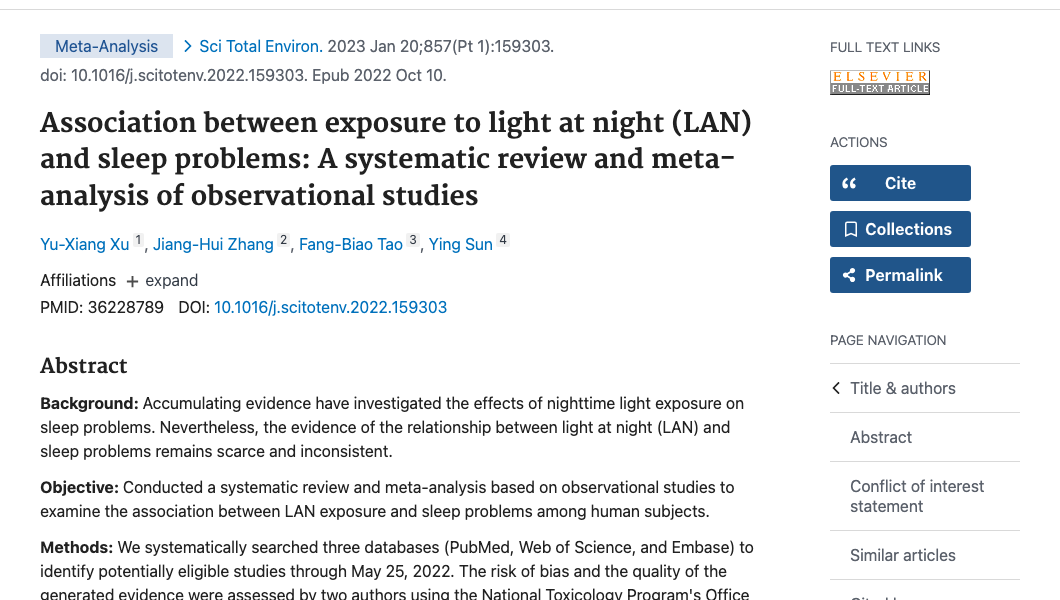
This systematic review and meta-analysis examined the association between exposure to light at night (LAN) and sleep problems across observational studies. The authors searched PubMed, Web of Science, and Embase through May 2022, identifying 7 cross-sectional studies with a combined total of 577,932 participants.
The pooled analysis found that individuals with higher levels of nighttime light exposure had a 22% increased prevalence of sleep problems (Summary Odds Ratio: 1.22, 95% CI: 1.13-1.33). A key finding was the dramatic difference between indoor and outdoor light sources: indoor LAN exposure showed a 74% increase in sleep problem prevalence (SOR: 1.74), while outdoor LAN showed a 19% increase (SOR: 1.19). A dose-response analysis revealed that light intensity exceeding 5.8 nW/cm2/sr was significantly associated with increased sleep problems, with prevalence rising proportionally as light intensity increased.
The findings support the detrimental effects of nighttime light exposure on sleep and suggest that maintaining bedroom darkness is a practical and effective measure to reduce sleep problems. The authors used the OHAT risk of bias tool and GRADE framework for quality assessment, and called for future longitudinal research with improved light measurement methodologies.
Methods
- Systematic search of PubMed, Web of Science, and Embase through May 2022
- Meta-analysis of 7 cross-sectional studies (577,932 participants)
- Risk of bias assessed using OHAT rating tool
- Evidence quality assessed using GRADE framework
- Subgroup analyses by indoor vs outdoor light exposure
- Dose-response analysis for light intensity thresholds
Key Results
- 22% increased prevalence of sleep problems with higher LAN (SOR: 1.22, 95% CI: 1.13-1.33)
- Indoor LAN: 74% increased prevalence (SOR: 1.74)
- Outdoor LAN: 19% increased prevalence (SOR: 1.19)
- Light intensity >5.8 nW/cm2/sr significantly associated with sleep problems
- Dose-response relationship: higher intensity = more sleep problems
- Low heterogeneity across studies
Limitations
- All included studies were cross-sectional (no causal inference)
- Only 7 studies met inclusion criteria
- Heterogeneity in light exposure measurement methods
- Most studies used self-reported sleep outcomes
- Limited geographic diversity in study populations
- Could not account for individual light sensitivity differences
Related Interventions
Related Studies
Discussed In