
Key Takeaway
Transportation noise (aircraft, road, rail) significantly increases sleep disturbance risk, with every 10 dB increase in nighttime noise roughly doubling the odds of being highly sleep disturbed.
Summary
This study updated the World Health Organization's systematic review on environmental noise and sleep disturbance, adding 11 new studies to the original 25 from the 2015 WHO review, for a total of 36 studies encompassing 173,160 survey responses. The authors examined self-reported sleep disturbance among residents exposed to aircraft, road, and railway traffic noise at home.
The meta-analysis found substantial effects of noise on sleep disturbance. When noise was explicitly mentioned as the source of disturbance, every 10 dB increase in nighttime noise was associated with markedly higher odds of sleep problems: aircraft noise OR 2.18, road traffic OR 2.52, and railway noise OR 2.97. When noise was not specifically mentioned, the associations were considerably weaker (aircraft OR 1.52, road OR 1.14, railway OR 1.17), suggesting that some sleep disruption from noise occurs below conscious awareness.
The exposure-response relationships closely matched the original WHO review at lower noise levels, supporting the existing WHO nighttime noise guidelines: 45 dB for road traffic, 44 dB for rail, and 40 dB for aircraft. However, populations exposed to high aircraft noise levels showed greater sleep disturbance risk than previously documented, suggesting current guidelines may underestimate the impact of aircraft noise at higher exposures.
Methods
- Systematic review and meta-analysis following PRISMA guidelines
- Searched Scopus, PubMed, Embase, and PsycINFO
- 36 total studies (25 original WHO + 11 new), 173,160 survey responses
- Examined aircraft, road, and railway traffic noise
- Derived exposure-response relationships for nighttime noise (Lnight, 2300-0700)
- Outcomes: awakenings, difficulty falling asleep, sleep disturbance
Key Results
- Aircraft noise: OR 2.18 (95% CI: 2.01-2.36) per 10 dB when noise mentioned
- Road traffic: OR 2.52 (95% CI: 2.28-2.79) per 10 dB when noise mentioned
- Railway noise: OR 2.97 (95% CI: 2.57-3.43) per 10 dB when noise mentioned
- Lower associations when noise not mentioned as source (aircraft 1.52, road 1.14, rail 1.17)
- Results consistent with original WHO review at lower noise levels
- Higher aircraft noise levels showed greater disturbance than previously estimated
Figures
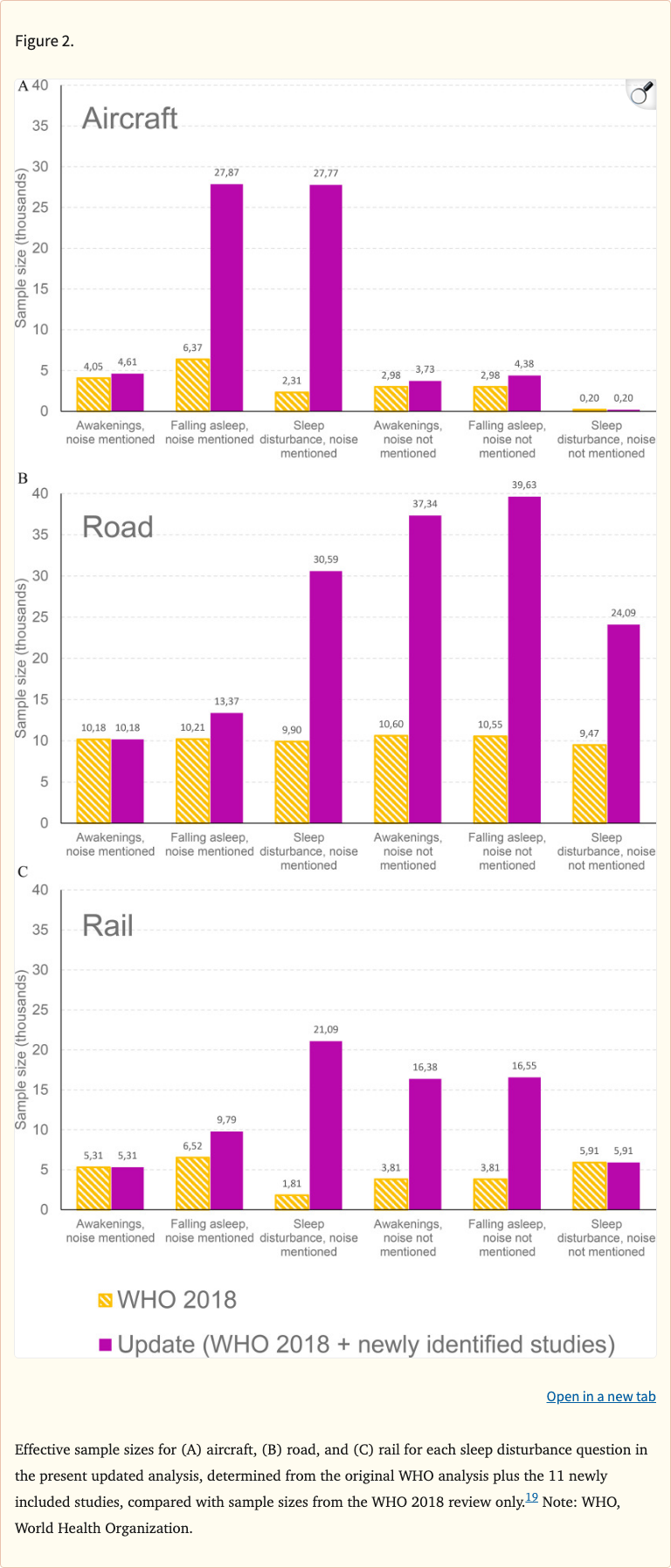 Figure 1
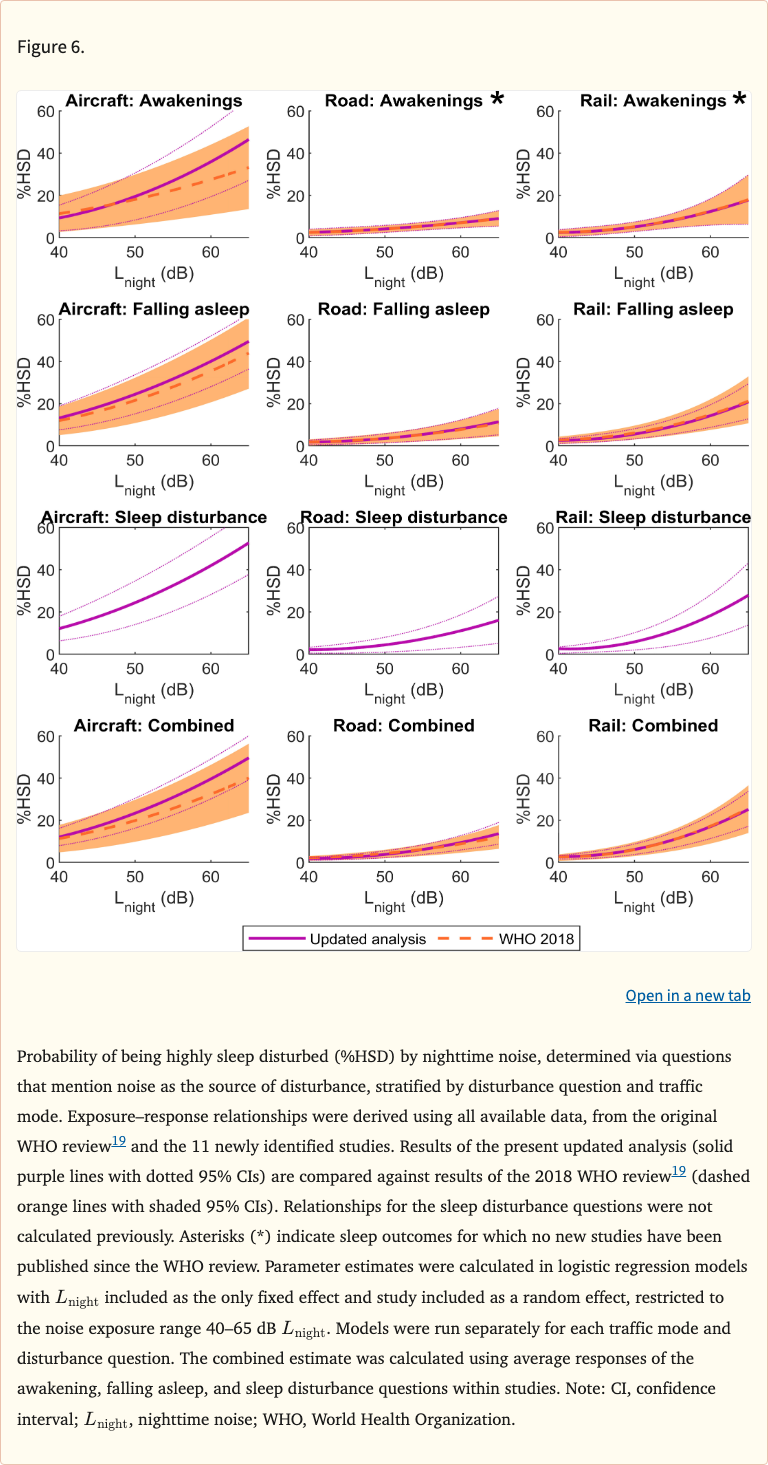 Figure 2
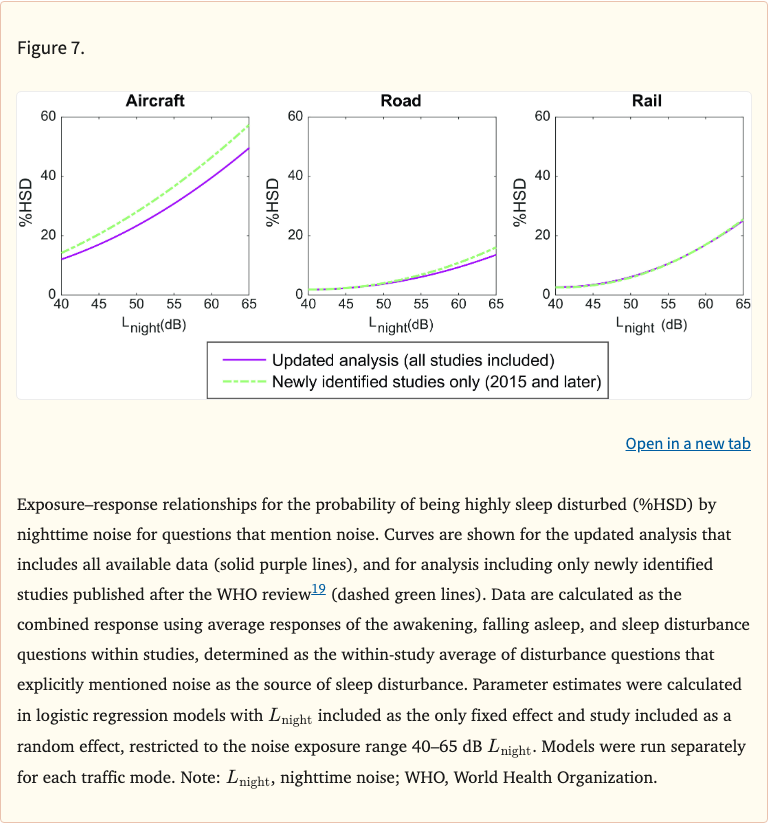 Figure 3
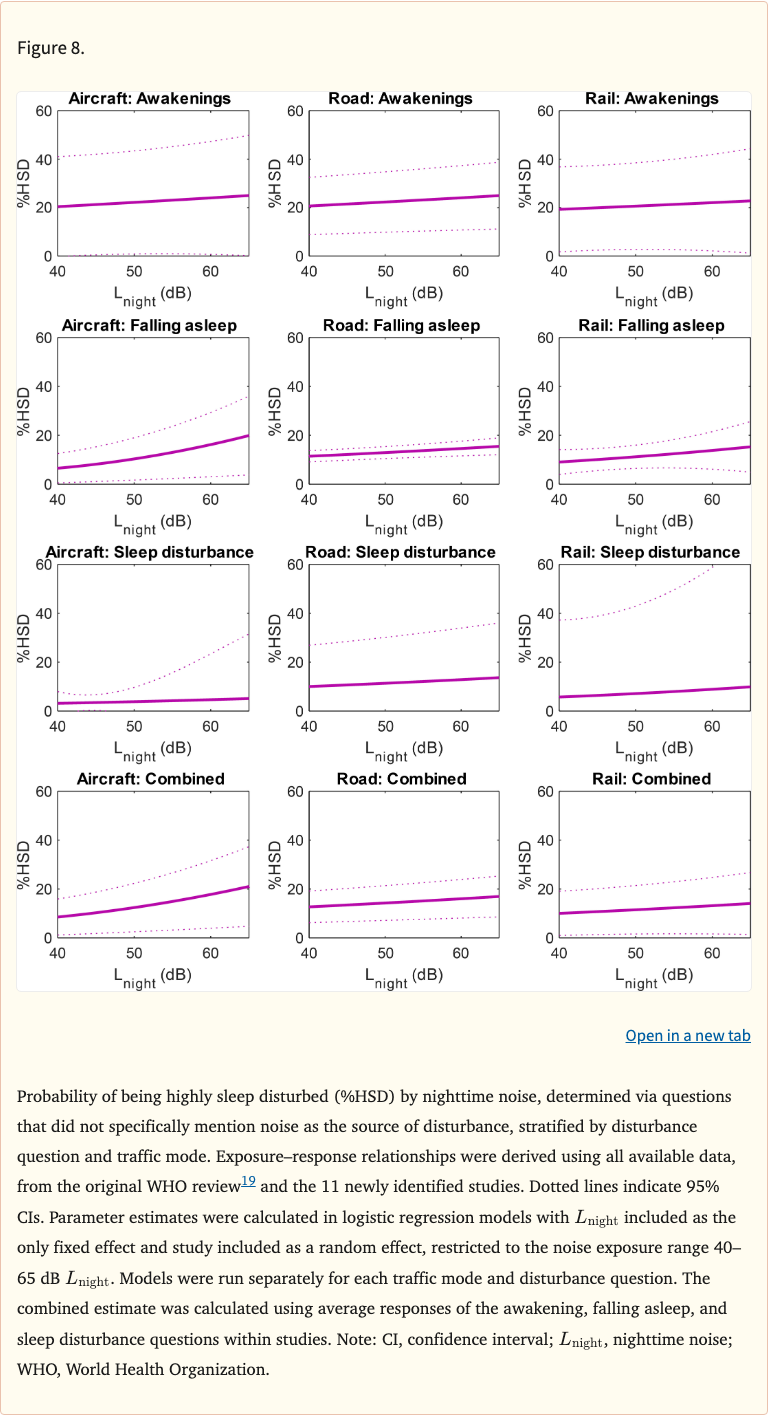 Figure 4
Limitations
- Relied on self-reported sleep disturbance outcomes
- Potential exposure misclassification (noise modeled at home exterior, not bedroom)
- Did not adjust for age, sex, socioeconomic status, or pre-existing sleep disorders
- Cross-sectional designs in most studies limit causal inference
- Did not assess objective sleep measures (PSG, actigraphy)
- Geographic focus on European populations