
Key Takeaway
Comprehensive review of aspirin's mechanisms, explaining how irreversible COX-1 inhibition provides cardioprotection through platelet suppression.
Summary
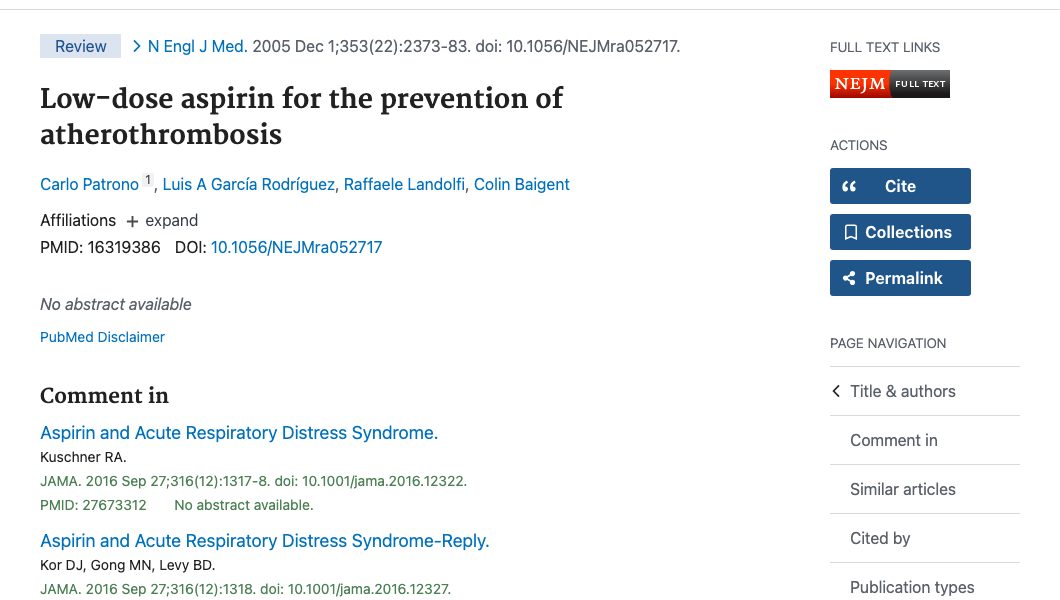
This authoritative review article summarizes the current understanding of low-dose aspirin's mechanisms and clinical applications for cardiovascular prevention.
Mechanism of Action:
COX-1 Inhibition:
- Aspirin irreversibly acetylates cyclooxygenase-1 (COX-1)
- This blocks production of thromboxane A2 in platelets
- Thromboxane A2 normally promotes platelet aggregation and vasoconstriction
- Because platelets cannot synthesize new COX-1, effect lasts platelet lifetime (7-10 days)
Why Low Doses Work:
- Even 75mg aspirin inhibits >95% of platelet thromboxane production
- Higher doses don't improve platelet inhibition but increase side effects
- The irreversible nature means once-daily dosing is sufficient
Additional Effects:
- COX-2 inhibition (at higher doses): Anti-inflammatory
- Nitric oxide effects: May improve endothelial function
- NF-κB inhibition: Reduces inflammatory gene expression
Clinical Evidence Summary:
- Primary prevention: 12% reduction in major vascular events
- Secondary prevention: 25% reduction in recurrent events
- Benefits must be balanced against bleeding risk
Current Recommendations:
- Secondary prevention: Clearly beneficial
- Primary prevention: Risk-benefit assessment needed
- Consider body weight when dosing
- Age is a critical factor in risk-benefit calculation