
Key Takeaway
Umbrella review of 72 meta-analyses confirms low-dose aspirin reduces cardiovascular events and colorectal cancer risk but significantly increases gastrointestinal and intracranial bleeding.
Summary
This umbrella review synthesized evidence from 72 systematic reviews and meta-analyses covering a wide range of health outcomes associated with low-dose aspirin use. The study used a comprehensive grading system to assess the strength of evidence across outcomes.
Strong evidence supported aspirin's role in reducing major cardiovascular events, myocardial infarction, and colorectal cancer incidence and mortality. The cancer-preventive effects were notable, with consistent risk reductions observed across multiple meta-analyses. Aspirin also showed suggestive evidence of benefit for preeclampsia prevention.
On the harm side, strong evidence confirmed that low-dose aspirin increases the risk of major gastrointestinal bleeding, intracranial bleeding, and hemorrhagic stroke. The authors emphasized that the overall benefit-risk balance depends heavily on individual patient characteristics, including age, cardiovascular risk, and bleeding history. This remains one of the most comprehensive evaluations of aspirin's broad health effects to date.
Figures
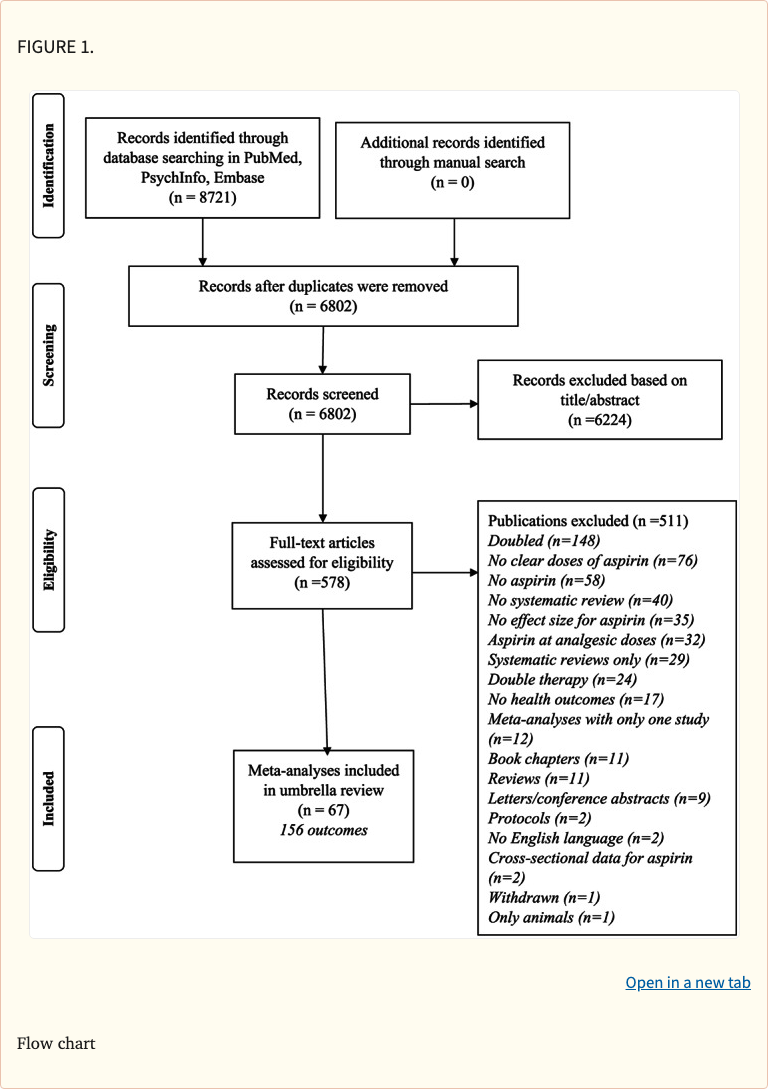 Figure 1