
Key Takeaway
Nasal breathing during exercise produces equivalent performance to mouth breathing while reducing ventilation rate by 22%, indicating improved breathing efficiency.
Summary
This study compared nasal-only breathing versus oral breathing during graded exercise testing. Despite the perceived difficulty of nasal breathing during exercise, performance outcomes were equivalent between conditions.
Notably, nasal breathing resulted in a 22% lower ventilation rate at equivalent workloads, suggesting improved breathing efficiency. This supports the concept that trained nasal breathers can maintain performance while breathing less.
The findings encourage athletes to develop nasal breathing capacity for improved efficiency during submaximal exercise.
Methods
- Graded exercise test to exhaustion
- Compared nasal-only vs. oral breathing
- Measured ventilation, oxygen consumption, power output
- Recreational athletes as subjects
Key Results
- No difference in peak power output
- 22% reduction in ventilation rate with nasal breathing
- Equivalent oxygen consumption
- Nasal breathing perceived as harder but performed equally
Figures
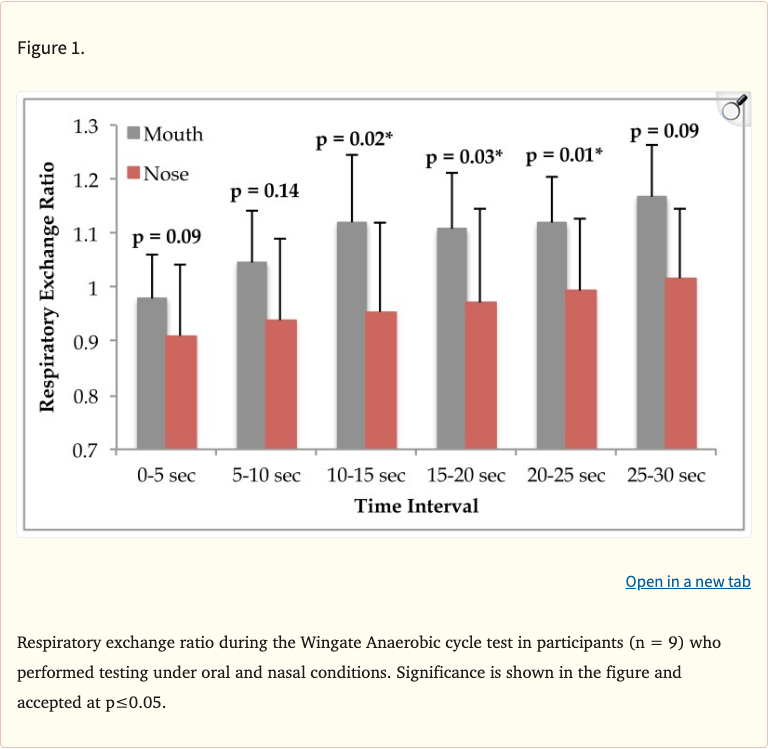 Figure 1
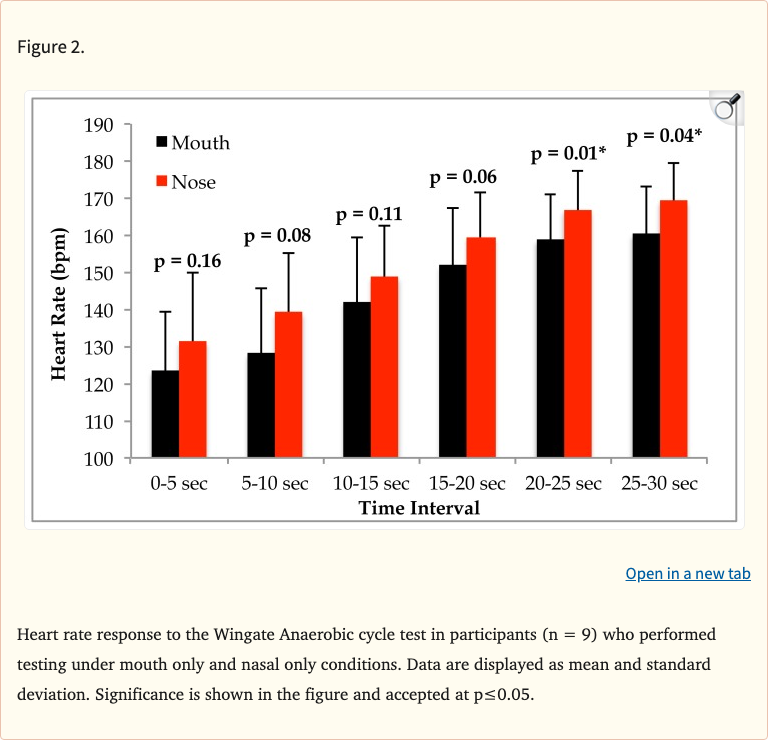 Figure 2
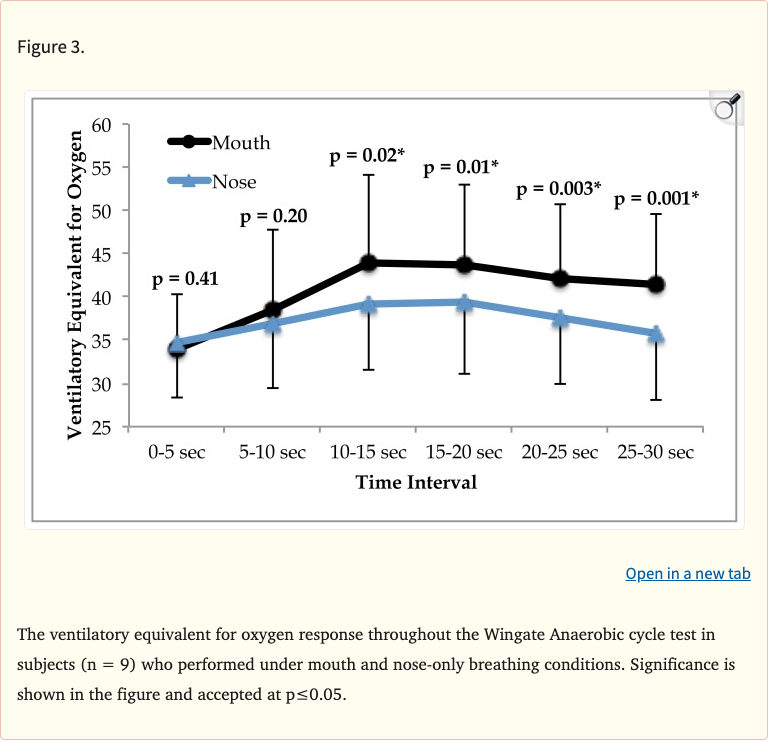 Figure 3
Limitations
- Recreational athletes (may differ in elite)
- Acute study, not chronic adaptation
- High-intensity may favor mouth breathing
