
Key Takeaway
Spinal manipulation produces small but statistically significant improvements in pain and function for chronic low back pain, with GRADE certainty rated low to very low
Summary
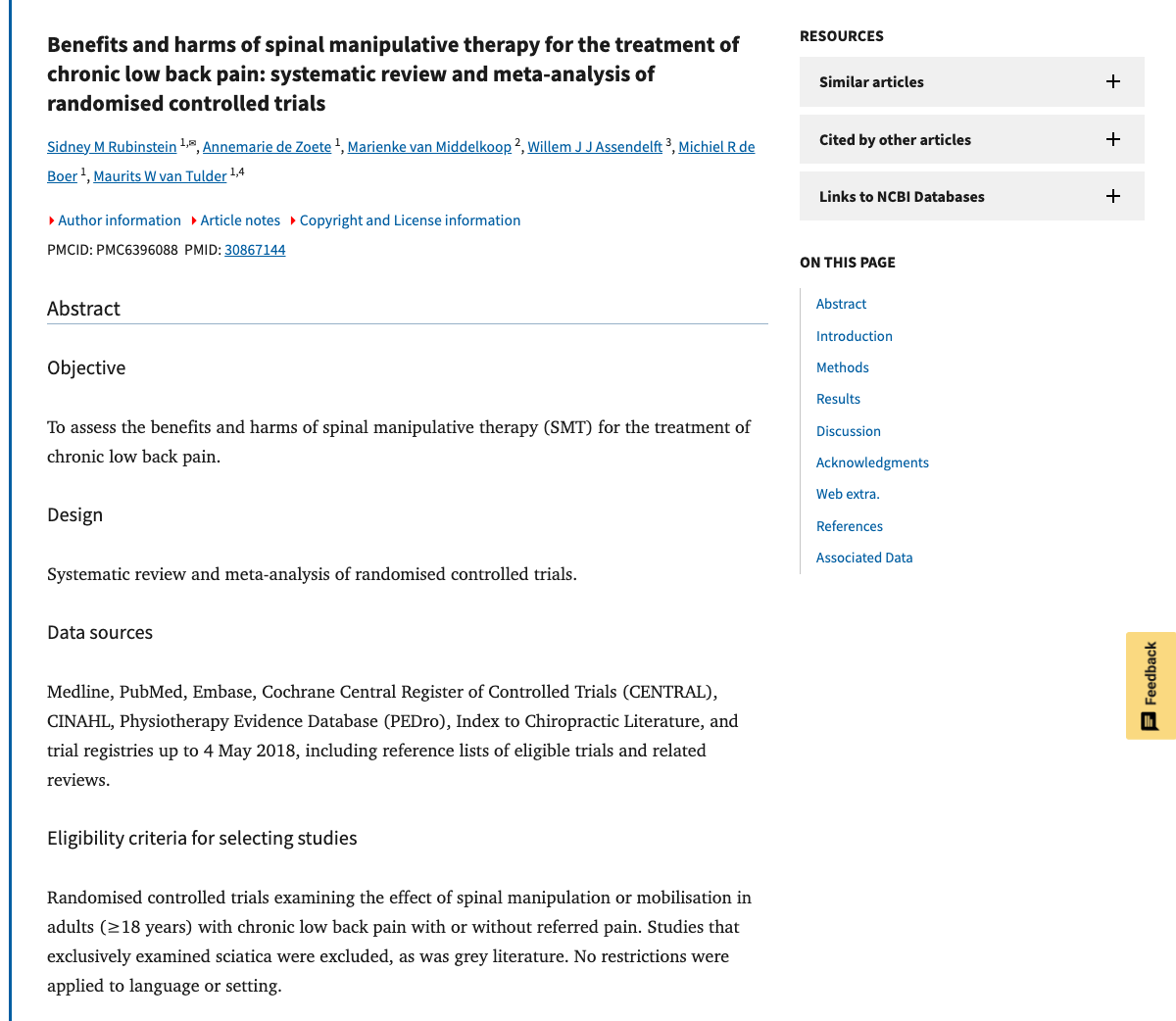
This Cochrane systematic review and meta-analysis evaluated the effectiveness of spinal manipulative therapy (SMT) for chronic low back pain. The authors searched multiple databases and included 47 randomized controlled trials with a total of 9,211 participants.
The review compared SMT to recommended therapies, non-recommended therapies, sham SMT, and SMT as an adjunct to other interventions. Results showed small, statistically significant improvements in pain (mean difference -12.0 on 0-100 scale) and function at various time points.
However, the clinical significance of these small effects is debatable. The quality of evidence was rated as low to very low across most outcomes due to risk of bias (blinding is nearly impossible with manual therapy) and inconsistency between studies. Benefits were similar regardless of the type of comparator treatment.
Methods
Cochrane systematic review searching CENTRAL, MEDLINE, Embase, CINAHL, PEDro, and other databases through 2018. Included 47 RCTs (9,211 participants) of adults with chronic low back pain (>12 weeks). Interventions included high-velocity low-amplitude thrust manipulation and mobilization techniques. Risk of bias assessed with Cochrane tool; evidence quality graded using GRADE criteria. Outcomes included pain intensity (0-100 VAS) and functional status at short, medium, and long-term follow-up.
Key Results
SMT vs recommended therapies: small pain improvement (MD -7.48, 95% CI -11.72 to -3.24) at 1 month. SMT vs non-recommended therapies: pain improvement (MD -12.0 on 100-point scale). SMT vs sham: small pain improvement at 1 month. Function improvements were similarly small across comparisons. No serious adverse events reported in included trials. Effects were statistically significant but clinically modest across all comparisons and time points.
Figures
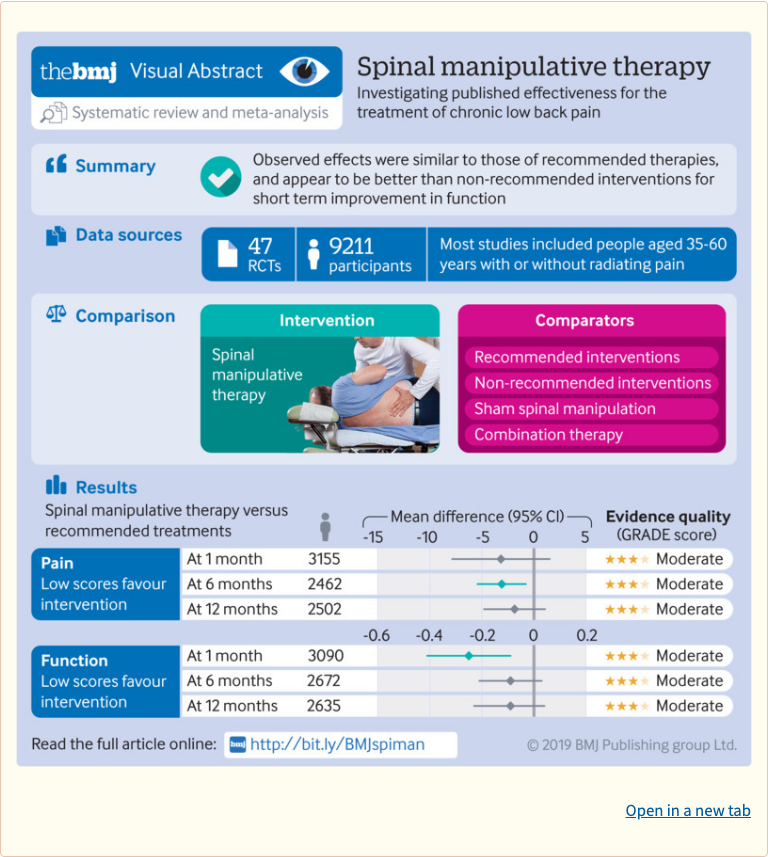 Figure 1
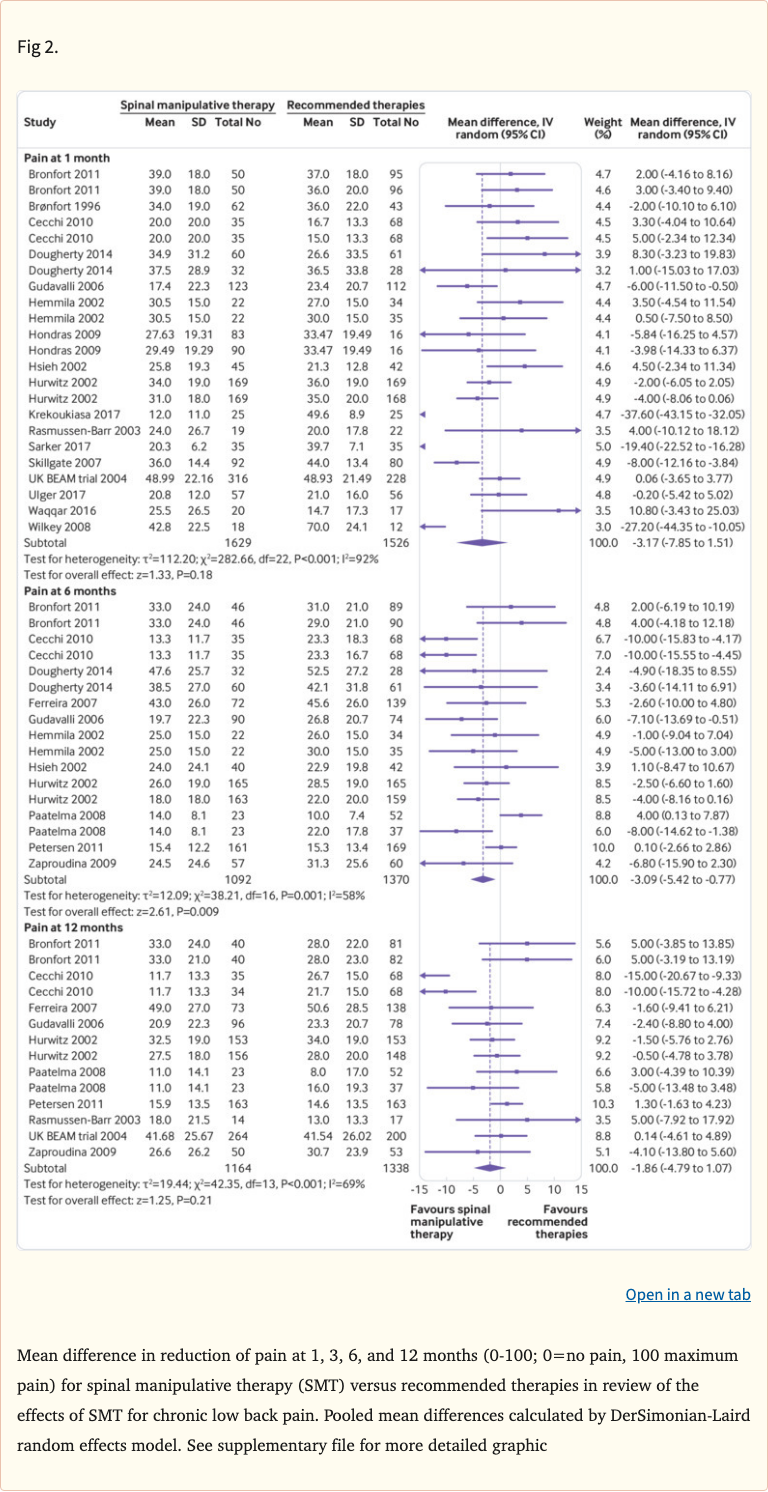 Figure 2
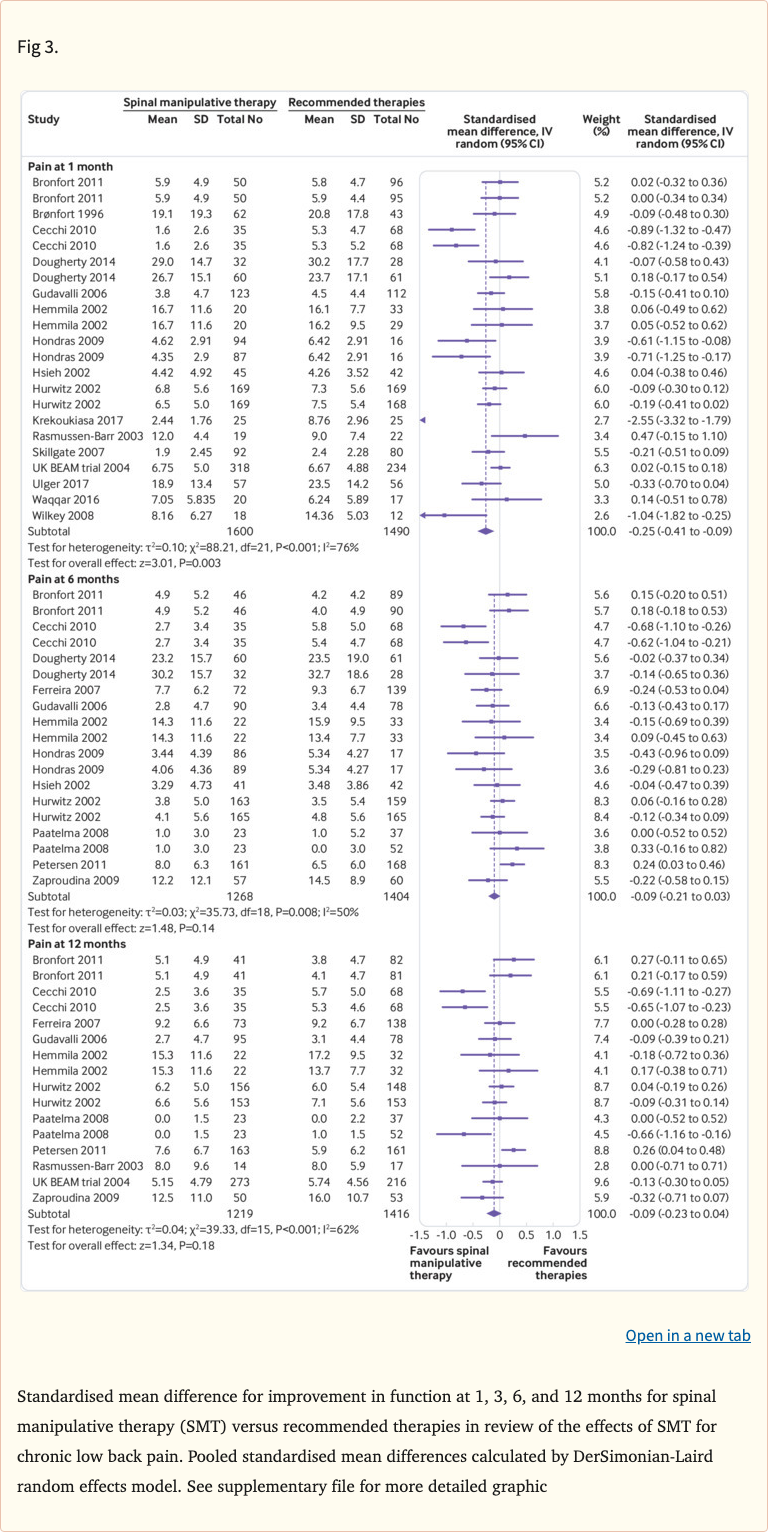 Figure 3
Limitations
Nearly all evidence rated low to very low certainty by GRADE criteria. Blinding is inherently difficult with manual therapy - patients generally know if they received spinal manipulation. High heterogeneity across studies in techniques, dosing, and outcome measures. Many trials had small sample sizes. Publication bias possible. Clinical significance of small effect sizes is debatable - a 12-point improvement on a 100-point scale may or may not be meaningful to patients.