
Key Takeaway
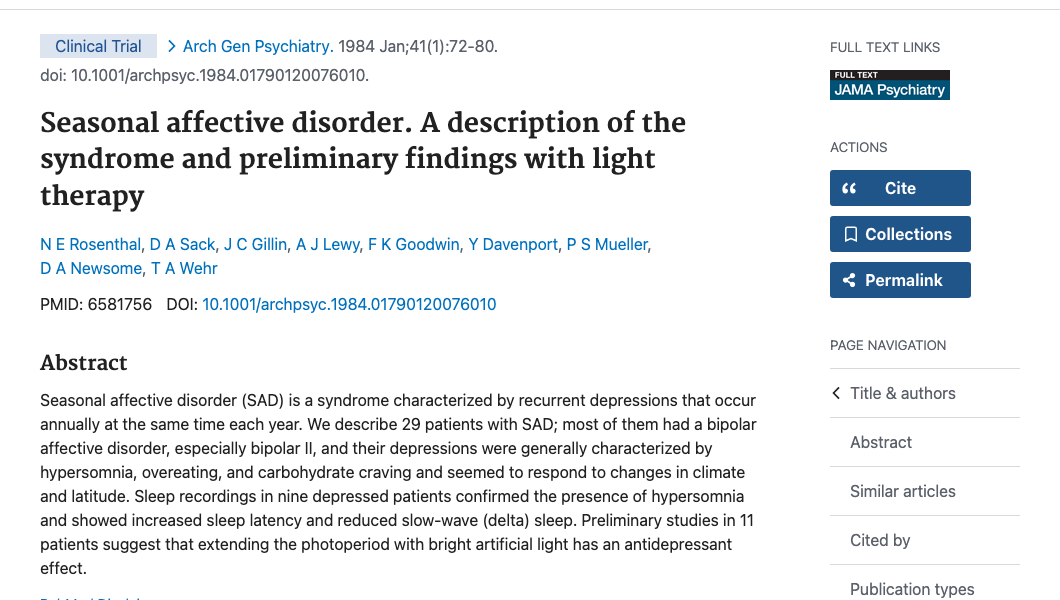
The landmark study that first described Seasonal Affective Disorder and demonstrated that bright light therapy could effectively treat winter depression.
Summary
This groundbreaking study introduced Seasonal Affective Disorder (SAD) to the medical literature and tested bright light as treatment.
Study design:
- 29 patients with recurrent winter depression
- Exposed to bright artificial light (2,500 lux)
- Treatment given for several hours morning and evening
- Compared to dim light control condition
Key findings:
- SAD characterized by winter depression, summer remission
- Symptoms: low energy, increased sleep, carbohydrate craving, weight gain
- Bright light produced significant antidepressant effects
- Most patients responded within days
Pattern identified:
- Depression onset: Fall/early winter
- Remission: Spring
- Annual recurrence
- Geographic correlation (more common at higher latitudes)
Light therapy results:
- Marked improvement in depression scores
- Energy and alertness increased
- Sleep patterns normalized
- Effects reversed when light withdrawn
Clinical significance:
This study established SAD as a clinical entity and light therapy as its treatment, launching decades of research that confirmed and refined these findings.

