
Key Takeaway
Meta-analysis of RCTs confirms bright light therapy is an effective treatment for SAD with effect sizes comparable to antidepressant medications.
Summary
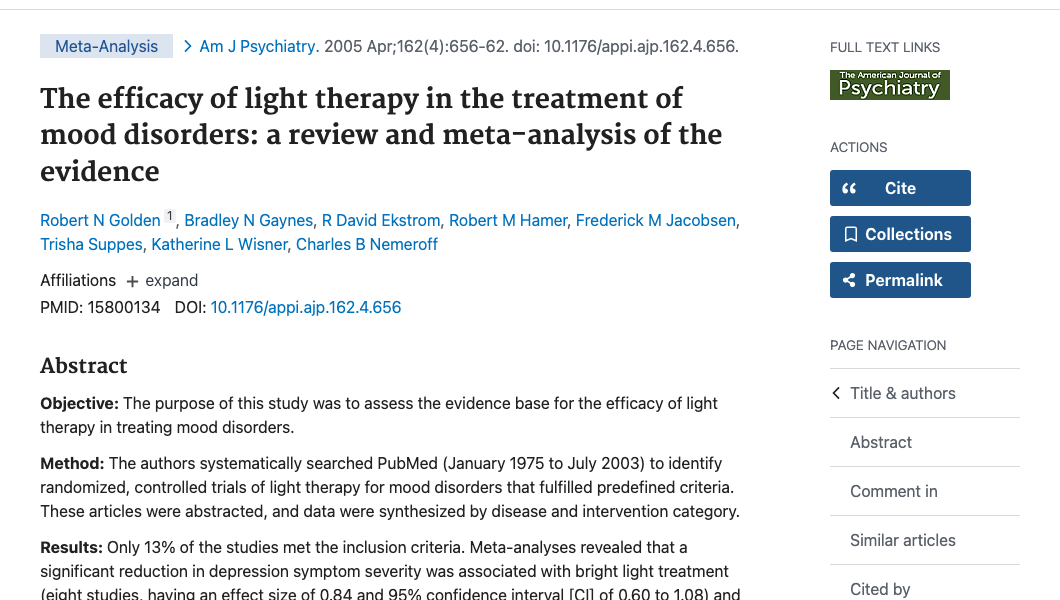
This comprehensive meta-analysis evaluated the evidence for light therapy in treating seasonal and non-seasonal depression.
Study design:
- Systematic review of randomized controlled trials
- Included studies using bright light (≥2,500 lux)
- Compared light therapy to control conditions
- Assessed effect sizes and clinical significance
Key findings:
- Bright light therapy effective for SAD (effect size 0.84)
- Effect comparable to antidepressant medications
- Morning light more effective than evening
- Response typically within 1-2 weeks
Efficacy data:
- SAD response rate: 50-80%
- Effect sizes: moderate to large
- Remission achieved in many patients
- Benefits maintained with continued use
Optimal parameters identified:
- Intensity: 10,000 lux preferred
- Duration: 30 minutes at 10,000 lux
- Timing: Early morning most effective
- Daily use during symptomatic period
Comparison to medications:
- Similar efficacy to SSRIs for SAD
- Faster onset of action
- Fewer side effects
- Lower cost
Clinical significance:
Provides strong evidence base supporting light therapy as first-line treatment for SAD, with efficacy matching pharmacological treatments.

