
Key Takeaway
Cochrane review finds insufficient high-quality evidence to determine whether light therapy can prevent SAD recurrence, highlighting a major gap in preventive research.
Summary
This Cochrane systematic review evaluated whether light therapy can prevent the onset of Seasonal Affective Disorder in people with a history of winter depression. The review searched for randomized controlled trials through June 2018 that assessed the safety and efficacy of any type of light therapy (bright white light, infrared light, dawn simulation) used preventively before the expected onset of depressive episodes.
The review identified a very limited evidence base for preventive light therapy. While light therapy is well-established as a treatment for active SAD episodes, far fewer studies have examined whether starting light therapy prophylactically in autumn can prevent depression from developing in the first place. The available evidence was rated as very low to low certainty, meaning the authors could not draw firm conclusions about preventive efficacy.
This Cochrane review is important because it highlights a significant clinical question: if patients know they are vulnerable to SAD every winter, can early light therapy use prevent episodes rather than just treat them? The lack of robust evidence on this question represents a major research gap, and the authors called for well-designed RCTs to address preventive strategies for SAD.
Methods
Cochrane systematic review methodology with comprehensive search of CENTRAL, MEDLINE, Embase, PsycINFO, and trial registries through June 2018. Included randomized controlled trials of any light therapy modality used to prevent SAD in adults with a history of recurrent winter depression. Two reviewers independently screened, extracted data, and assessed risk of bias. Certainty of evidence evaluated using GRADE framework.
Key Results
- Very limited number of eligible RCTs identified for preventive light therapy
- Evidence certainty rated very low to low across outcomes
- Insufficient evidence to determine whether bright light therapy, infrared light, or dawn simulation can prevent SAD recurrence
- No firm conclusions could be drawn about optimal timing, duration, or type of preventive light therapy
- The review identified a critical gap in the prevention research landscape for SAD
Figures
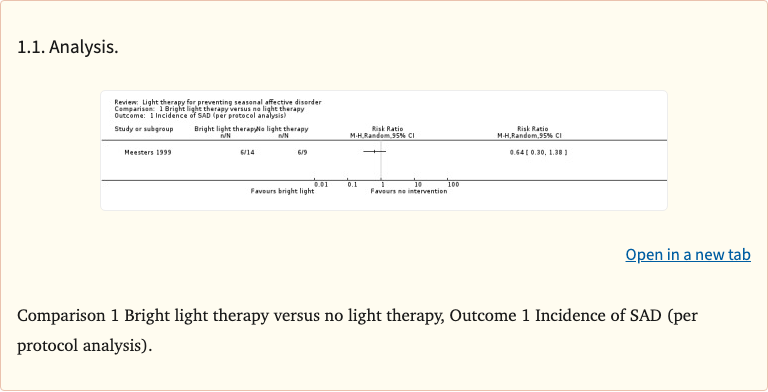 Figure 1
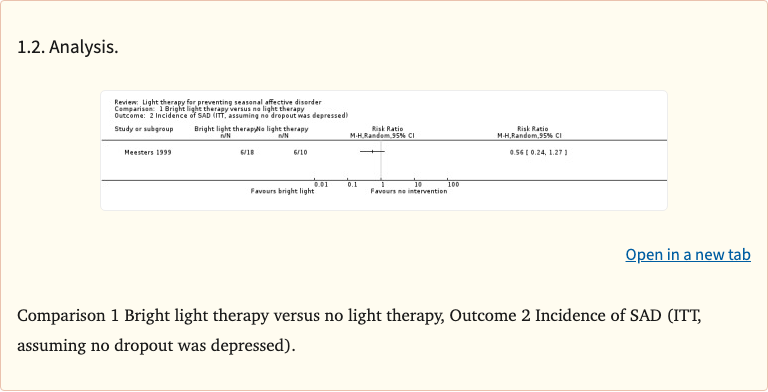 Figure 2
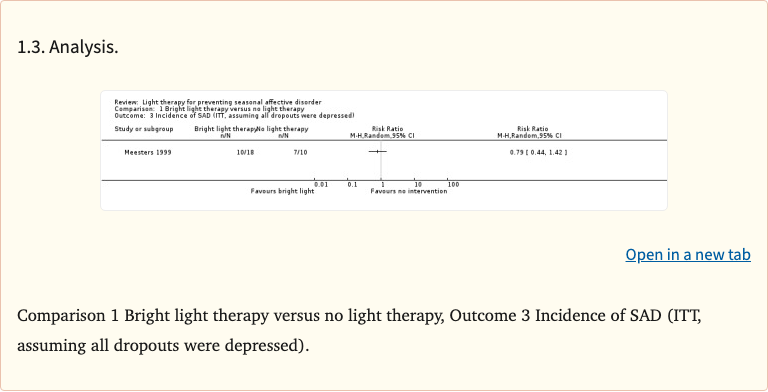 Figure 3
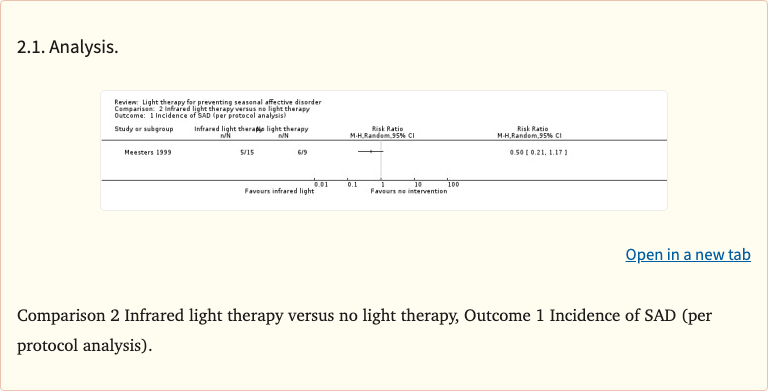 Figure 4
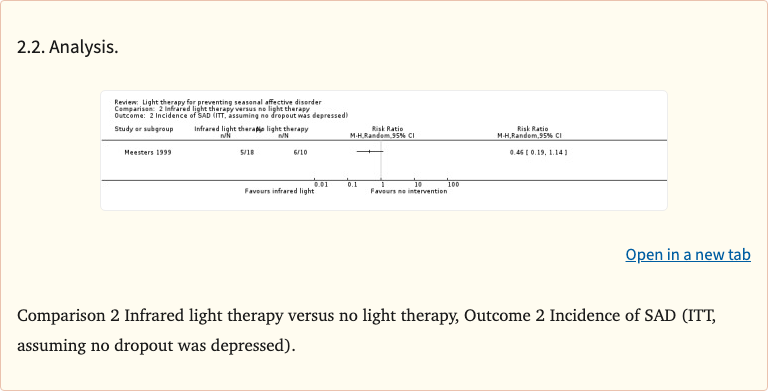 Figure 5
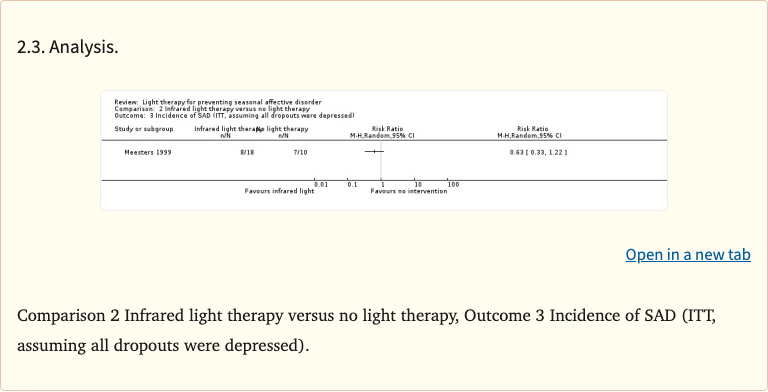 Figure 6
Limitations
- Very few eligible studies available, severely limiting the ability to draw conclusions
- Low to very low certainty of evidence for all outcomes assessed
- Heterogeneity in light therapy types (bright white, infrared, dawn simulation) made pooling difficult
- Most available studies had small sample sizes and methodological limitations
- Review can only reflect the existing evidence base, which is sparse for prevention

