
Key Takeaway
Meta-analysis confirmed resisted sprint training including sled work produces meaningful improvements in sprint performance, particularly in the acceleration phase
Summary
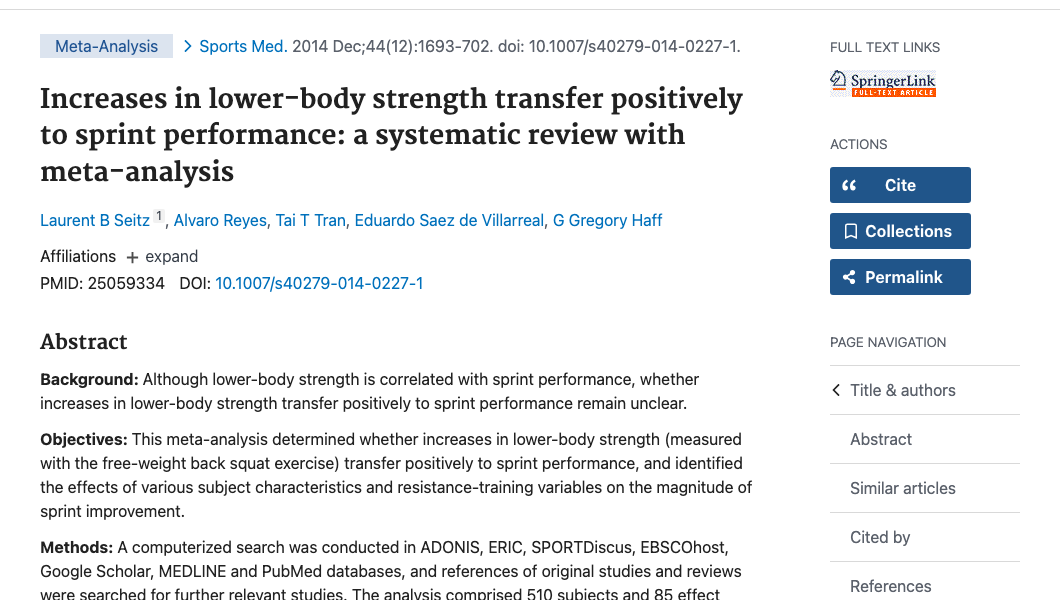
This systematic review and meta-analysis examined the transfer of lower-body strength training methods, including resisted sprinting with sleds, to sprint performance outcomes.
Methods
- Systematic review and meta-analysis
- Included studies on resisted sprint training
- Analyzed sled, parachute, and weighted vest methods
- Examined effects on acceleration and maximum velocity
- Assessed moderating variables (load, duration, experience)
Key Results
- Resisted sprinting improved sprint times
- Effect size: Small to moderate (g = 0.3-0.5)
- Greater effects on acceleration vs max velocity
- Optimal load: 10-20% velocity decrement
- Benefits seen across experience levels
- Sled sprinting among most effective methods
Limitations
- Heterogeneity in training protocols
- Variable study quality
- Different loading parameters across studies
- Limited long-term follow-up data
- Publication bias possible