
Key Takeaway
Meta-analysis of 25 RCTs (n=1,042) found EMDR significantly reduces depression (Hedges' g = 0.75), with greater effects in severe cases.
Summary
This meta-analysis and meta-regression examined the efficacy of EMDR specifically for depression by pooling data from 25 randomized controlled trials with 1,042 participants. While EMDR is primarily known as a PTSD treatment, depression is a frequent comorbidity and an increasingly studied standalone target for EMDR.
The overall analysis found a moderate-to-large effect size (Hedges' g = 0.75) favoring EMDR over control conditions for depression reduction. Meta-regression analyses revealed that baseline depression severity was a significant moderator: participants with more severe depression at baseline showed larger treatment effects. This suggests EMDR may be particularly beneficial for individuals with significant depressive symptoms.
Subgroup analyses explored the influence of control condition type, number of sessions, and whether depression was the primary diagnosis versus a comorbidity. The findings expand the evidence base for EMDR beyond PTSD, supporting its potential utility as a treatment for depressive disorders.
Methods
Systematic review and meta-analysis with meta-regression following PRISMA guidelines. Searched PubMed, PsycINFO, Embase, and Cochrane Library for RCTs comparing EMDR to control conditions that measured depression outcomes. Included 25 RCTs with a total of 1,042 participants. Effect sizes were calculated using Hedges' g. Meta-regression examined moderators including baseline depression severity, number of EMDR sessions, control condition type, and whether depression was primary or comorbid. Subgroup analyses were conducted for treatment context and depression severity levels.
Key Results
The pooled effect size for EMDR on depression was Hedges' g = 0.75, indicating a moderate-to-large and statistically significant effect. Meta-regression showed baseline depression severity was a significant moderator, with greater effects in more severely depressed participants. Subgroup analyses indicated that EMDR was effective across different control conditions. The number of EMDR sessions did not significantly moderate outcomes. Effects were observed whether depression was the primary diagnosis or comorbid with PTSD or other conditions.
Figures
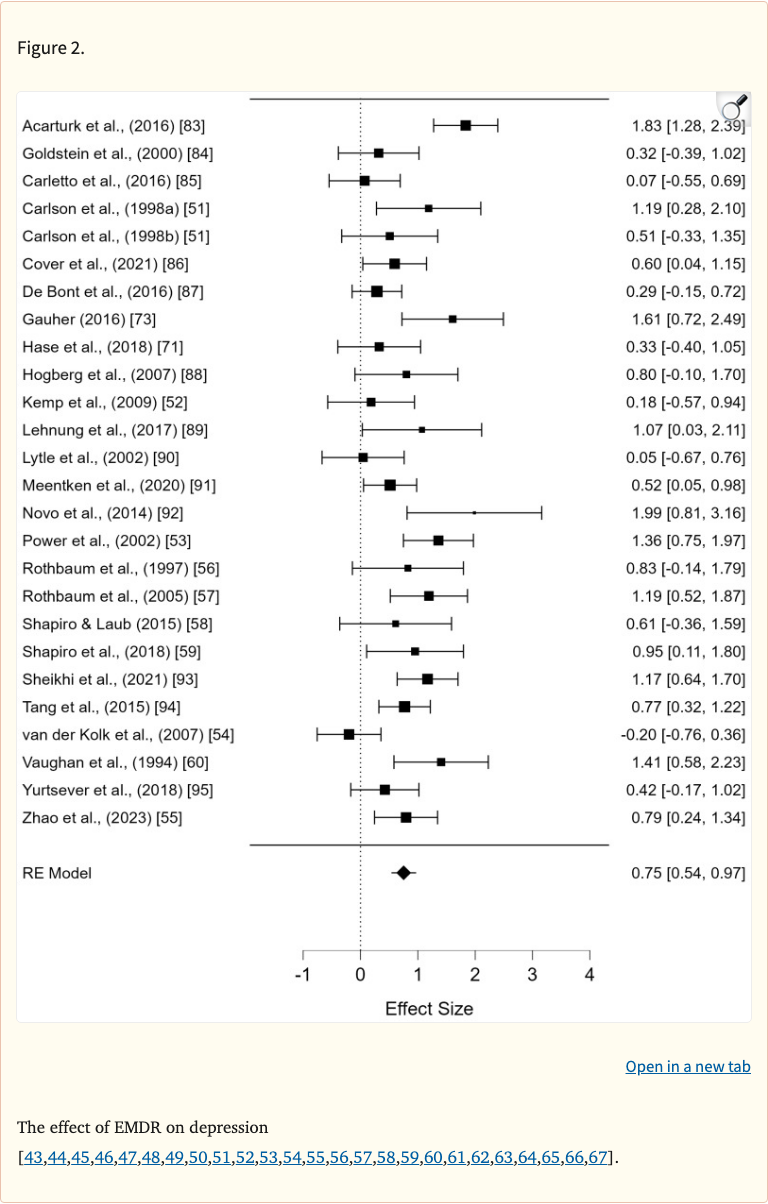 Figure 1
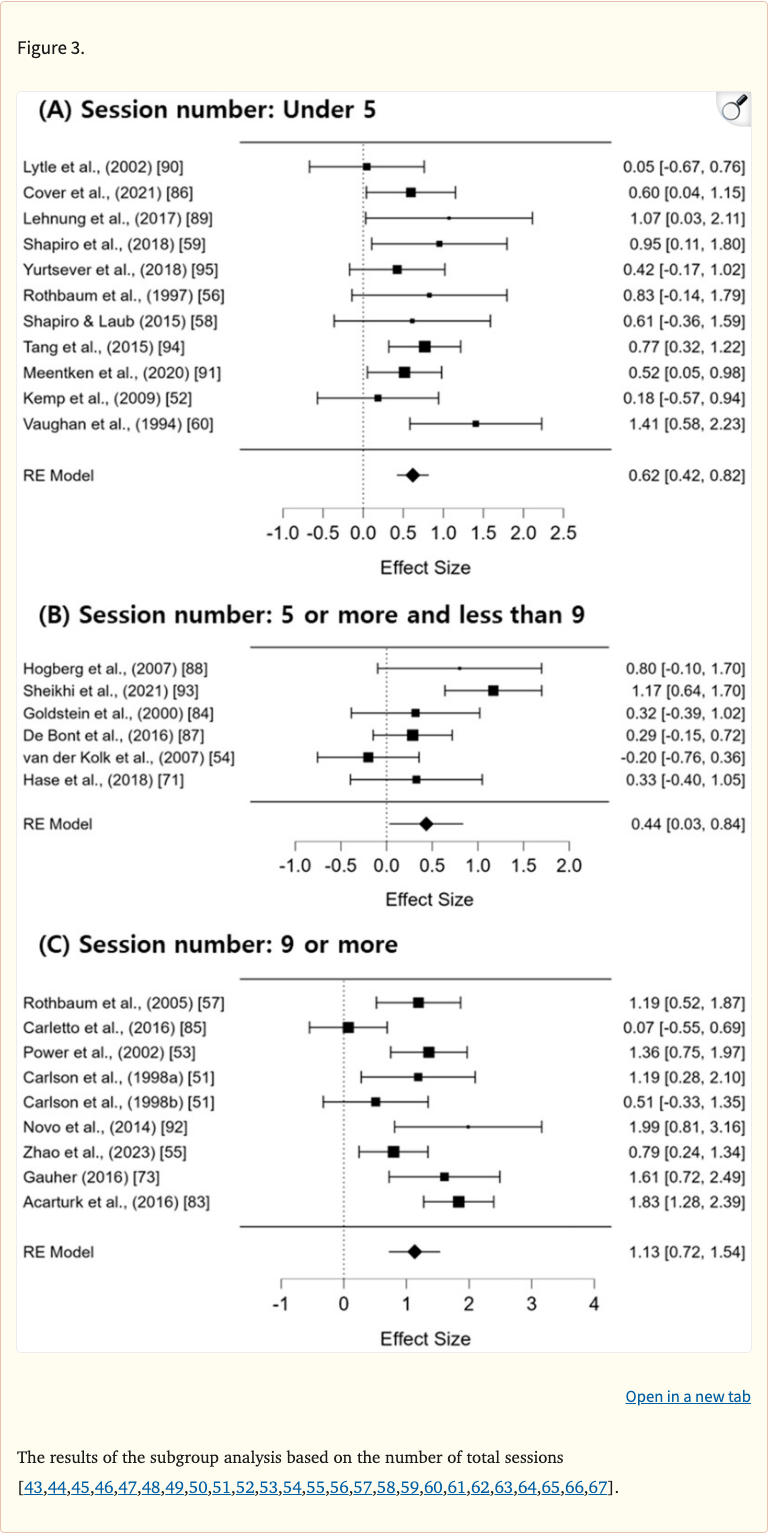 Figure 2
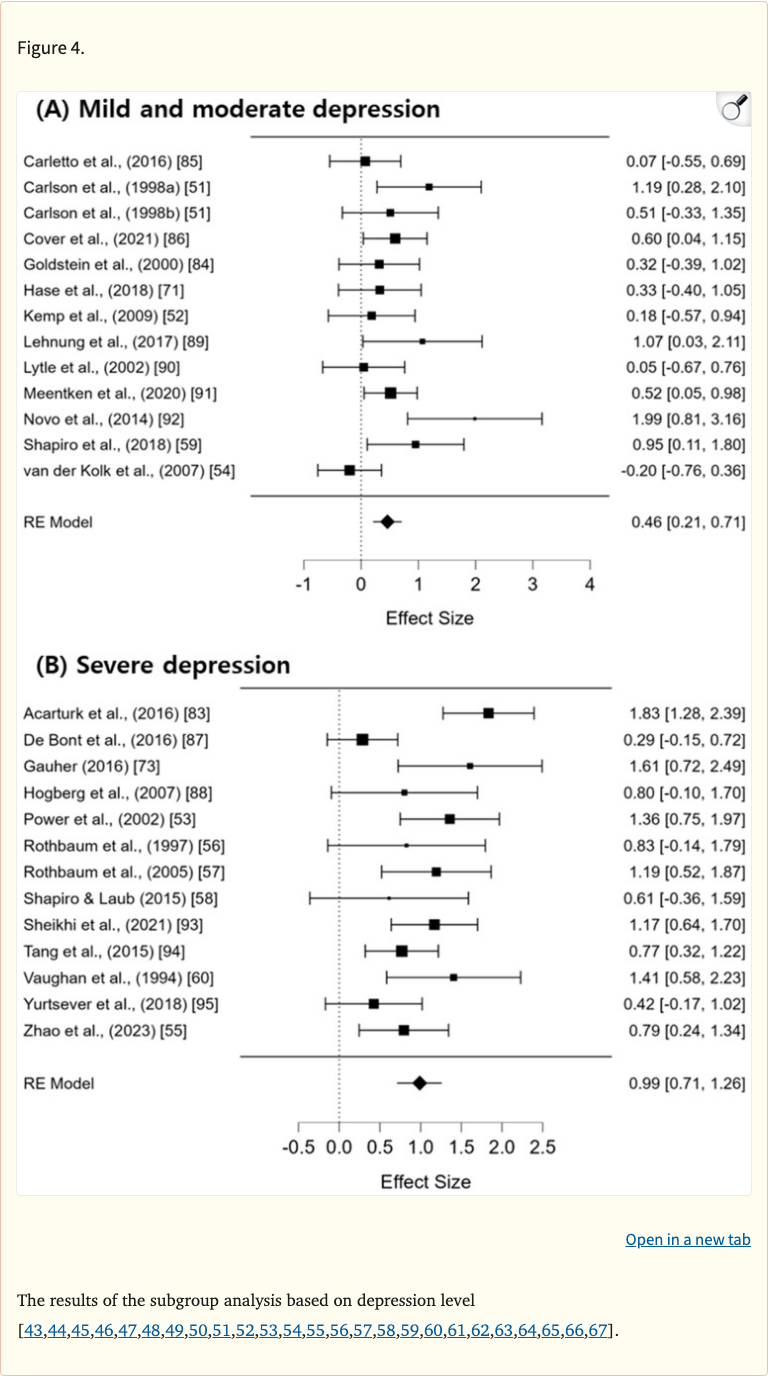 Figure 3
Limitations
- Substantial heterogeneity across included studies
- Many studies had depression as a secondary outcome rather than primary diagnosis
- Variability in EMDR protocols and session numbers across studies
- Some included studies had small sample sizes
- Limited long-term follow-up data to assess durability of antidepressant effects
- Publication bias cannot be fully excluded despite funnel plot analyses