
Key Takeaway
Meta-analysis of 26 RCTs found EMDR significantly reduces PTSD symptoms compared to controls, with effects maintained at follow-up.
Summary
This comprehensive meta-analysis evaluated the efficacy of Eye Movement Desensitization and Reprocessing (EMDR) therapy for PTSD across 26 randomized controlled trials involving over 1,800 participants.
Results showed EMDR significantly reduced PTSD symptoms compared to waitlist controls and was comparable to other trauma-focused therapies like CBT. Effects were maintained at follow-up assessments, suggesting durable benefits.
The analysis supports EMDR as an effective first-line treatment for PTSD, with the advantage of requiring fewer sessions than some alternative approaches.
Methods
- Systematic review of 26 RCTs through 2013
- Random effects meta-analysis
- Comparison groups: waitlist, TAU, active treatments
- Outcomes: PTSD symptom scales, depression, anxiety
Key Results
- Large effect size for PTSD reduction vs waitlist (d = 1.17)
- Comparable efficacy to trauma-focused CBT
- Significant reductions in depression and anxiety
- Effects maintained at 3-6 month follow-up
Figures
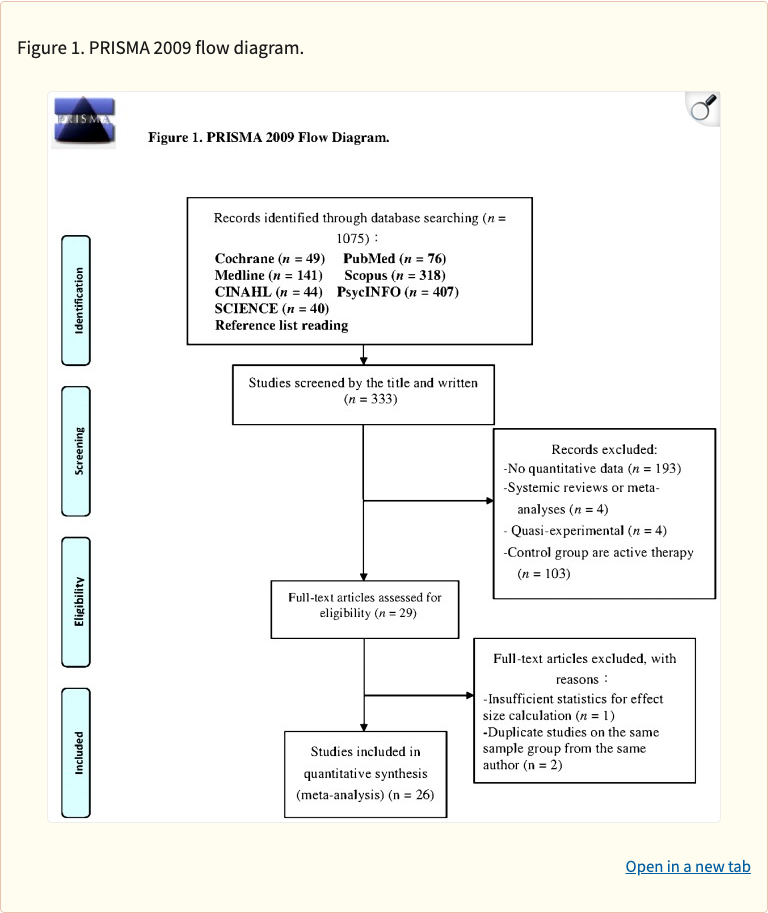 Figure 1
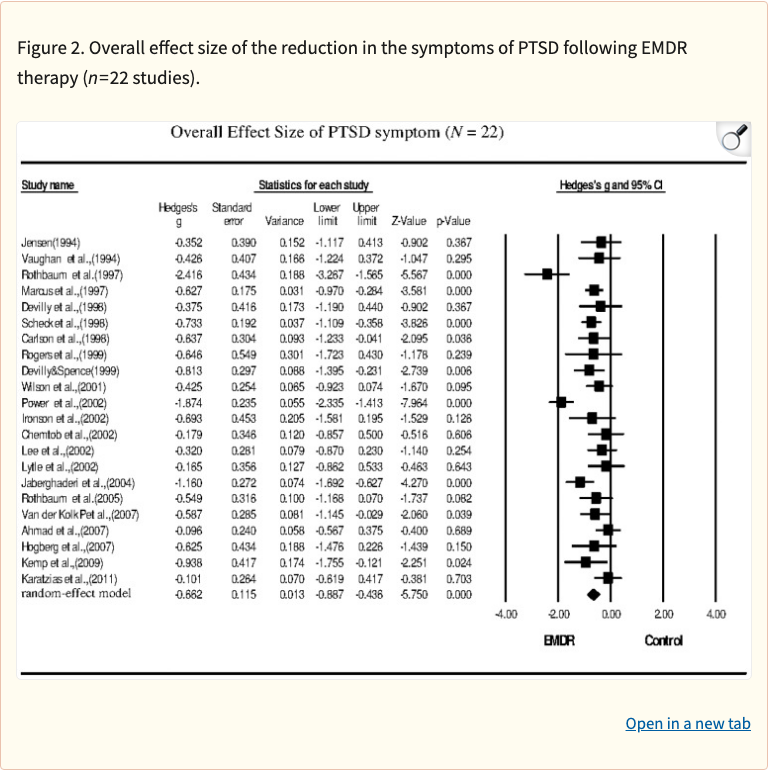 Figure 2
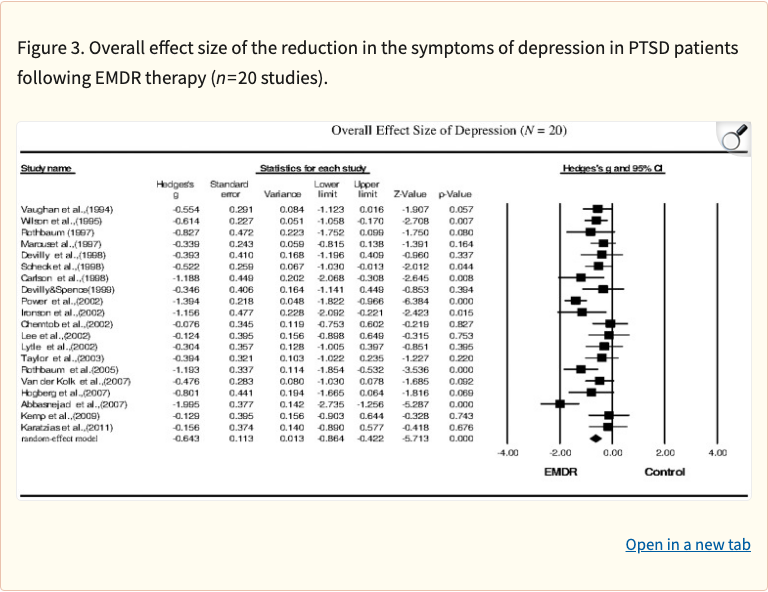 Figure 3
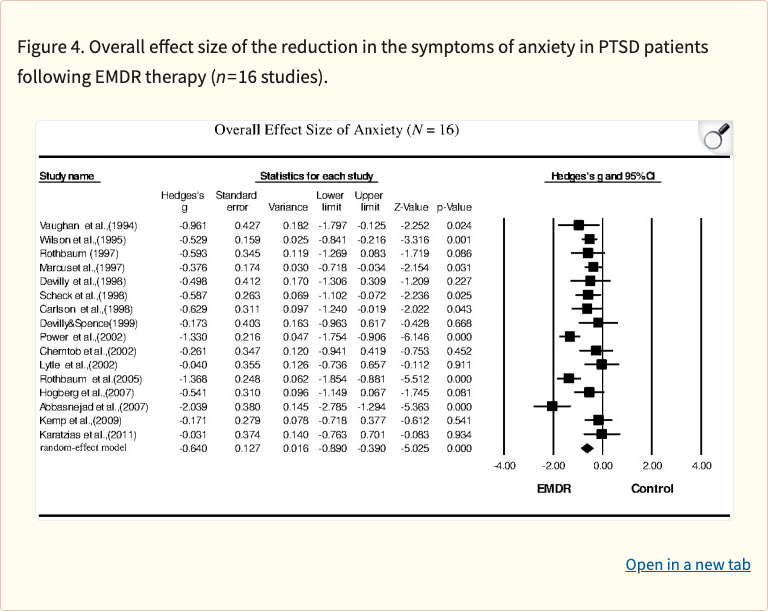 Figure 4
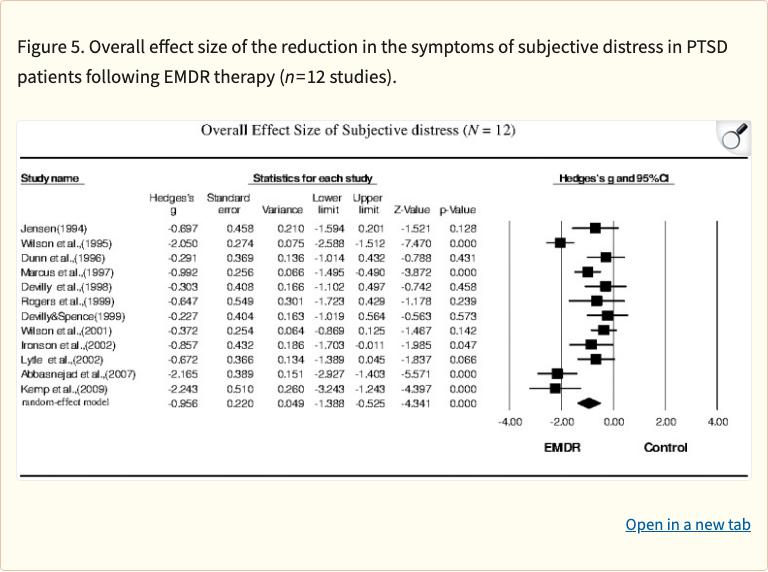 Figure 5
Limitations
- Heterogeneity across included studies
- Variable treatment protocols and session numbers
- Publication bias possible
- Limited long-term follow-up data