
Key Takeaway
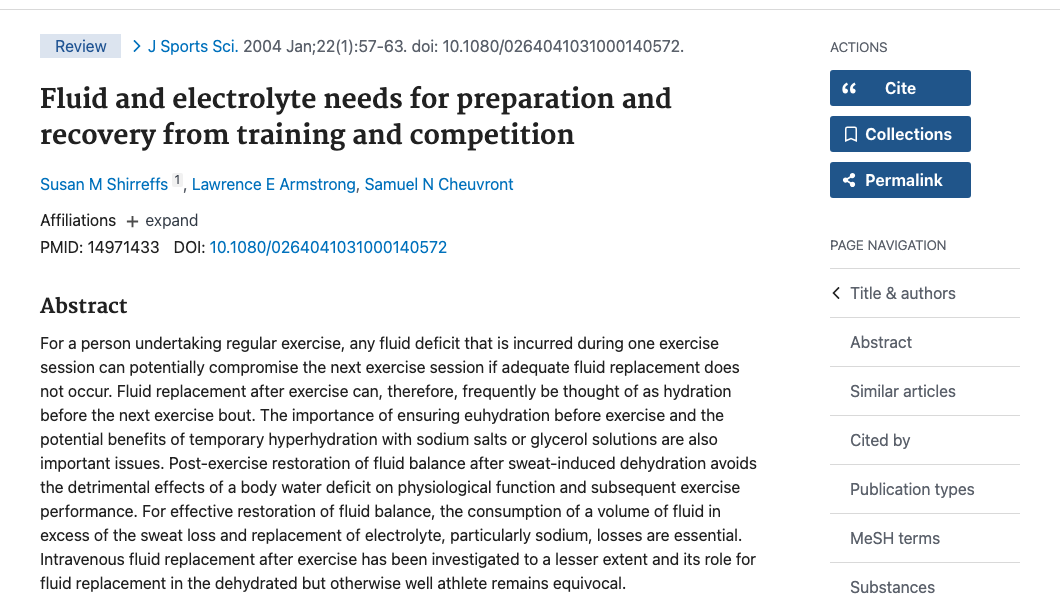
Complete rehydration after exercise requires sodium replacement; water alone is insufficient as it dilutes blood sodium and suppresses thirst before full rehydration.
Summary
This review examined the physiology of fluid and electrolyte balance during exercise and recovery.
Key findings on sodium:
- Drinking plain water after exercise suppresses thirst prematurely
- Water dilutes plasma sodium, reducing drive to drink
- Sodium maintains plasma osmolality and sustains thirst
- Complete rehydration requires sodium equivalent to sweat losses
Practical recommendations:
- Include sodium in post-exercise fluids
- Drink 150% of fluid lost (to account for ongoing urine losses)
- Salty foods with water work as well as sports drinks
- Individual sweat rates and sodium losses vary significantly
Significance:
Established the mechanistic basis for why electrolyte replacement is necessary for complete rehydration.
Related Interventions
Related Studies
Discussed In

Avoid Fitness Plateaus, Overtraining & Mis-Timed Performance Peaks
Perform with Dr. Andy Galpin

Essentials: How to Build Endurance
Huberman Lab

206. James DiNicolantonio: supplementation and nutrient deficiencies, eggs vs. bagels for weight loss, creatine and diet
Paul Saladino MD Podcast

Using Salt to Optimize Mental & Physical Performance
Huberman Lab
Hydration for optimal health and performance | Stacy Sims, PhD
The Proof with Simon Hill

Electrolytes: are sports drinks a scam?
Sidenote by AsapSCIENCE

Robb Wolf | Electrolytes: How Sodium, Potassium & Magnesium Help To Beat Brain Fog
Wellness + Wisdom Podcast

Mineral Balance, Adrenal Cocktails, and Electrolytes
Well-Fed Women